Dufferin Bell
Lost to Records: The Dufferin Bell
Highfield Hunter
Fog cloaks Framboise Cove's jagged shores on Cape Breton's southeast edge, where on May 13, 1951, a forgotten Park ship met its end. Framboise Cove nestles on Cape Breton Island's southeast coast, a rugged inlet where the Atlantic's relentless swell crashes against sheer granite cliffs and boulder-strewn beaches. Just 20 km south of Louisbourg's historic fortress, this remote corner feels worlds away—shrouded in fog half the year, with pounding surf that echoes the fury of countless storms.
Framboise Cove and Communities
Nearby Framboise village clings to the headlands, a tight-knit outpost of lobster fishers and summer folk whose roots trace to Acadian and Mi'kmaq heritage. To the north, Forchu's weathered homes overlook the cove, where locals still swap tales of salvage tugs like the Foundation Josephine racing from Louisbourg—too late to save the freighter. Note there are no dive shops or rentals in the immediate Framboise/Forchu area—plan gear transport accordingly.
Further north (~90 km via Hwy 104), Sydney provides full diver support with hotels, restaurants, and marine supplies as the ideal staging base for expeditions. This "forgotten fringe" of Cape Breton thrives on resilient communities—Richmond County's 8,000 souls blend fishing quotas, eco-tourism, and WWII echoes (nearby UXO dumps linger offshore). Between 1945 and the 1970s, it was common practice for ships to scuttle vast amounts of conventional explosives and chemical weapons (including mustard gas) in these waters.
Park Ships Era
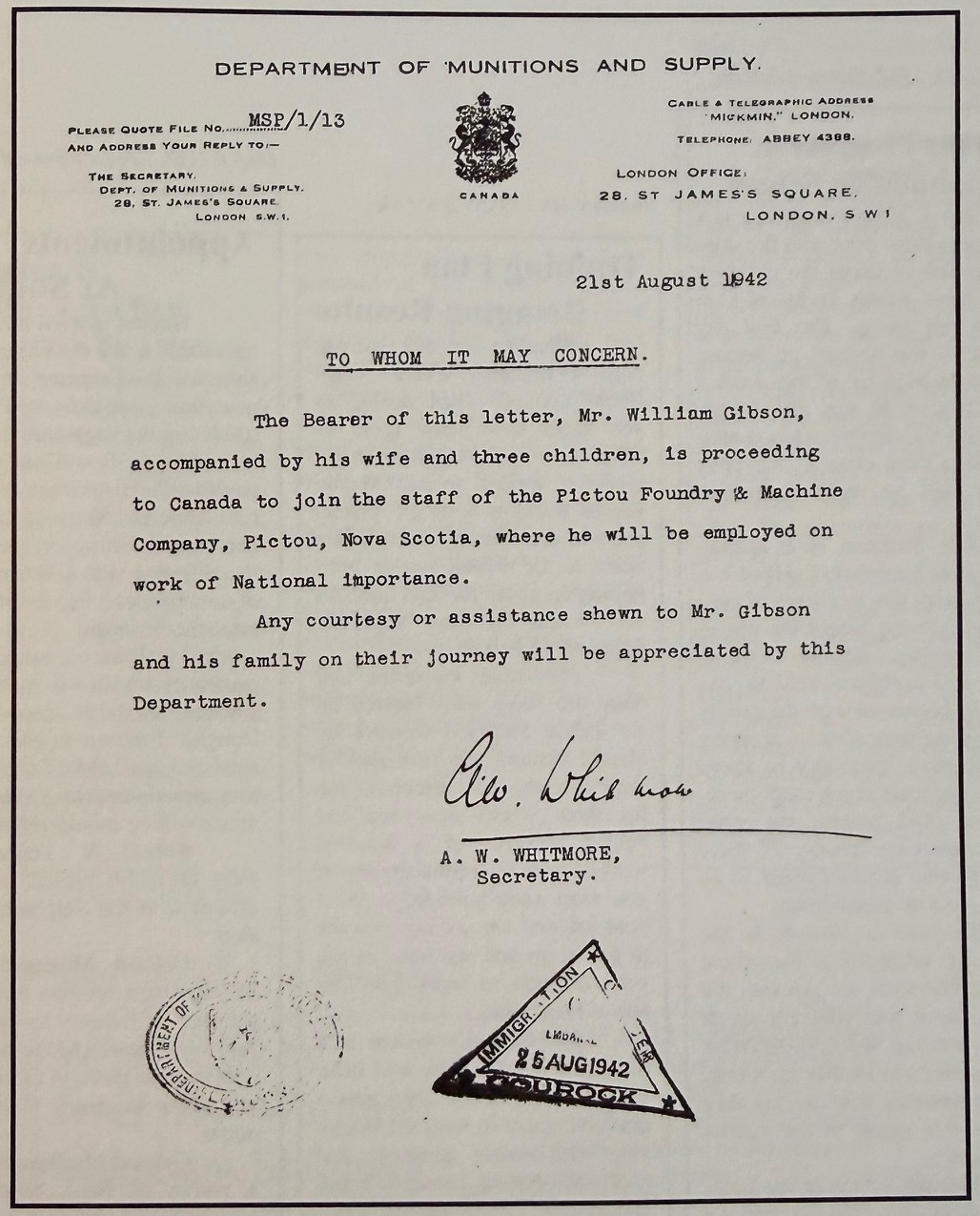
As World War II gripped the globe in 1942, Canada's shipbuilding industry exploded from sleepy pre-war yards into a wartime juggernaut, churning out vessels to counter U-boat carnage in the Battle of the Atlantic. From just 38 ocean-going merchant ships in 1939, the nation ramped up to 57 yards and 38 berths by 1943, employing 57,000 workers—many women stepping into welding torches and rivet guns for the first time. The Park Steamship Company, formed April 8, 1942, spearheaded this effort, ordering 160+ bulk carriers and tankers modeled on Britain's simple North Sands design: no-frills freighters built fast and cheap. Positions in Pictou were created to enable shipbuilding with staff being relocated as required.
Enter the Park ships—176 coal-fired steamers (10,000 DWT class, plus smaller 4,700-tonners) named for Canadian parks like Gatineau or Point Pleasant, launched from yards in Pictou, Saint John, Montreal, and Davie Shipbuilding in Lauzon, Quebec. These 440-ft workhorses, with triple-expansion engines hitting 11 knots, hauled grain, timber, and munitions on 936 perilous voyages, some armed with bow guns and anti-torpedo nets manned by DEMS gunners. By 1945, Canada's yards had birthed 436 merchant ships under government contracts, transforming a peacetime coastal trade nation into an Allied lifeline—yet postwar surplus doomed most to scrap or sale abroad. Dufferin Bell, birthed in this frenzy at Davie Shipbuilding & Repairing Co. in Lauzon, Quebec, embodies the era's grit: rushed to sea as Camp Farnham (later Dufferin Park), renamed for commerce, and bound for obscurity in Framboise Cove.
Canada's wartime shipbuilding demanded total national commitment, with government campaigns urging every citizen to contribute to the war effort against Axis threats. Factories and yards became symbols of unity, where skilled tradesmen worked alongside novices in round-the-clock shifts to meet impossible deadlines. Women played pivotal roles, breaking barriers as welders, riveters, crane operators, and electricians—thousands entering the workforce for the first time, their hands on torches forging the hulls that sustained Allied convoys. This collective sacrifice turned sleepy shipyards into arsenals of freedom, producing vessels like Park ships in record time despite material shortages and blackout drills.
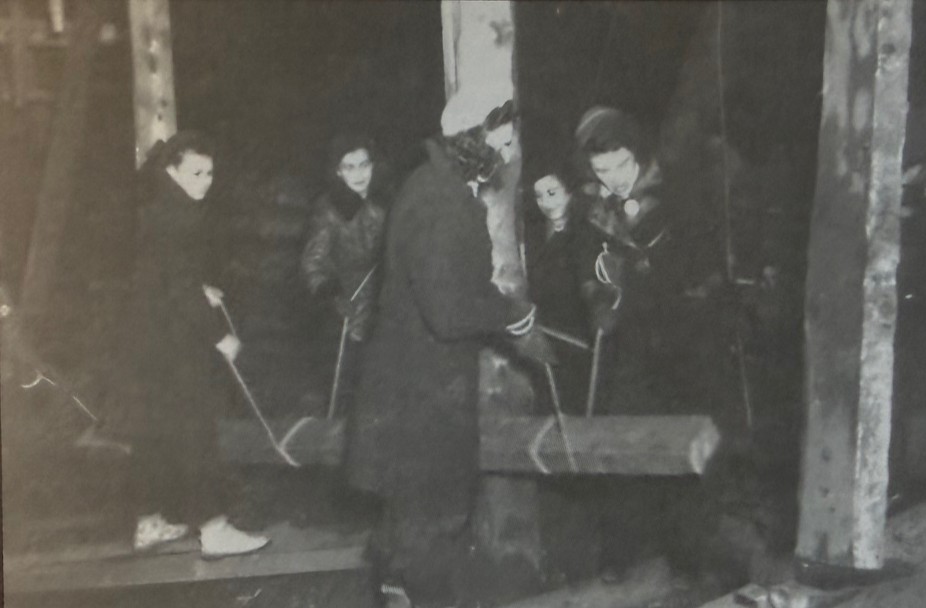
Launched as Camp Farnham amid 1943 urgency, renamed Dufferin Park to join her sisters—then Dufferin Bell for Maritimes trade.
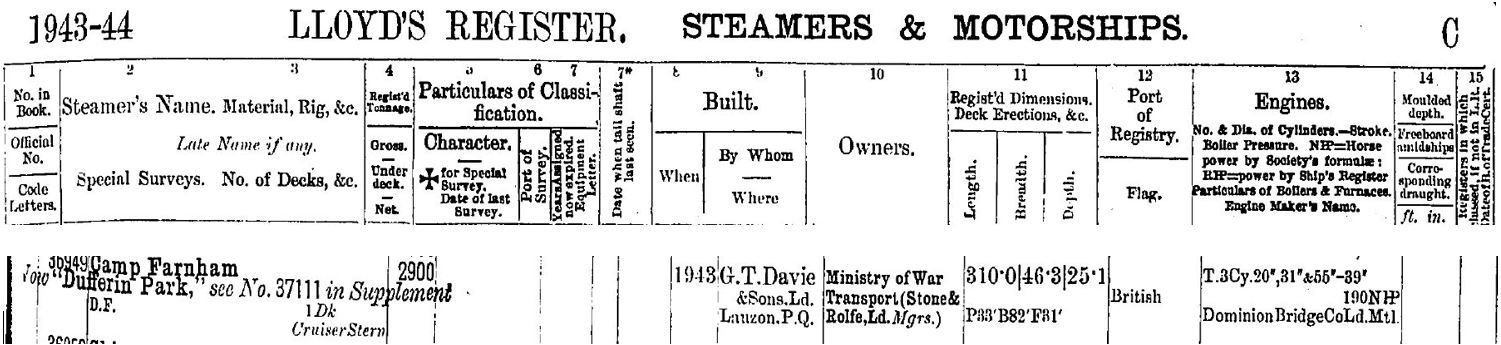
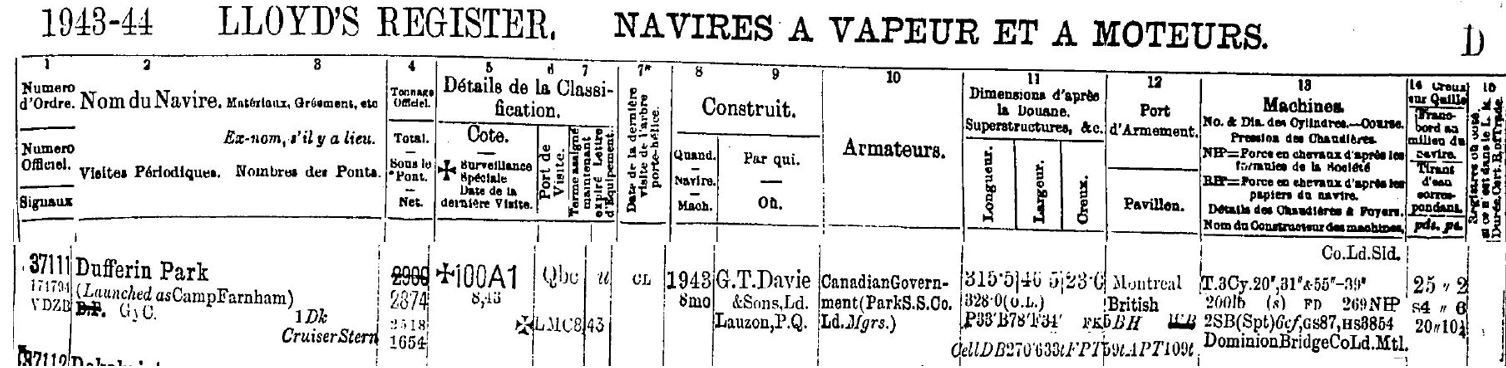
SS Dufferin Bell
Launched as a standard Park ship "4700-tonner," SS Dufferin Bell measured 441 feet in length overall (LOA), with a 56.5-foot beam, 34.5-foot depth, and 2,874 gross register tons (4,719 deadweight tons). Her coal-fired triple-expansion steam engine delivered 475 nominal horsepower to a single screw propeller, pushing the freighter to 11 knots on efficient coastal runs. Three derrick-equipped masts served five cargo holds optimized for grain, timber, or bulk—self-unloading design that defined her postwar trade. By 1951, wartime bow gun mounts were long gone, leaving a utilitarian hull stripped for commerce, vulnerable without DEMS defenses when fog turned Framboise's ledges lethal. Today, divers find her flattened boilers, winches, and shaftline echoing that robust wartime blueprint amid the scatter.
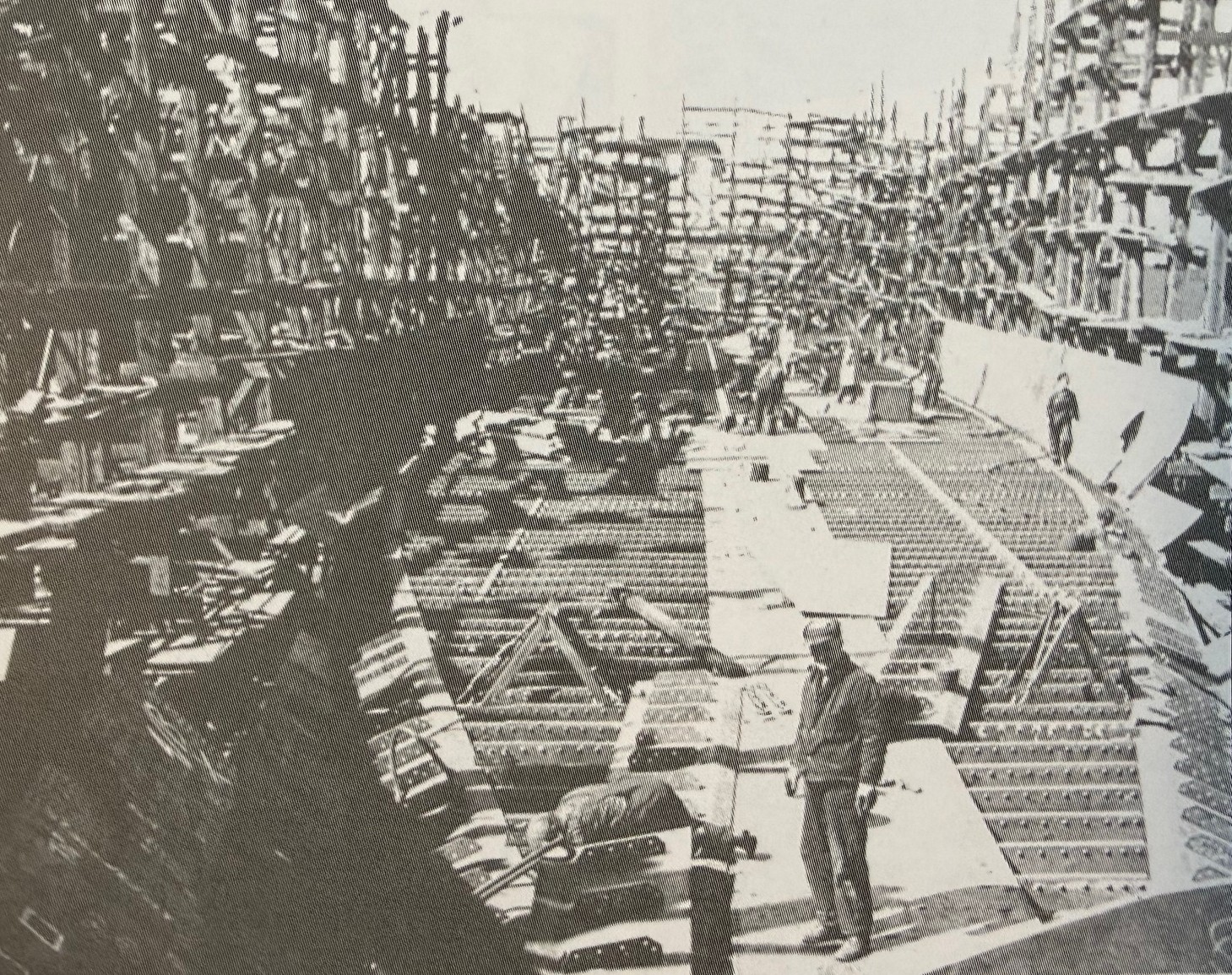
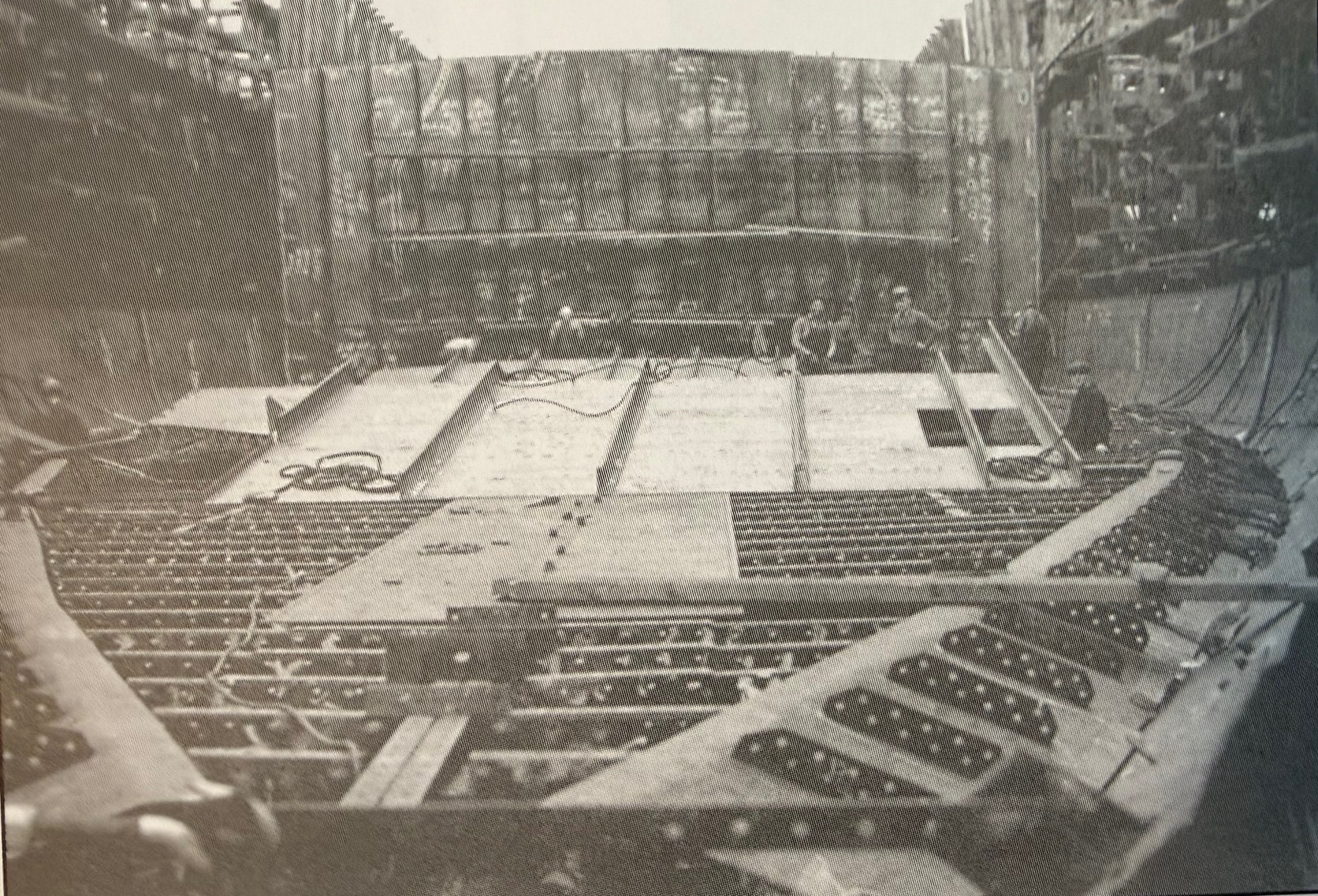
There were 43 of the 4700-tonner ships built, 24 of (over half- built in Pictou, Nova Scotia) some with many name changes and use post war, others did not survive the war. Those known to have wrecked include:
| Wartime Name | Postwar Name(s)/Fate |
| Avondale Park | Sunk by U-boat 1945 |
| Beresford Park | Federal Ambassador → Gerda Toft (sank 1954) |
| Crescent Park | Julia → Lona → Senator Hagelstein → Agia Sophia → Manos Lemos (wrecked 1969) |
| Dufferin Park | Dufferin Bell (wrecked 1951 Framboise Cove) |
| Kensington Park | Docteur Yersin (wrecked 1953) |
| Lansdowne Park | Caribbean Trader (wrecked 1963) |
| Montmorency Park | Docteur Angier (wrecked 1949) |
| Taber Park | (sunk 1945 U-boat) |
| Taronga Park | Merian (wrecked 1977) |
| Victoria Park | (Torpedoed 1945; Pictou lead ship) |
| Wentworth Park | Azar (wrecked 1968) |
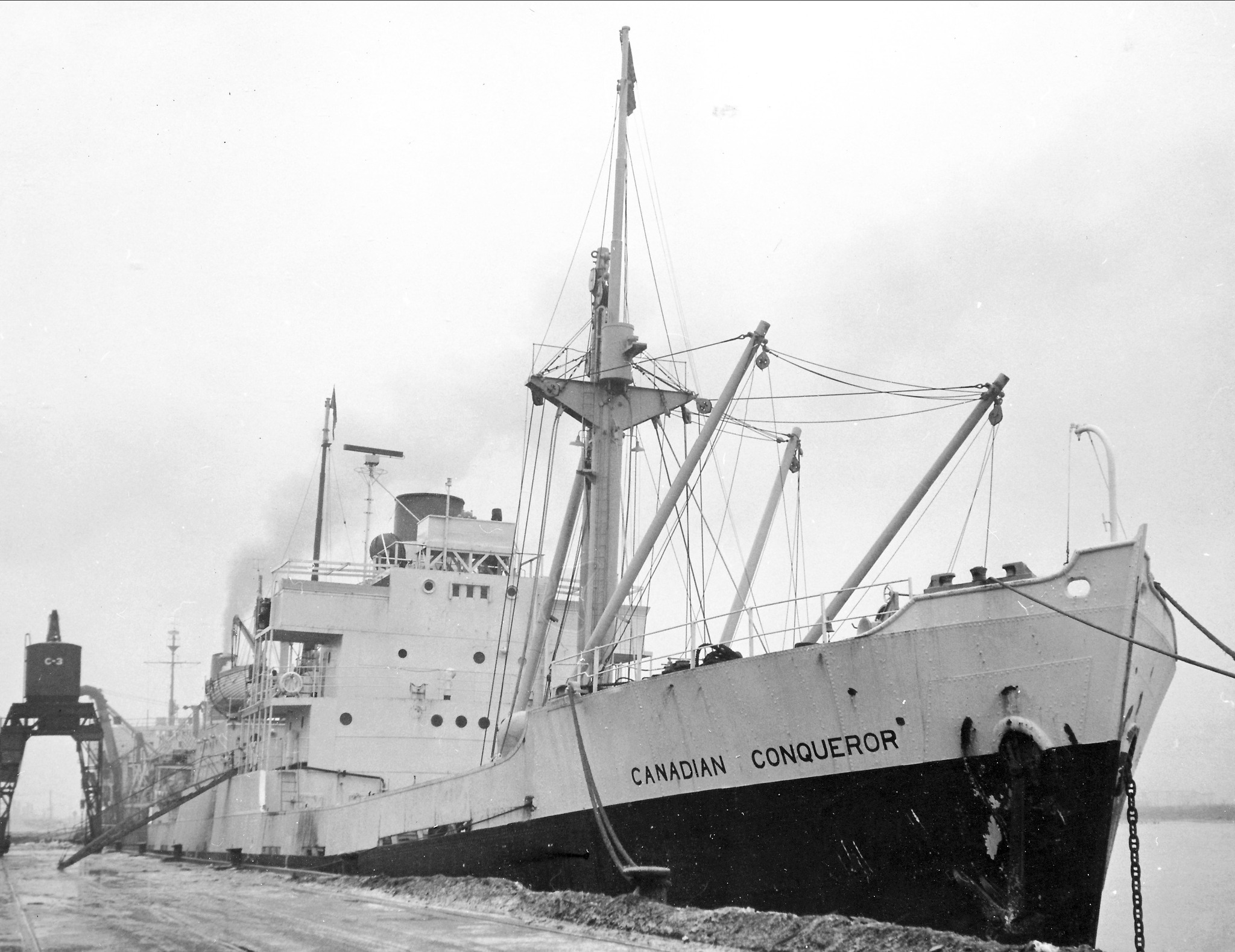
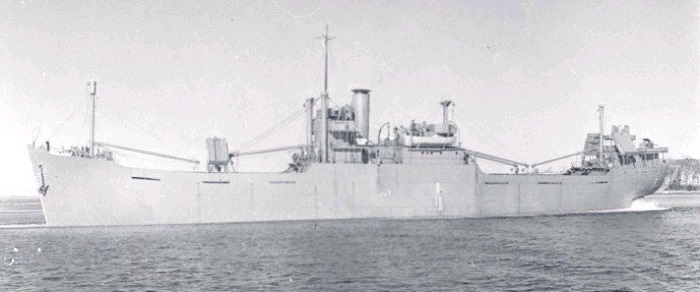
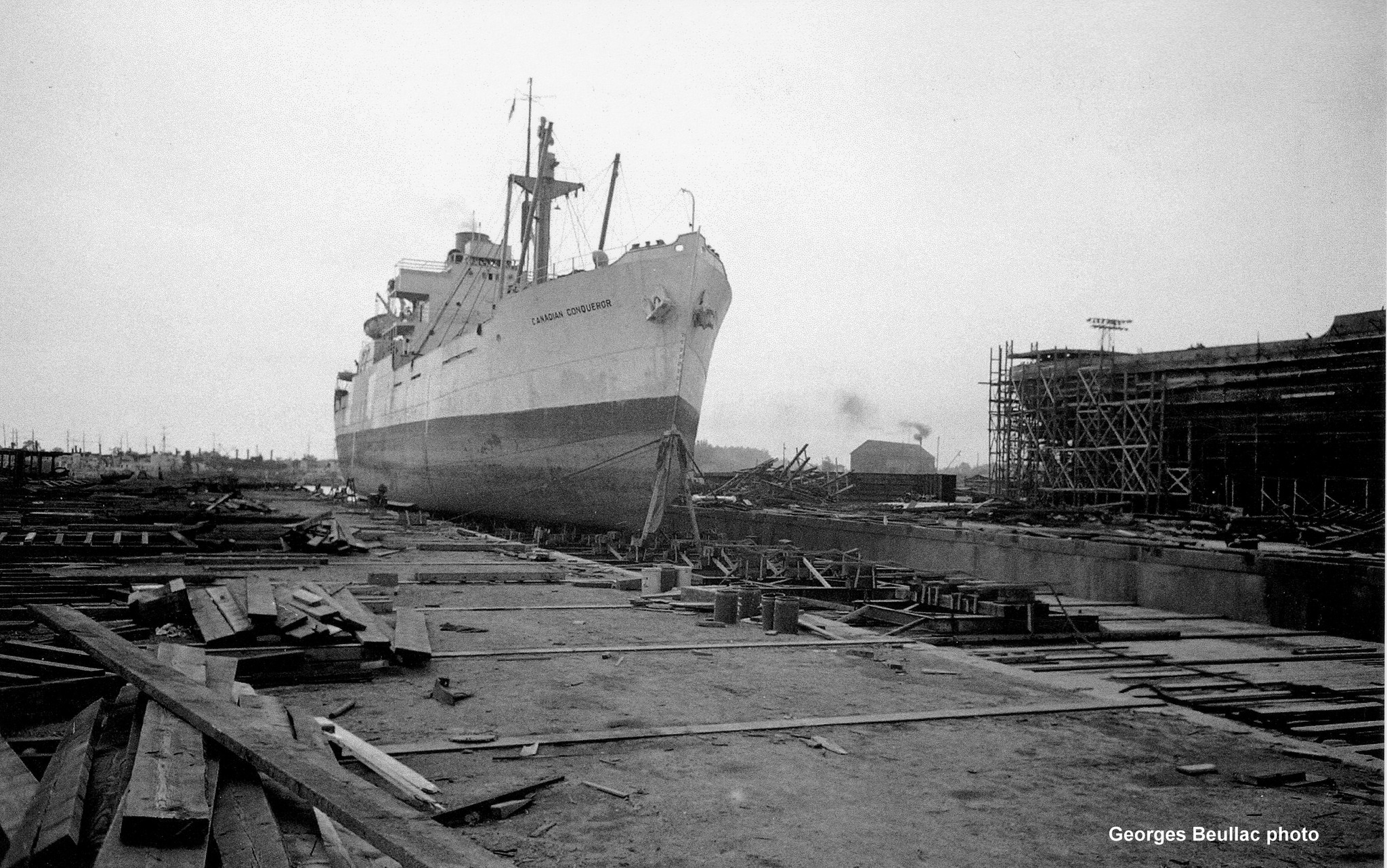
While no photos of SS Dufferin Bell exist, the following photos depict ships from the same Modified Scandinavian-class Park ships (4,700 DWT), conveying the compact size (~420 ft LOA) that helps readers visualize her vast, scattered wreckage in Framboise Cove's shallows.
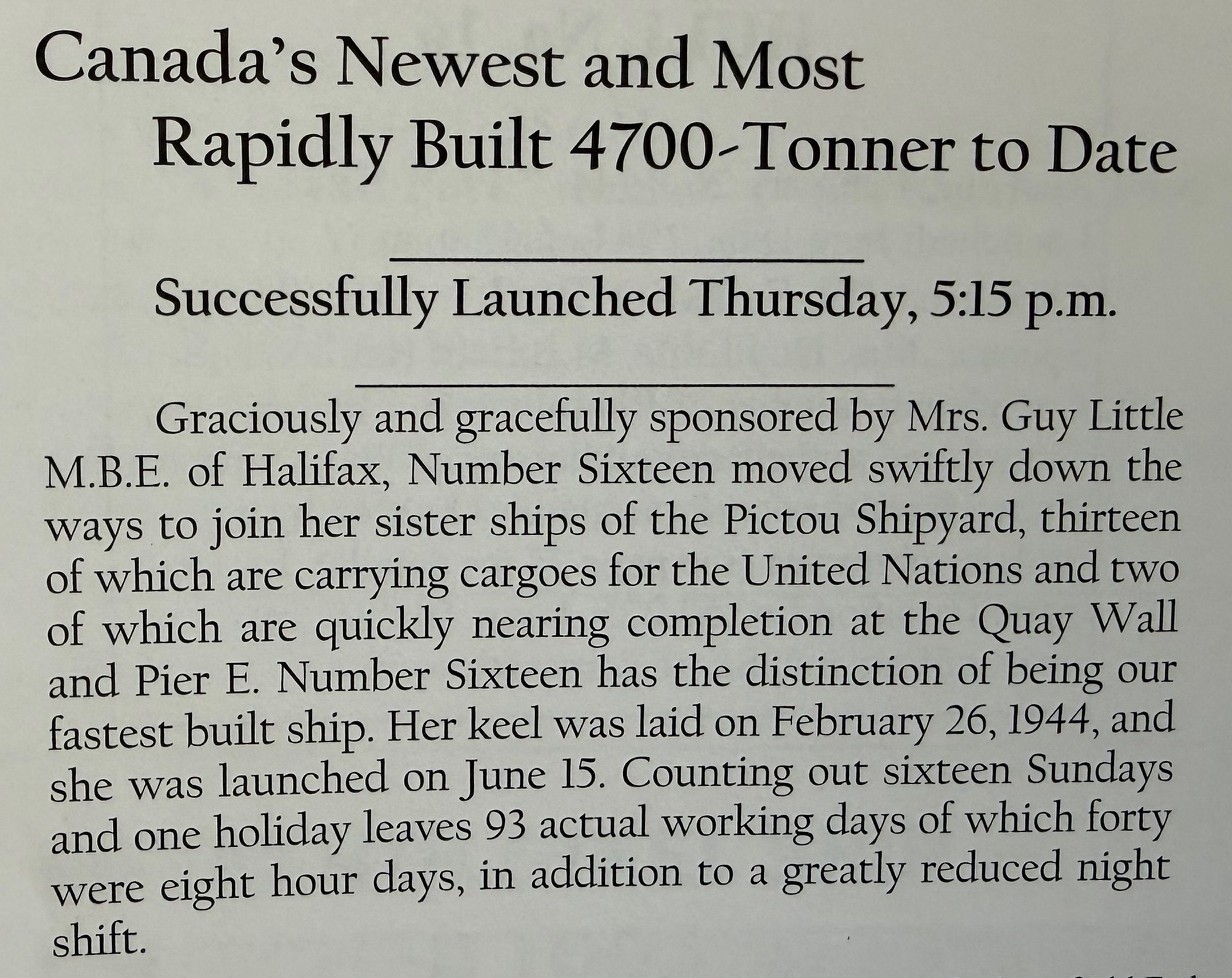
To meet the wartime effort, these ships were built in record time. Articles at the time confirmed the incredible speed and effort that was required. Ships were recorded as being completed in under 4 months from the keel being laid to launching.
Service History
Detailed voyage records for SS Dufferin Bell (ex-Camp Farnham/Dufferin Park) are scarce, typical for "workhorse" Park ships whose logs faded postwar—fueling the "lost to records" allure. Launched amid 1943 urgency, she likely convoyed bulk cargoes like grain, timber, or ore across the North Atlantic, dodging U-boats with DEMS gunners and zigzags en route to UK/Mediterranean ports. Managed by Pickford & Black Ltd. for Park Steamship Co. (Montreal), her wartime service mirrored sisters: essential supply runs sustaining Allied armies, possibly Halifax-to-Liverpool hauls amid vital North Atlantic convoys.
Post-VE Day (1945), sold 1946 to Picbel Ltd. (Halifax), she shifted to coastal peacetime trade—her final leg from Saint John, NB, to Louisbourg, NS, laden unknown, perhaps gypsum or fish meal common to Maritimes freighters. No crew manifests or logs surface publicly; Lloyd's/Wrecksite note only the May 1951 end, suggesting routine runs until fog claimed her at Framboise. This opacity echoes Park fleet's fate—hundreds scrapped, histories buried like her hull.
The Wreck Climax
As dusk settled over Framboise Cove on May 13, 1951, the Dufferin Bell was already in trouble. The 2,874-ton freighter had crept in toward Cape Breton’s southeast coast on a coastal leg from Saint John to Louisbourg, trading the open Atlantic for a deceptively tight approach along a lee shore. In fog or low visibility—routine on that coast in spring—she found rock instead of safe water, driving hard aground on the cove’s outer ledges. Steel on stone would have been audible for miles: a long, grinding shudder as frames twisted and plates opened to the sea.
Once stranded, the ship’s fate shifted from navigation to survival and salvage. With no loss of life reported, the crew’s first battle was simply to get off safely—boats over the side, lines rigged to the shore, and a cold, wet scramble onto the rocks while the hull worked under them. Messages went out for assistance, and within days a tug—likely one of the Foundation fleet working out of Halifax and Louisbourg—arrived to try to pull her free. But a Park ship’s deep, boxy hull wedged onto a rising and falling swell is a stubborn thing; every tide and wave only set her higher on the jagged bottom.
The more the Atlantic pounded her, the more the Dufferin Bell ceased to be a ship and became a wreck. Bulkheads buckled, cargo shifted, and any hope of refloating her slipped away as surveyors and insurers weighed the cost of salvage against her residual value in a market already flooded with surplus wartime tonnage. In the end, she was written off where she lay, a total constructive loss on a remote Cape Breton shore. The Park ship that had survived the Battle of the Atlantic was finally undone not by a torpedo, but by a foggy approach, a hard rock ledge, and a coastline that has claimed vessels for centuries—leaving her story, and even her captain’s name, largely lost to record.
Diving the Wreck
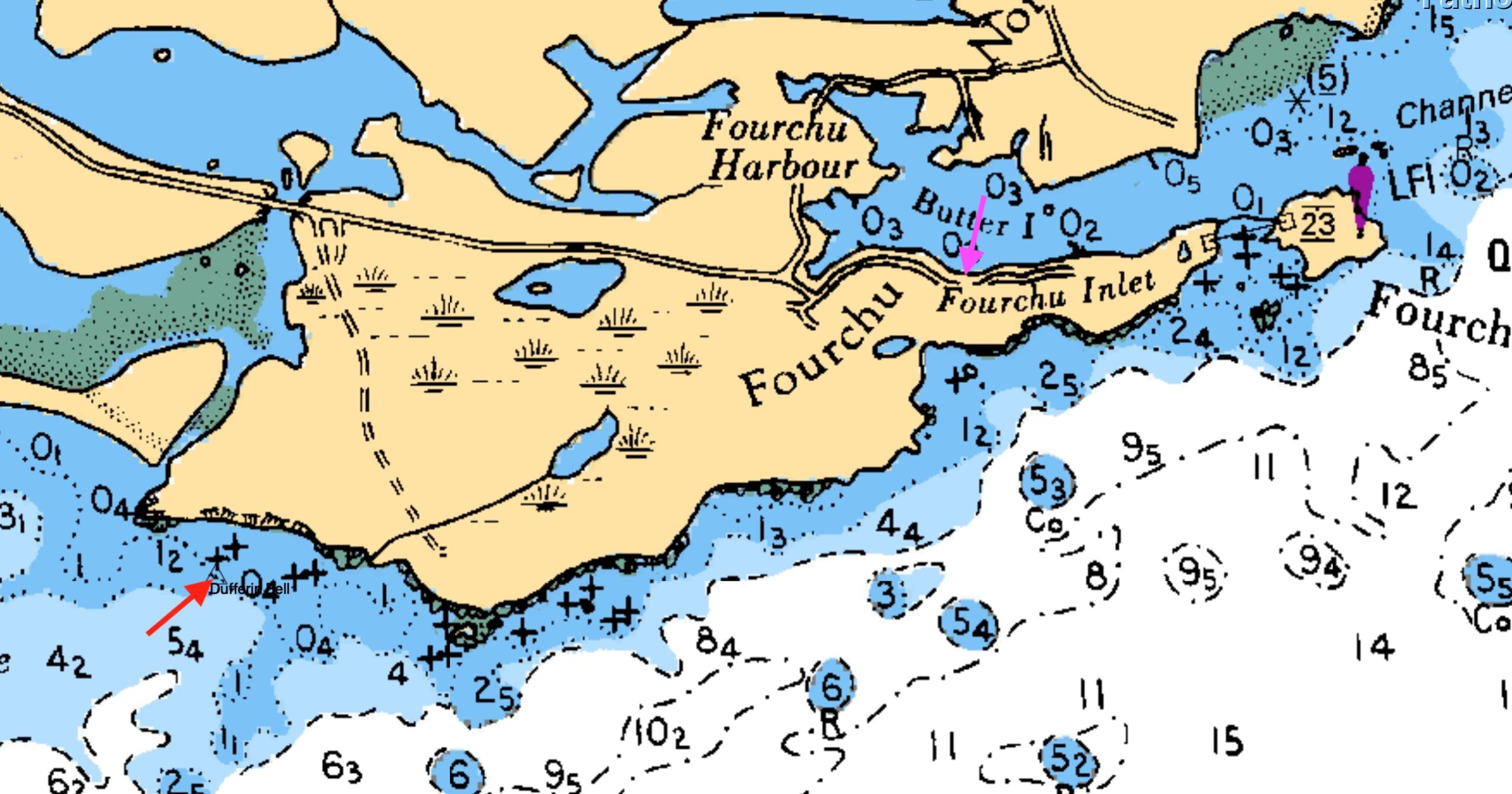
My last dive on the Dufferin Bell wreck came in August 2025, a rare calm day on Framboise Cove's treacherous ledges where the old Park ship lies scattered like shrapnel from an exploded can of pop. Pinpointing the shaftline at 45°42.251' N, 60°17.620' W—flattened against the ocean floor amid a debris field of twisted plates and recognizable fittings—felt like victory after the site's usual "washing machine" chaos. Proximity to shore amplifies every swell, cliffs funneling waves into a violent churn; only slack tide or glass-flat seas make it diveable, rewarding patience with intact boilers, winches, and propeller remnants still identifiable after 74 years underwater.
Launch from the unmarked slip on St. Peters-Forchu Extension Road demands local savvy—no tie-ups, just a rough concrete ramp hugging Forchu Inlet's edge, with gravel shores and minimal amenities. Visibility hovered 10-20 ft that day, schools of fish parting as we finned amid the wreckage, magnetometer pings from prior SeaSpy hunts confirming the spread. It's raw Cape Breton diving: no crowds, big currents if mistimed, but artifacts whisper of wartime grit—perhaps a forgotten valve or gauge from her Davie yard days can still be viewed.
Access Details
The boat slip for accessing Dufferin Bell is precisely at 45°42.953' N, 60°14.977' W, an unmarked gravel pull-off on the St. Peters-Forchu Extension Road (Route 320) along Forchu Inlet's western shore. This rough concrete ramp—visible as weathered slab amid kelp-fringed gravel—offers no dock, cleats, or amenities; beach small rigid-hulls like your Highfield Patrol at mid-to-high tide to dodge mudflats.
From here, motor ~2-3 km southeast to wreck coords (45°42.251' N, 60°17.620' W), eyeing CHS Chart 4417 for the "false passage" reef that vanishes at high water—stay offshore or risk grounding like the Bell herself. Local knowledge rules; no facilities mean pack fuel, gear, and comms for this remote Cape Breton launch. For fellow wreck hunters, mark calm forecasts, rig reef lines, and launch early; this one's a diver's puzzle, pieced from chaos.
Plan Your Forchu Expedition
Getting There:
5-hour drive from Halifax via Highway 102 to Truro, then off the ramp to the right towards Cape Breton Island. Continue Highway 104 through New Glasgow and Antigonish to the Canso Causeway. Cross the Canso Causeway and head southeast via Highway 320 toward St. Peter’s, then local roads (route 320/247) to Forchu/Forchu Harbour. Be cognisant of the narrower roads toward the end of the trip. Amenities including fuel are scare on the local roads.
Alternately, once arriving at Canso Causeway, travel towards Sydney over Kelly’s Mountain and in towards Marion Bridge. Modern GPS have lots of support.
Lodging & Dining:
Forchu has no hotels, inn, restaurants or stores. Alternates include
- Peck’s Cottages in Lousibourg
- Modern hotels in Sydney
Diving:
- Bring your own boat or contact local fishermen at Forchu to arrange charters
- Primary: Dufferin Bell (45°42.251' N, 60°17.620' W )
- Secondary: Yet to be determined, but area has other wrecks yet unfound.
Local Resources:
Forchu has no listed Harbour Authority Contact. The harbour operates through a lease agreement with Small Craft Harbours, a branch of Fisheries and Oceans Canada (DFO).

Legacy
The Dufferin Bell endures as a shattered testament to Cape Breton's unforgiving coast and Canada's wartime shipbuilding legacy—a Park ship born in frenzy, lost to fog and rock, her captain's name and full voyages faded like hull plates under kelp. From Davie's Lauzon ways to Framboise Cove's debris field, she whispers of U-boat dodges, postwar scrambles, and the raw Atlantic that claimed her on that fateful May day in 1951.
Yet in her scattered remnants—boilers, winches, shaftline at 45°42.251' N, 60°17.620' W—lies a diver's goldmine of artifacts to see and identify, but to leave untouched, accessible from Forchu's unmarked slip (45°42.953' N, 60°14.977' W) on calm days when the "washing machine" relents. For wreck hunters, she's prime for rediscovery: a puzzle of recognizable artifacts amid cod runs and currents, fueling NS maritime tourism one dive at a time.
Lost to records? Perhaps—but not to those who fin through her chaos. Mark the tides, dodge false passages, and let her story surface for the next generation of explorers.
Wreck Coordinates:
Dufferin Bell: 45°42.251' N, 60°17.620' | 20-40 ft | Sand/Rock
Boat Ramp: 45°42.953' N, 60°14.977' W
Vessel Specs: Dufferin Bell — 2874 GRT, 440 ft × 57 ft, Steel Hull
Modern survey technology—when paired with rigorous historical research and professional dive operations—continues to reveal and preserve the stories of vessels long thought lost to time and tide. The Forchu region stands ready to welcome the next generation of maritime explorers.
Dive Safety Notice:
Professional dive operations are strongly recommended. Strong tidal currents, and challenging sea conditions require proper training, equipment, and local knowledge. These shared coordinates now guide future explorers, blending SCUBA with Nova Scotia's maritime heritage.
The confirmation of the Dufferin Bell’s location represents a meaningful contribution to Atlantic Canada's maritime archaeology. The wreck's depth and documented historical record make it an exceptional site for future research, documentation, and recreational diving education. Modern survey technology—when paired with rigorous historical research and professional dive operations—continues to reveal and preserve the stories of vessels long thought lost to time and tide.
Ask me about the Highfield and Suzuki offshore expedition platform — engineered for serious divers.
#HighfieldHunter #HighfieldPatrol760 #SuzukiEngines #Suzuki-300hp #HalifaxShipwrecks #NSMaritimeHistory #DufferinBell #NovaScotia #CapeBretonIsland #DufferinBell