St Paul Island
Highfield Patrol 760 — Proven in the North Atlantic
Highfield Hunter
Our latest expedition to St. Paul Island began long before the shoreline came into view.
The 550-kilometre drive from Halifax to Dingwall, Cape Breton, is a trial for any towing setup — steep grades, tight turns, and stiff coastal winds. Towing the Highfield Patrol 760, however, was straightforward and controlled. Its powder-coated aluminum hull kept weight manageable while offering corrosion resistance for the harsh saltwater environment we were heading toward. The balanced trailer profile made the haul feel predictable and stress-free, reinforcing our confidence in the boat before it ever touched the water.
Planning for St. Paul Island began months earlier during our 2025 winter sessions with Highfield — mapping routes, double-checking gear lists, and stress-testing the Patrol 760’s capabilities against Cabot Strait’s infamous moods. The island’s extreme isolation demands meticulous preparation. With no immediate support available if winds shift or gear fails, every detail — from fuel reserves to backup communications — carries mission-critical weight. If something fails, you own it.
That’s why hull design matters.
The Patrol 760 carries a 26-degree deadrise — a true offshore geometry. Not marketing deep-V. Real deep-V. In Cabot Strait’s confused cross-swells, that sharp entry doesn’t slap or pound — it parts water. Spray tracks outward and aft. The ride remains dry. There is no shuddering impact through the deck, no teeth-rattling rebound off the back of the next wave. Just a steady, composed drive forward that inspires trust when distance from shore grows with every mile.
To nail the early departure window, we staged overnight at a nearby cottage, positioning ourselves for a dawn launch from Dingwall’s wharf.

By sunrise, the boats were loaded — dive cylinders, sonar systems, emergency redundancy, and expedition gear carefully stowed. The Patrol 760’s layout proved invaluable. A large bow locker swallowed lines and safety equipment, while the anchor locker with integrated roller on the bow step made deployment controlled and efficient in surge-prone areas. The self-bailing deck, backed by an automatic bilge pump, ensured that boarding seas or spray would never become operational distractions.
Offshore, water finds its way aboard. What matters is how efficiently it leaves.
The military-grade Hypalon tubes — reinforced with additional top-side fabric for boarding protection and gear loading — offer both durability and security. Twin lifelines running the length of the tubes provide added safety for crew movement in offshore conditions. In rough water, those small design choices matter.
The configurable cockpit proved equally important. The jockey seats — two removable with quick-release systems — allow rapid reconfiguration depending on mission profile: seated transit offshore, open deck space for dive prep, or expanded working room for sonar operations.
From Dingwall, the run to St. Paul Island covers roughly 22 nautical miles across Cabot Strait. Previous expeditions taught us that Dingwall’s sheltered position within Aspy Bay offers a safer return leg when weather turns.
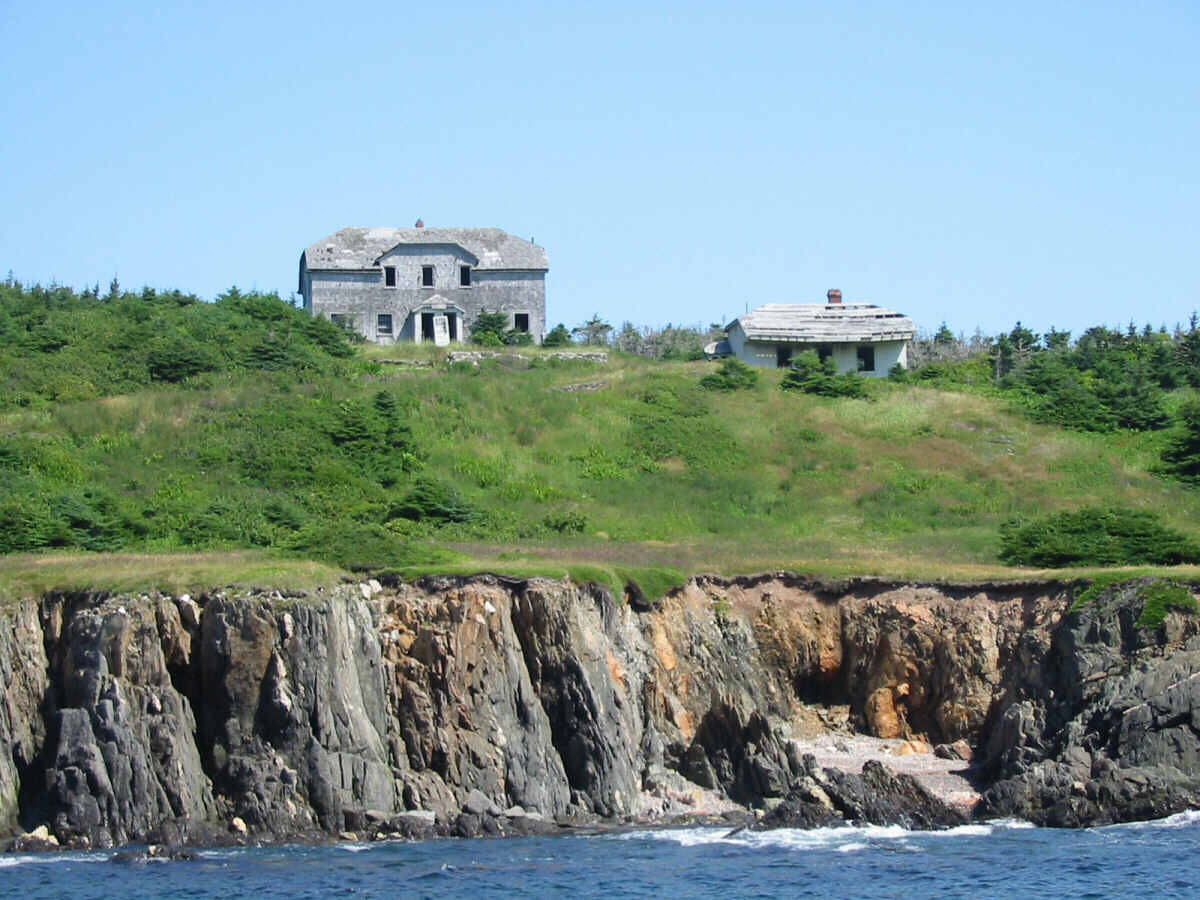
Our narrow weather window looked promising. We pushed off at first light.
The Patrol 760 rose effortlessly onto plane — quick, responsive, balanced. Offshore, seas built to 2‑ to 3‑foot swells, yet the 26-degree deep-V hull sliced through cross-swells while the Hypalon tubes stabilized lateral movement. Spray tracked outward and aft; the ride remained notably dry.
The Suzuki DF300B Dual Prop delivered immediate torque — not an aggressive surge, but steady authority. Fully loaded, there was no hesitation.
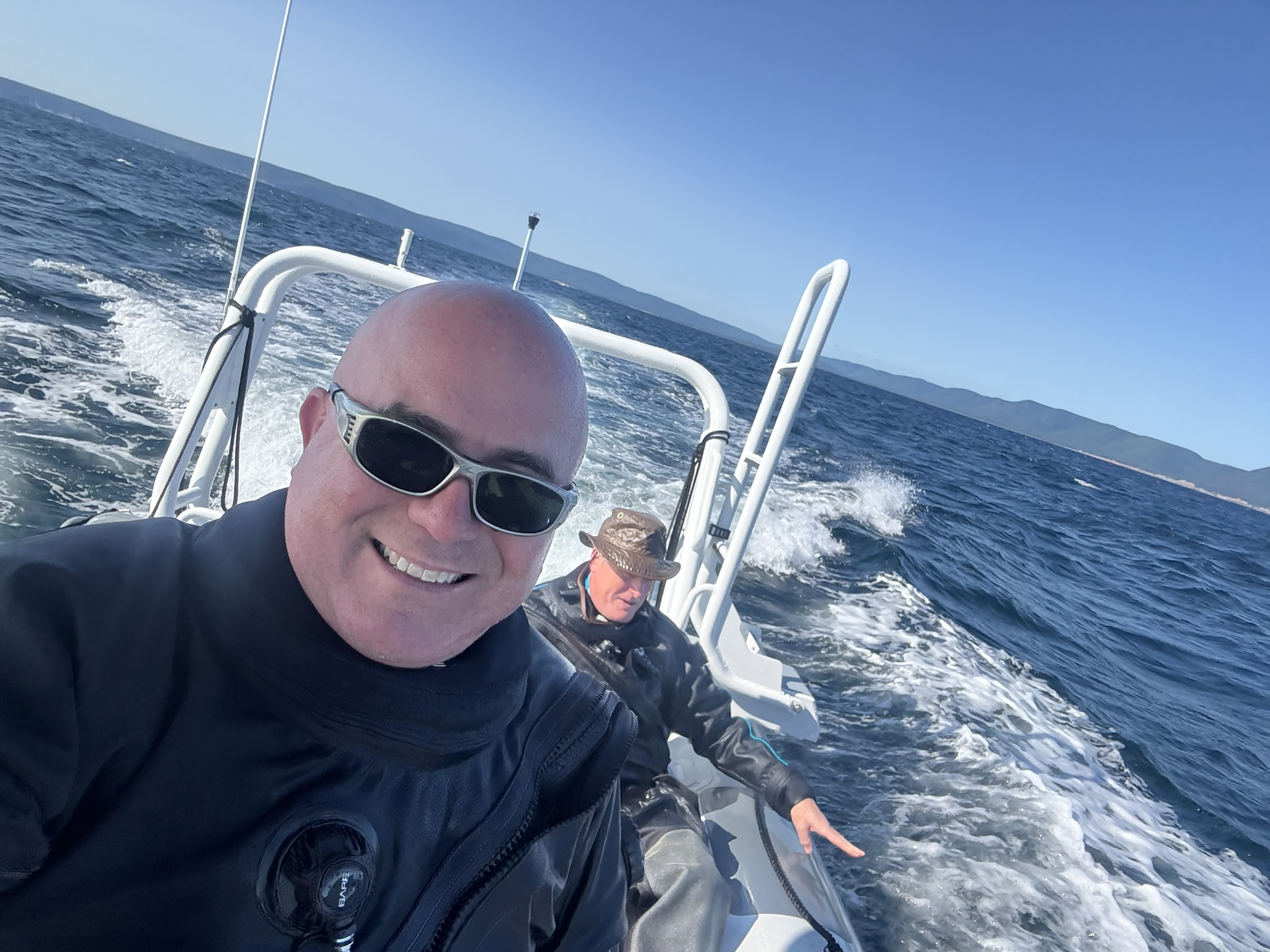

Pushing off from Dingwall Harbour under that crimson dawn, excitement lit our faces — grins wide beneath sunglasses and hats as the Highfield Patrol 760 sliced into Cabot Strait. Minutes in, St. Paul Island’s silhouette sharpened on the horizon, pulling us forward with the promise of wrecks waiting to be uncovered.
In Cabot Strait’s confused cross-swells, the dual contra-rotating props never lost their bite. Where lesser setups can momentarily ventilate in quartering seas, the DF300B held its line. The Lean Burn system quietly optimized fuel use as we ran offshore — extending range and giving us margin. Out here, range equals options.
Suzuki Precision Control translated small throttle inputs into smooth response. Wireless shift and throttle feel seamless at the helm, and the full digital interface fed engine data into the NMEA network without clutter. Automatic trim control adjusted continuously, maintaining optimal running attitude without constant correction.
And the noise — or rather, the lack of it — stood out. Suzuki’s noise reduction engineering kept the ride composed enough for normal conversation, even as swells stacked unpredictably.
Overhead, the large T-top broke the early glare and later shed a passing squall that swept across the Strait without warning.
Past crossings in smaller craft stretched close to three hours; this one clocked in at just forty minutes — a remarkable gain in both efficiency and safety. Standing at the console as St. Paul’s cliffs rose ahead, I was reminded why we trust this vessel.
Fully loaded with dive cylinders, sonar systems, safety redundancy, and fuel reserves, the Patrol 760 rose onto plane without strain. The engine’s low- and mid-range torque eliminated lag during acceleration and provided steady thrust through quartering seas.
Low-speed precision proved equally valuable. Approaching rocky shorelines and holding position while divers prepared to enter required measured, predictable throttle response. The dual-prop configuration translated small inputs into stable control — critical in confined and surge-prone areas around St. Paul Island.
Covering the 22-nautical-mile crossing efficiently while maintaining fuel security expanded our operational window and reduced offshore exposure — a decisive advantage in a region where weather shifts quickly and support is distant.
Throughout the operation, engine temperatures remained stable, throttle response stayed crisp, and no performance anomalies were observed — reinforcing confidence in extended offshore deployment.
In expedition diving and maritime research, peak horsepower alone is irrelevant. Control under load, torque where it matters, and predictable handling in variable seas define true offshore capability. The Suzuki DF300B proved itself not as an accessory, but as a core component of the expedition platform.
The EPA-certified fuel tank design prevented overfilling and minimized environmental risk — a small but important detail when operating around historically and ecologically sensitive waters.
Powder-coated aluminum resisted the inevitable salt exposure. Hypalon tubes absorbed impact and stabilized lateral motion. The self-bailing deck cleared spray. The automatic bilge remained quiet but ready.
None of it felt flashy. It felt dependable.
And in Cabot Strait, dependability is everything.
Overhead, the large T-top provided welcome shelter — breaking the sun during mid-day exposure and shedding intermittent rain squalls that sweep across the Cabot Strait without warning. It is a practical offshore necessity, not a luxury.
As St. Paul’s cliffs rose ahead, the value of Highfield’s design philosophy was undeniable. Powder-coated aluminum for corrosion protection. Military-grade Hypalon tubes. Configurable seating. Secure deck layout. Deep-V offshore geometry.
This is not recreational design — it is purpose-built expedition architecture.
As we secured near the island, cliffs rising sharply above, the value of integrated design became clear. Hull, tubes, seating, deck systems, engine — not isolated components, but a unified offshore platform.
In water where weather builds quickly and mistakes compound fast, confidence comes from systems — not single components. Hull, structure, safety systems, and powerplant working together.
For professionals operating where conditions rarely forgive error, Highfield and Suzuki are not simply equipment choices — they are mission partners.
Ask me about the Highfield and Suzuki offshore expedition platform — engineered for serious divers.
#HighfieldHunter #HighfieldPatrol760 #SuzukiEngines #Suzuki-300hp #NSMaritimeHistory #NovaScotia #StPaulIsland