Havana
The Sudden Harbour Loss of the S.S. Havana (1891–1906)
Highfield Hunter
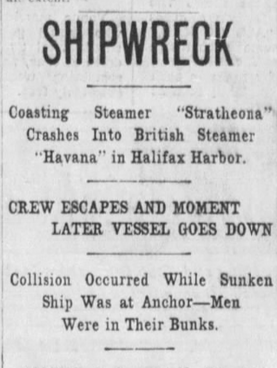
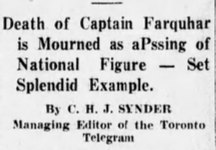
In April 1906, the steam schooner Havana did not vanish in a North Atlantic gale. She did not strike ice, nor founder on a remote reef. Instead, she sank in Halifax Harbour — within sight of the city’s wharves, warehouses, and growing industrial waterfront. Struck while at anchor by the outbound steamer Stratheona near Point Pleasant, Havana slipped beneath the surface in roughly ten minutes. No lives were lost. Yet the vessel belonged to Captain James Augustus Farquhar — one of Nova Scotia’s most accomplished maritime figures — and that fact transforms a minor harbour casualty into a story of transition, irony, and enduring legacy.
The Collision — Halifax Harbour, April 1906
Contemporary reports describe Havana lying at anchor when the coasting steamer Strathcona, bound outward from Halifax, collided with her. Captain Farquhar and most of the crew were asleep below decks; only the watch remained on duty. The impact was decisive.
Crew members rushed topside and were taken aboard the Stratheona. Within minutes, Havana was beyond recovery. There was no prolonged distress, no drawn‑out salvage attempt — just a swift, efficient sinking in one of Canada’s busiest working harbours.
Primary Source Extract:
“With the exception of the watch on deck… Within ten minutes the Havana disappeared.”
The brevity of the event is striking. Many Atlantic shipwrecks unfolded in dramatic weather, but Havana was undone not by storm, but by proximity — a reminder that danger persists even in sheltered waters.
Sable Island — A Childhood in Wreck Culture
To understand Havana’s deeper meaning, one must begin on Sable Island. Captain James Augustus Farquhar’s formative years were spent in an environment defined by shipwreck. Sable Island’s shifting sandbars had claimed hundreds of vessels, and salvage operations were a routine part of island life.
Growing up amid grounded hulls and recovery efforts, Farquhar learned early about navigation, risk, and the mechanics of maritime survival. Wreck was not merely tragedy — it was discipline, technical challenge, and opportunity.
This upbringing shaped a mariner comfortable with calculated risk. It explains his later mastery of deep‑sea diving and salvage, and it frames the quiet irony of Havana’s fate: a man raised among wrecks would eventually lose a vessel of his own — not offshore, but in the harbour he knew best.
Havana — A Transitional Working Vessel
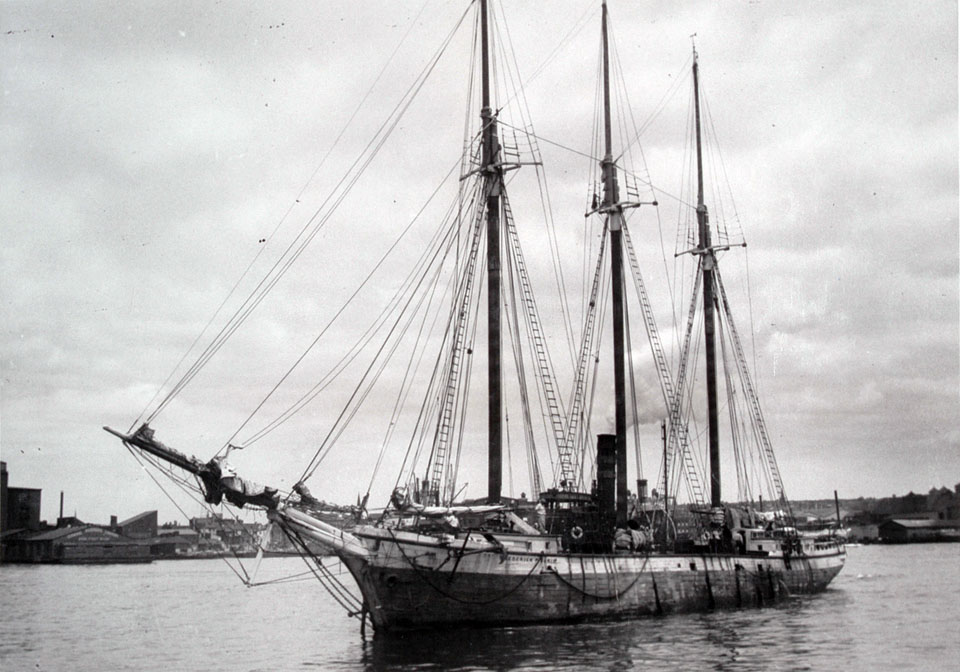
Built in 1891 at Hantsport, Nova Scotia, Havana was a three‑masted steam schooner representative of the transitional era between sail and steam. Traditional rigging remained economically useful, while mechanical propulsion provided reliability and maneuverability in harbour and coastal trade.
Such vessels were practical rather than glamorous. Havana was not a passenger liner nor a naval vessel, but a working ship engaged in sealing and coastal commerce — the backbone of Atlantic Canada’s maritime economy.
Her loss therefore interrupted not only a voyage, but a system of trade and seasonal enterprise closely tied to the ambitions of her owner.
The Builder – Hantsport and the Churchill Yard
The Havana was built in 1891 at Hantsport, Nova Scotia, by shipbuilder George W. Churchill, a name rooted deeply in one of the province’s most productive shipbuilding families.
To understand the vessel, you have to understand where she came from.
Hantsport, sitting along the tidal estuary of the Avon River at the edge of the Minas Basin, was not simply a village—it was a shipbuilding engine. The extreme Fundy tides, nearby timber resources, and direct access to Atlantic trade routes made it an ideal place to build and launch wooden vessels.
At the center of this industry was the Churchill shipyard, founded by George’s father, Ezra Churchill, one of the most influential shipbuilders in 19th-century Nova Scotia. From the 1840s onward, the Churchill operation helped transform Hantsport into a major maritime construction hub, producing dozens upon dozens of large wooden vessels for Atlantic trade.
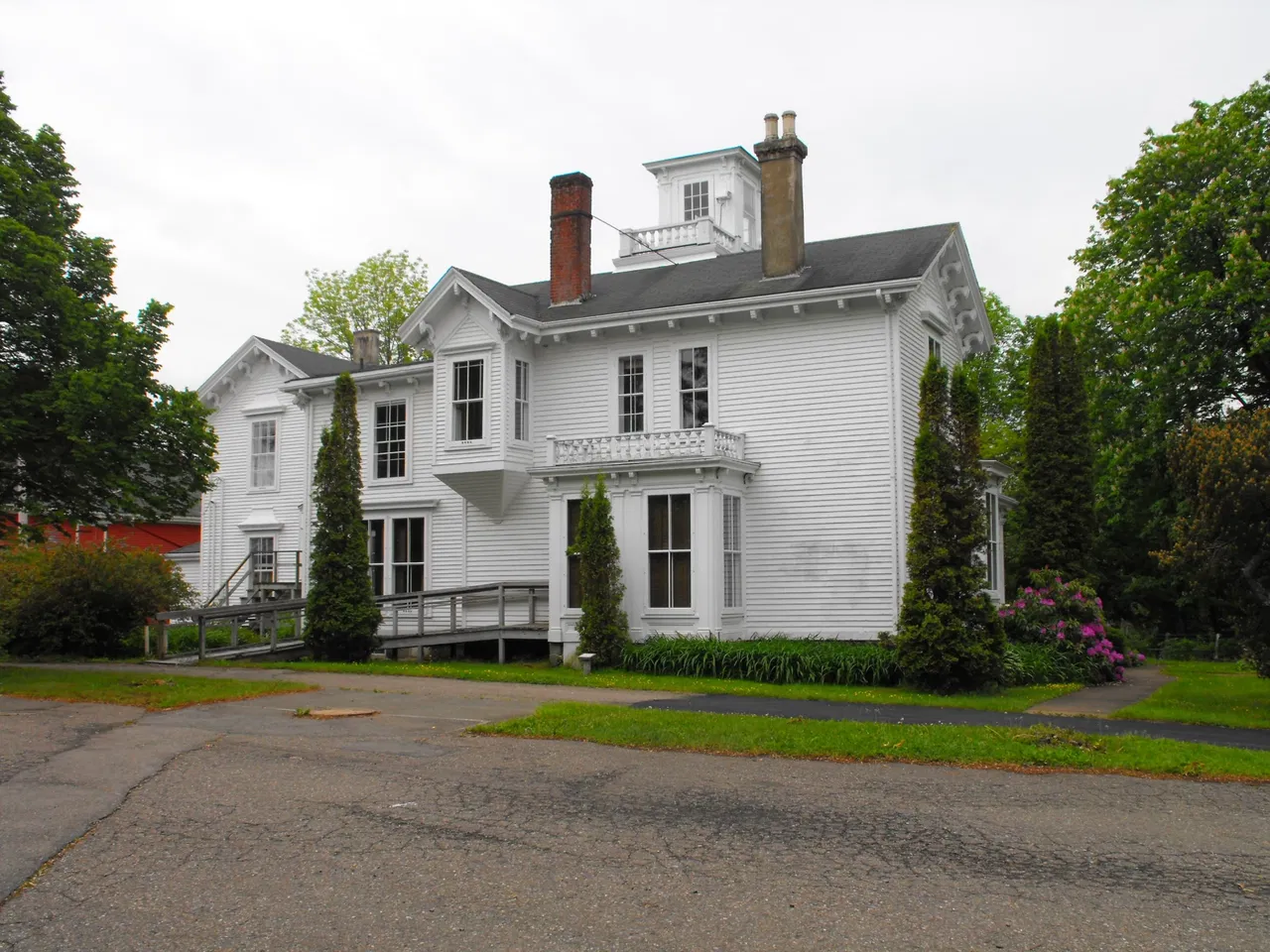
By the mid-19th century, the yard had launched everything from brigs and schooners to massive ocean-going barques—some among the largest ever built in Canada. The scale of production was such that the Churchill fleet became both a shipbuilding enterprise and a shipping network, moving timber, gypsum, and cargo throughout the North Atlantic world.
When Ezra stepped back, George Washington Churchill (1835–1906) took over management of the yard and continued operations into the final decades of the wooden ship era.
It was during this later period—when steam power was beginning to merge with traditional sail—that the Havana was constructed.
A Vessel of Transition
The Havana reflects that exact moment in maritime history.
Built as a three-masted steam schooner, she combined sail with auxiliary steam propulsion—a practical evolution rather than a radical one. This was not a luxury vessel or a deep-ocean liner. She was a working ship, designed for the demands of sealing, salvage, and coastal trade—industries that defined Atlantic Canada at the time.
By 1891, yards like Churchill’s were adapting. Iron and steel ships were beginning to dominate global trade, but in places like Nova Scotia, wooden vessels still filled critical regional roles. The Havana represents one of the last generations of locally built wooden working ships, bridging the gap between two eras.
The End of an Era
There is a quiet significance in this.
The same forces that allowed the Churchill yard to thrive—timber, tides, and skilled labour—were becoming less relevant in a world shifting toward industrial shipbuilding. Within a few decades of Havana’s construction, the great age of wooden shipbuilding in places like Hantsport would collapse under the pressure of steel hulls and centralized industrial yards.
George W. Churchill himself died in 1906—the same year Havana was lost in Halifax Harbour.
It is a coincidence, but a fitting one.
Both the man and the vessel belonged to the closing chapter of a distinctly Nova Scotian industry—one that built ships not in massive factories, but along tidal rivers, where hulls rested in the mud at low tide and floated free on the rise.
Yard Inset – Building with the Tides
Shipbuilding at Hantsport did not take place in dry docks or controlled basins. It happened in the open—on the banks of the Avon River—where the tides of the Minas Basin governed everything.
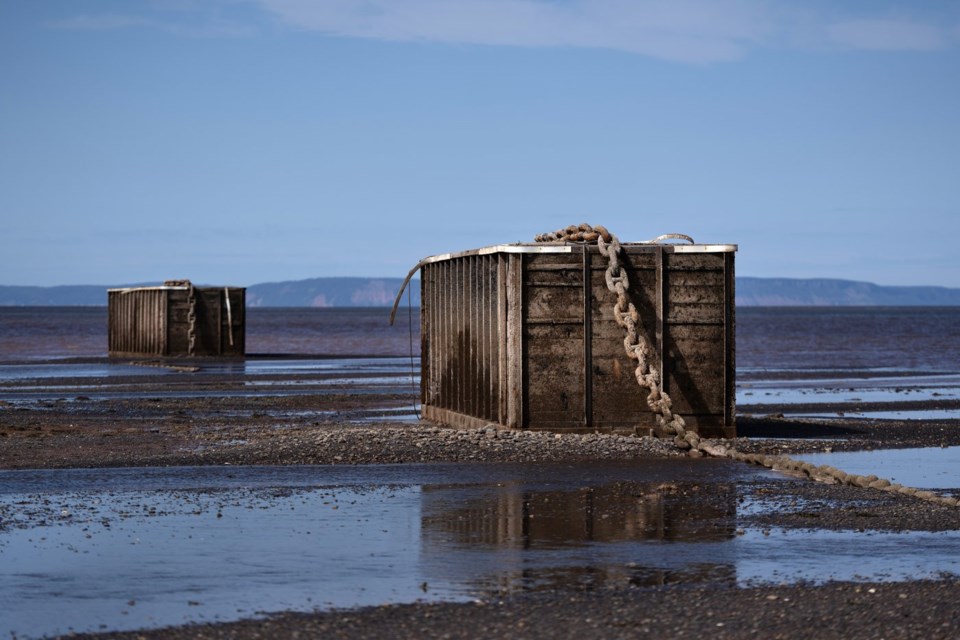
Here, the rise and fall of the water could exceed 40 feet. At low tide, the river withdrew completely, leaving vessels sitting upright in thick mud, their hulls exposed for work. Shipwrights moved freely beneath them, shaping frames, fastening planks, and driving treenails into green timber. The yard was quiet then—tools against wood, the slow rhythm of construction grounded in the exposed riverbed.
At high tide, everything changed.
Water returned with force, lifting the hulls free. What had been a construction site became, briefly, a working harbour. Materials could be brought alongside, hulls could be shifted, and—when the time came—a finished vessel could be launched directly into the current, carried out toward the Minas Basin and the open Atlantic beyond.
There were no rigid schedules. The tide was the clock.
For builders like George W. Churchill, this was not a limitation—it was an advantage. The tidal system eliminated the need for expensive infrastructure and allowed large wooden ships to be built efficiently using the natural environment itself. It also demanded precision. A missed tide could delay work for hours. A poorly timed launch could be disastrous.
The Havana was built in this setting—its hull rising from the mud in stages, shaped between tides, and finally released into the river on a flood that would carry it out into the Bay of Fundy.
It is a method of construction that feels distant now, but it was once the backbone of Nova Scotia’s shipbuilding tradition—practical, tide-driven, and deeply tied to place.
Lucky Farquhar — From Seaman to Steamship Magnate
James Augustus Farquhar’s life bridged the Age of Sail and the Age of Steam. He went to sea before the mast, rounded Cape Horn in clipper ships, commanded vessels of his own, and later embraced steam propulsion during an era of rapid technological change.
By the time of his death in 1930, newspapers declared that “Farquhar’s luck” had become a Maritime proverb — a phrase standing for bold enterprise and brilliant outcomes.
He was described as master mariner, salvor, deep‑sea diver, and founder of significant Halifax steamship firms. His career exemplified calculated risk supported by discipline and relentless work.
Farquhar’s Own Voice — Farquhar’s Luck
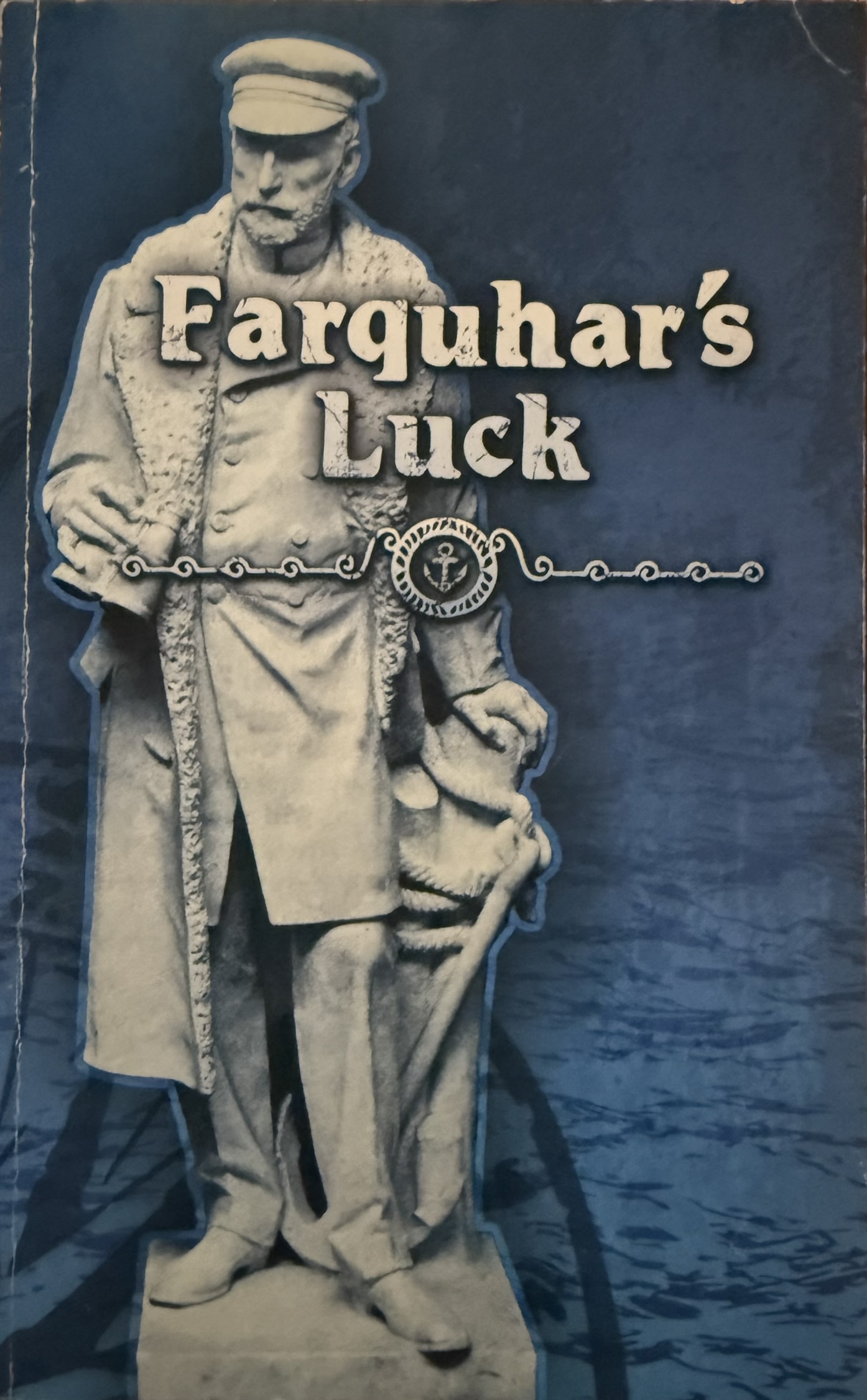
Unlike many mariners of his era, Farquhar left a written record of his life – a chronicle that would later be published as Farquhar’s Luck.
In 1980, fifty years after his death, Captain James Augustus Farquhar’s memoir was published under the title *Farquhar’s Luck*. Drawn from the lively chronicle he kept throughout his life, the book documents a career that stretched from Sable Island wreck culture to steamship enterprise in Halifax.
The title reflects the phrase that became synonymous with his reputation — “Farquhar’s luck.” Yet those who knew him understood that luck alone did not define his success. His writing reveals discipline, calculated risk, and relentless work beneath the mythology.
Through his own words, Farquhar describes his early exposure to wreck and salvage, voyages before the mast, command in the age of sail, adoption of steam power, deep-sea diving operations, and commercial expansion within Atlantic trade networks.
The Havana, lost in 1906, becomes part of a much broader arc — one episode within a life shaped by maritime adaptation and enterprise.
Unlike many vessel owners of his era, Farquhar left a written record. Havana is therefore not simply a submerged structure, but a vessel connected to a documented maritime philosophy.
Today, divers tracing her timbers beneath Halifax Harbour move through a site once commanded by a man who understood both risk and recovery — and who preserved his own account of it for future generations.
The Irony of Salvage
Few aspects of the Havana story are more compelling than its irony. Captain Farquhar learned deep sea diving to enhance his salvage operations, accomplishing numerous rescues throughout Atlantic waters.
Yet Havana afforded no opportunity for recovery. The harbour depth, rapid flooding, and structural compromise rendered salvage impractical. The man who built a reputation recovering wrecks could not recover his own vessel.
This paradox elevates Havana from minor harbour casualty to symbol of maritime limitation — a reminder that even experience and preparation have boundaries.
Harbour Context — Halifax in 1906
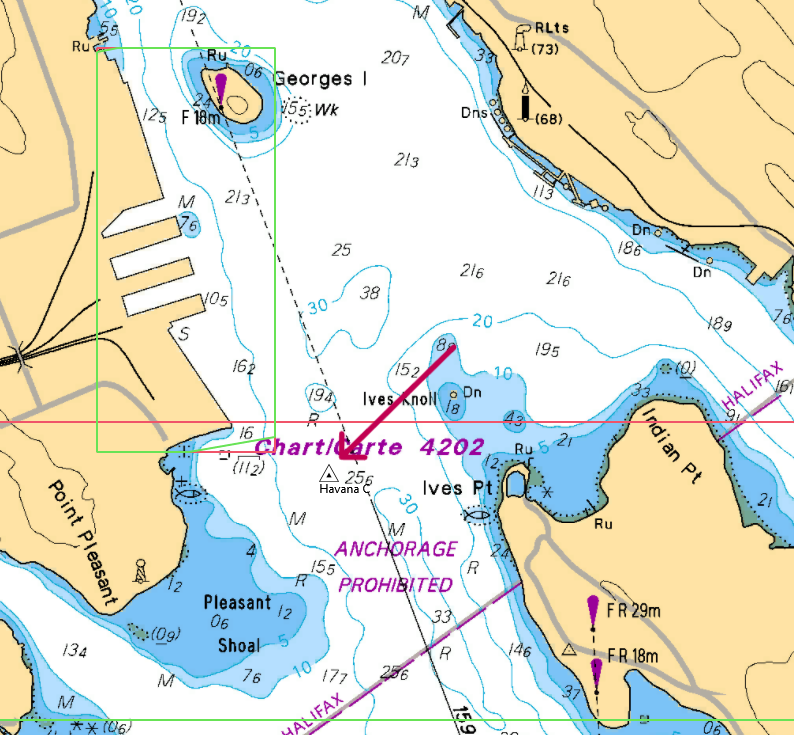
By 1906, Halifax Harbour was already a strategically important port. Steam traffic was increasing, anchorages near Point Pleasant were common, and navigation required coordination in confined waters.
Collisions in harbour reveal the risks inherent in industrial expansion. Rather than being lost to storm, Havana was lost to density — a product of proximity within a modernizing maritime environment.
Technical Dive Site Survey — Present Condition
Location: Halifax Harbour near Point Pleasant
Depth: Approximately 80–90 feet
Seabed: Sand and silt overlay with ballast concentrations
Water Temperature: Winter bottom temperatures near 2°C
Visibility: Typically 5–15 feet depending on tidal and vessel activity
Remaining structural elements include timber hull framing, ballast stone mounds, coal remnants, partially buried boiler structure, and isolated fittings. The debris field aligns roughly along the original hull axis.
Active commercial traffic, variable currents, and cold‑water exposure require advanced dive planning, harbour coordination, and surface support monitoring.
Cultural Memory and Enduring Recognition
The Farquhar name endured long after Havana’s loss. Family prominence continued in Halifax society, and decades later, American press still referenced Captain Farquhar and his statue in Nova Scotia.
Through obituary accounts, family notices, and cultural references, the story extended well beyond the harbour floor.

Interpretive Significance
Havana is not remembered for catastrophe or mass casualty. Her importance lies in narrative depth. She represents a transitional vessel owned by a transitional mariner. She illustrates the limits of calculated risk and the quiet hazards of industrial harbour life.
Most harbour wrecks fade into obscurity. Havana endures because her owner’s life story magnifies her significance. Beneath Halifax Harbour, she remains a quiet but meaningful chapter in Atlantic Canada’s maritime heritage.
Modern Exploration — The Highfield Hunter Reaches the Havana (January 10, 2026)
The plan began the evening before. January 9th carried a forecast of scattered showers and west winds pushing 44 km/h, gusting to 66. Halifax in January offers little comfort and less certainty. But winter windows are rare, and hesitation is often the only true barrier. We committed.
Dawn broke cold and metallic. Frost clung to the gunwales as we uncovered the boats and loaded steel tanks into the 25-foot Highfield. A smaller 16-foot aluminum boat trailed behind — practical, stubborn, and loud against the chop. The wind cut across the harbour, but the Halifax Peninsula shielded us from the worst of the west. Engines growled to life. We pushed off.
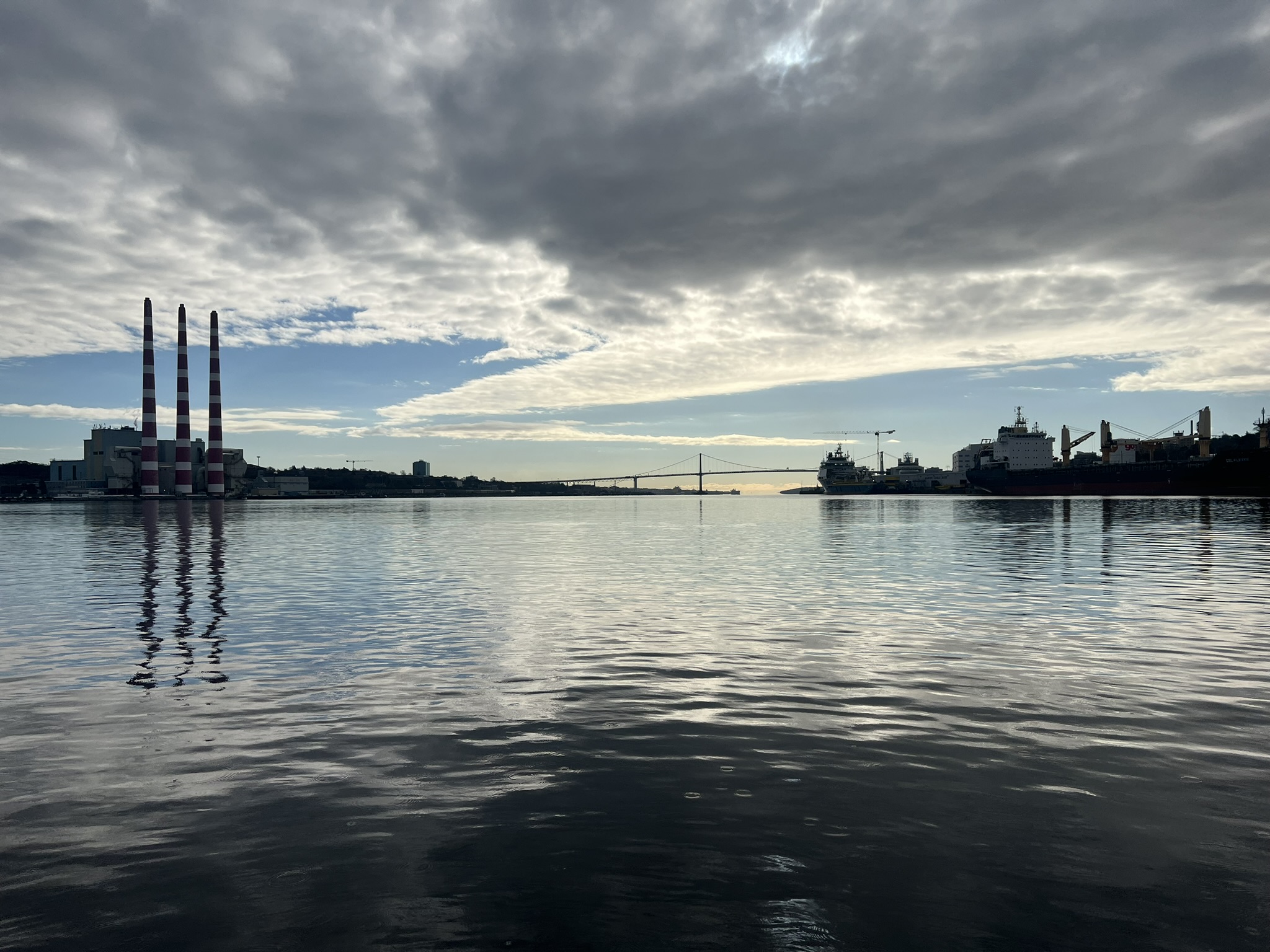
The harbour in winter feels different. The air carries a sharper edge. Sound travels farther. Container cranes loomed against a pale sky while freighters moved deliberately through the channel. We checked in with Halifax Traffic, confirmed diving operations, and took position over the coordinates.
One vessel anchored. The second idled nearby as a tethered chase boat, lines ready and radios monitored. Three of us stepped to the stern. Regulators hissed. Masks sealed. The Atlantic swallowed us in a rush of grey.
The first sensation was temperature. Even through drysuit layers, the cold pressed in — bottom water hovering near 2°C. The descent line shimmered downward into dimness. I expected the usual harbour murk — heavy silt, visibility measured in arm’s length. Instead, as my light cut forward, the water opened to 10, even 15 feet. Shapes began to form.
Timbers emerged from the sand like ribs. Hull sections rose at angles, softened by a century of salt and current. Rock piles — ballast — lay scattered in uneven mounds. Patches of coal stained the seabed black. And there, unmistakable, the boiler rested half-buried — iron rounded and silent beneath silt.
I checked the anchor and began a slow circuit westward, finning carefully to avoid disturbing the bottom. The wreck revealed itself in fragments: a deadeye resting against timber; a curve of brass catching my beam; an intact porthole rim still circular after 120 winters. Clusters of short, stubby shells marked her sealing past — small reminders of the industry she once served.
Above us, unseen, ships continued their passage through Halifax Harbour. Down here, only the rhythm of breath and the muted thud of distant propellers broke the stillness. The wreck felt preserved in suspension — not dramatic, not chaotic, but settled.
After roughly forty minutes, fingers stiffening and computers edging toward ascent profiles, we began our return. The line led upward into brighter grey. Cold air met us at the surface. Engines idled close. Lines were handed up. The city skyline reappeared, unaware.
More than a century earlier, Captain Farquhar mastered hard-hat diving in pursuit of salvage and recovery. On this winter morning, modern divers traced the remains of his vessel in the same harbour. The circle — from Sable Island wreck culture to steamship enterprise to quiet harbour loss — closed again beneath Atlantic water.
Access and Site Permissions
The wreck of the S.S. Havana lies within Halifax Harbour near Point Pleasant at coordinates 44°37.443′ N, 63°33.211′ W. As the site rests within an active commercial shipping corridor in Canada’s primary Atlantic port, diving operations require prior coordination and authorization. Divers must obtain clearance from Halifax Harbour Authority / Port of Halifax, notify Halifax Traffic (Vessel Traffic Services) before entering the water, and comply with all Transport Canada marine safety regulations. Due to continuous vessel movement, restricted navigation zones, and strong tidal influence within the Narrows and main channel, the site is not suitable for unsupervised or recreational access. Proper surface support, radio monitoring, and formal operational approval are mandatory.
Ask me about the Highfield and Suzuki offshore expedition platform — engineered for serious divers.
#HighfieldHunter #HighfieldPatrol760 #SuzukiEngines #Suzuki-300hp #HalifaxShipwrecks #NSMaritimeHistory #NovaScotia #Halifax #Havana