Norwegian
The Fogbound Loss of the RMS Norwegian (1863)
An Allan Line Disaster off St. Paul’s Island
Highfield Hunter
The Morning the Fog Closed In
The Gulf of St. Lawrence lay silent beneath a shroud of white. In the early hours of Sunday, June 14, 1863, the iron mail steamer Norwegian pressed westward toward Montreal, her engines beating steadily against the calm sea. Passengers stirred below decks, unaware that visibility on the bridge had collapsed to a matter of yards. The world beyond the rail had vanished.
Shortly before seven o’clock, the lookout’s voice pierced the fog: “Breakers ahead!” The order came instantly—engines full astern—but the momentum of 3,000 tons of iron and steam could not be arrested in time. With a grinding concussion that shuddered through hull and machinery, Norwegian struck the rockbound flank of St. Paul’s Island. The impact threw her engines out of gear; iron shrieked against stone. Within moments, the proud Allan Line steamer lay hard aground, her voyage ended in the grey silence of the North Atlantic fog.
From Dumbarton Yard to Royal Mail Service
Constructed in 1861 by William Denny & Brothers at Dumbarton, Scotland, Norwegian represented the modern iron screw mail steamer of her age. Barque-rigged and powered by twin 450-horsepower engines, she combined sail and steam in a transitional era of maritime engineering. Her registered tonnage stood at 1,888 tons, with gross tonnage reported at 3,449 tons. Measuring approximately 300 feet in length with a beam of nearly 38 feet, she was a formidable presence on the Atlantic routes.
Owned by the Montreal Ocean Steamship Company—the Allan Line—Norwegian formed part of a fleet that carried Royal Mail, emigrants, and commercial cargo between Liverpool, Londonderry, Quebec, and Montreal. In an era before wireless positioning or radar, her masters relied on compass, chronometer, lead line, and experience to navigate some of the most fog-prone waters in the world.

A Nova Scotia Sister: The Nova Scotian Comparison
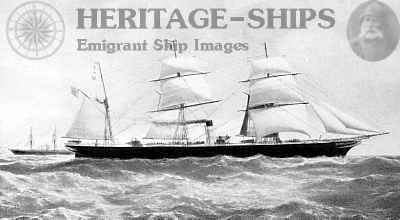
Living in Nova Scotia and writing about its maritime past, it is fitting to compare Norwegian with her near-sister steamer Nova Scotian. Both vessels were built in the early 1860s by William Denny & Brothers for the Montreal Ocean Steamship Company and were designed for the demanding Liverpool–Quebec–Montreal mail service. Iron-hulled, screw-driven, and barque-rigged, they represented the modern Atlantic mail steamers of their era—large, powerful, and built to maintain schedule through fog, ice, and current.
Visually, Norwegian and Nova Scotian would have appeared nearly identical at sea: a single funnel, two masts, long iron hull, and a profile emblematic of Allan Line’s expanding presence in Canadian waters. Using Nova Scotian as a comparison vessel provides an authentic regional anchor—particularly meaningful given Norwegian’s loss off St. Paul’s Island—and helps readers visualize the scale and character of the ship as she would have appeared on her final voyage in 1863.
Service Across the Atlantic
Between 1861 and 1863, Norwegian maintained a steady transatlantic schedule. Newspaper shipping columns tracked her departures and arrivals with mechanical regularity—Liverpool to Quebec, Quebec to Liverpool—carrying emigrants seeking new futures and goods sustaining colonial commerce. She transported species, manufactured goods, seeds, textiles, and passengers in both cabin and steerage classes.
The Allan Line prided itself on speed and reliability. But speed in the age of fog carried risk. The Gulf of St. Lawrence, particularly near St. Paul’s Island, had already claimed numerous vessels. Navigators called it the ‘Graveyard of the Gulf’—a title earned through sudden weather, hidden reefs, and treacherous currents.
When “Norwegian” Isn’t Norwegian
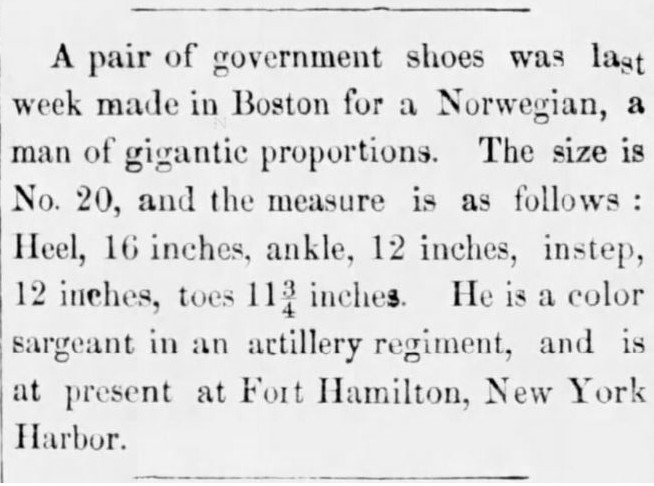
Researching nineteenth-century newspapers is rarely a straight course. A single keyword can open doors to ship manifests, inquiry transcripts—or something entirely unexpected. During the archival sweep for references to the Norwegian, one article was flagged simply because the word appeared in its headline. It had nothing to do with the Allan Line steamer, St. Paul’s Island, or maritime disaster. Instead, it described a pair of government-issued shoes made in Boston for a Norwegian soldier of extraordinary size—boots measuring nearly sixteen inches at the heel.
Moments like this are part of the rhythm of historical research. Among reports of wrecks, fog, and inquiry proceedings, small human curiosities surface—reminders that the nineteenth-century press was as much about spectacle and novelty as it was about tragedy. Though unrelated to the loss of the RMS Norwegian, the clipping is a fascinating artifact of its time, and worth preserving here as a glimpse into the broader world that shared her name.
The Final Voyage – June 1863
Departing Liverpool on June 4, 1863, and clearing Londonderry the following day, Norwegian set course for Montreal under Captain Andrew McMaster. On board were 59 cabin passengers, 269 steerage emigrants, a crew of 88, and approximately 571 tons of cargo. The crossing was largely uneventful, though seasonal fog thickened as the vessel entered Gulf waters.
As Norwegian approached St. Paul’s Island in dense fog, lookouts strained against near-zero visibility. Despite the engines being reversed upon sighting breakers, the steamer’s forward motion proved unstoppable. The collision was decisive: she struck heavily, listed to starboard, and water surged into one of her holds. The machinery, jolted violently, fell out of gear. The ship’s fate was sealed.
Orderly Escape from Disaster
Yet what might have become a catastrophe instead became a testament to discipline. Boats were lowered in controlled sequence. Passengers were landed ashore at the Human Establishment on St. Paul’s Island—an emergency refuge stocked with provisions by the Canadian Government. Women, children, and emigrants alike found temporary shelter from the elements.
Relief arrived in due course, and survivors were transported onward to Quebec. The Royal Mail was recovered, as were portions of the cargo. In stark contrast to other disasters of the era, not a single life was lost.
The Board of Trade Inquiry
A formal inquiry convened in Liverpool to determine the cause of the loss. Testimony examined navigational decisions, the vessel’s speed in dense fog, compass reliability, and the standard practices of North Atlantic mail steamers. While acknowledging Captain McMaster’s long and distinguished career, the Court ultimately concluded that proceeding at excessive speed in fog constituted default. His certificate was suspended for twelve months.
The ruling reflected the maritime law of the period: even in calm seas and without loss of life, command responsibility in restricted visibility was absolute.
Breaking on the Rocks
Salvage crews removed sails, rigging, and valuable cargo. Contemporary reports valued recovered goods in tens of thousands of dollars. Norwegian lay hard aground, her port side exposed to the swell. Gradually, under relentless Atlantic surge, she broke apart—iron ribs and plating surrendering to sea and time.
She joined the growing list of steamers lost in the era of early transatlantic communication—a casualty not of storm, but of fog and momentum.
Breakers Ahead: St. Paul Island in the Age of Steam
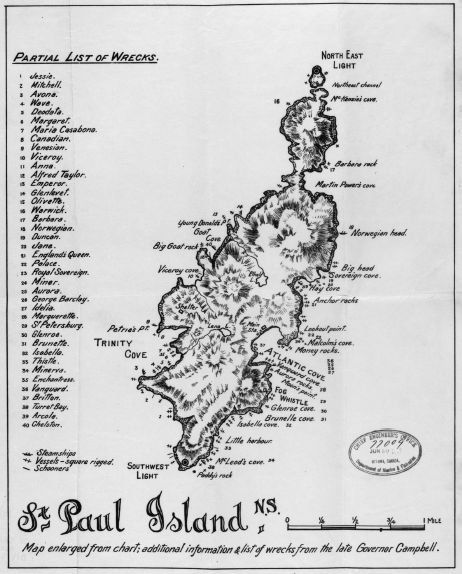
St. Paul Island did not claim the Norwegian alone. Rising abruptly from the Gulf of St. Lawrence, shrouded in fog and battered by converging currents, the island has earned a reputation as one of Atlantic Canada’s most unforgiving maritime hazards. Long before modern navigation, its reefs and shoals tore open hull after hull. The Norwegian became one name among many — part of a tragic roll call that spans decades of Atlantic commerce and emigration.
The Long Way Back

Captured during exploratory dives in 2002, this frame—extracted from original dive video footage—documents exposed deck edges and collapsed iron framing along the debris field. While limited by the camera technology of the time and the typically reduced visibility off St. Paul Island, the image provides early confirmation of structural orientation and preservation state. It represents some of the earliest personal documentation of the site and establishes a continuity of engagement that spans more than two decades.
I first descended onto the wreck of the Norwegian in 2002. I was younger then, eager and focused on machinery, structure, identification. I knew the history — the fog, the breakers, the inquiry in Liverpool — but underwater history is not read; it is felt. The wreck lies in roughly fifty feet of water, sloping into deeper ground along the island’s exposed flank. Even then, I remember the surge — the steady Atlantic pulse that never truly rests around St. Paul Island. Iron frames would appear and disappear as the swell lifted and settled. Kelp streamed past like torn banners. The water was cold, even in summer, the kind of cold that seeps past gloves and settles into your wrists.

Over the next few seasons I returned several times, tracing scattered wreckage and piecing together what I could. Then life moved forward, as it does. Years became decades. The wreck remained, but I did not.
In August 2025, nearly twenty years later, the Highfield brought me back.
Approaching St. Paul Island again felt different. The cliffs still rose abruptly from the sea, dark and indifferent. The same currents curled around the headlands. The same fog threatened to erase the horizon without warning. But this time there was a weight to it — the awareness of time passed, of unfinished curiosity.
We dropped in over eighty feet of water, holding the deeper line of the debris field. The Atlantic greeted us the way it always does — cool, green, and alive with motion. At depth the temperature dropped sharply; the cold pressed through layers and settled in. Visibility shifted with the surge — ten to fifteen feet at best — each swell lifting fine sediment and then letting it fall again like drifting smoke.
Shapes emerged slowly.
A capstan appeared first, heavy and unmistakable, still rooted in the seabed as though waiting for a line to be cast. Sections of boiler plating lay collapsed nearby, curved iron ribs half buried in sand and mussel shell. A porthole frame caught the light — brass dulled by a century and a half of salt water. Hull plates, torn and twisted, lay scattered in long, distorted ribbons that told their own silent story of impact and surrender.
Nothing stands proud. Nothing resembles a ship at first glance. The Norwegian is no longer a vessel — she is a field of iron memory.
The surge worked steadily across the wreckage, rocking even the heavier pieces with a slow, deliberate rhythm. It is impossible to forget, down there, that the same water that now moves you gently once drove her hard onto rock. At moments the only sound was the steady exhale of bubbles and the low, distant rumble of swell transmitting through stone. It is a different kind of quiet — not absence of sound, but the presence of depth.
After twenty years, the wreck felt smaller in some ways, but more significant in others. I was no longer just cataloguing parts. I was aware of time — of the men and women who stood on her decks in 1863, of the captain judged in a Liverpool courtroom, of the decades she has rested in cold Atlantic water. Returning was not just about rediscovery. It was about continuity.
The breakers still roll across St. Paul Island. The iron still rests where it fell. And beneath eighty feet of moving Atlantic water, the Norwegian remains — not intact, not preserved, but enduring.
Plan Your St. Paul Island Expedition
The journey to St. Paul Island deserves its own account. The logistics, weather windows, fuel calculations, tides, and contingency planning required to safely reach one of Atlantic Canada’s most isolated maritime sites are substantial enough for a dedicated article. Operating from a Highfield Patrol platform — built for open-water reliability and predictable handling in exposed conditions — changes what is realistically possible along this unforgiving stretch of coastline.
A comprehensive account of the planning, logistics, and operational details for St. Paul Island can be found in my dedicated St. Paul Island expedition document.
As St. Paul Island lies a significant distance offshore — and several hours’ drive from Halifax — careful planning is essential. Travel from Halifax to Dingwall, if using it as the primary launching point, requires advance coordination and favorable conditions. Alternatively, departure can be made from Bay St. Lawrence, though both routes demand close attention to weather windows, sea state, fuel range, and emergency contingencies before committing to open water.
Getting There:
Departing from Halifax, travel north on Highway 102 toward Truro before merging onto Highway 104 eastbound. Continue along the Trans-Canada Highway toward the Canso Causeway, crossing onto Cape Breton Island. Remain on Highway 104 until connecting with the Cabot Trail.
On this expedition, we crossed the iconic Englishtown Ferry and continued counterclockwise along the Cabot Trail, tracing the island’s rugged eastern coastline. The road narrows and climbs in places, offering sweeping Atlantic views before descending toward the northern communities.
Dingwall Road provides access to the village of Dingwall. From there, turn left onto Mountainview Road and then right onto Quarry Road. This route leads directly to Dingwall Harbour and the public slipway pictured below — the final staging point before committing to open water toward St. Paul Island.

Lodging & Dining:
- Markland Cottages with restaurant
- Various AirBnB
- Angies Restaurant
- ACA’s General Store
Diving:
- Bring your own boat or contact local fishermen at Dingwall Harbour to arrange charters.
- RMS Norwegian (47°12.400′ N, 60°08.140′ W | 50-100+ft | east side island)
Local Resources:
- Northern Victoria Small Craft Harbour Authority: 902-336-2235
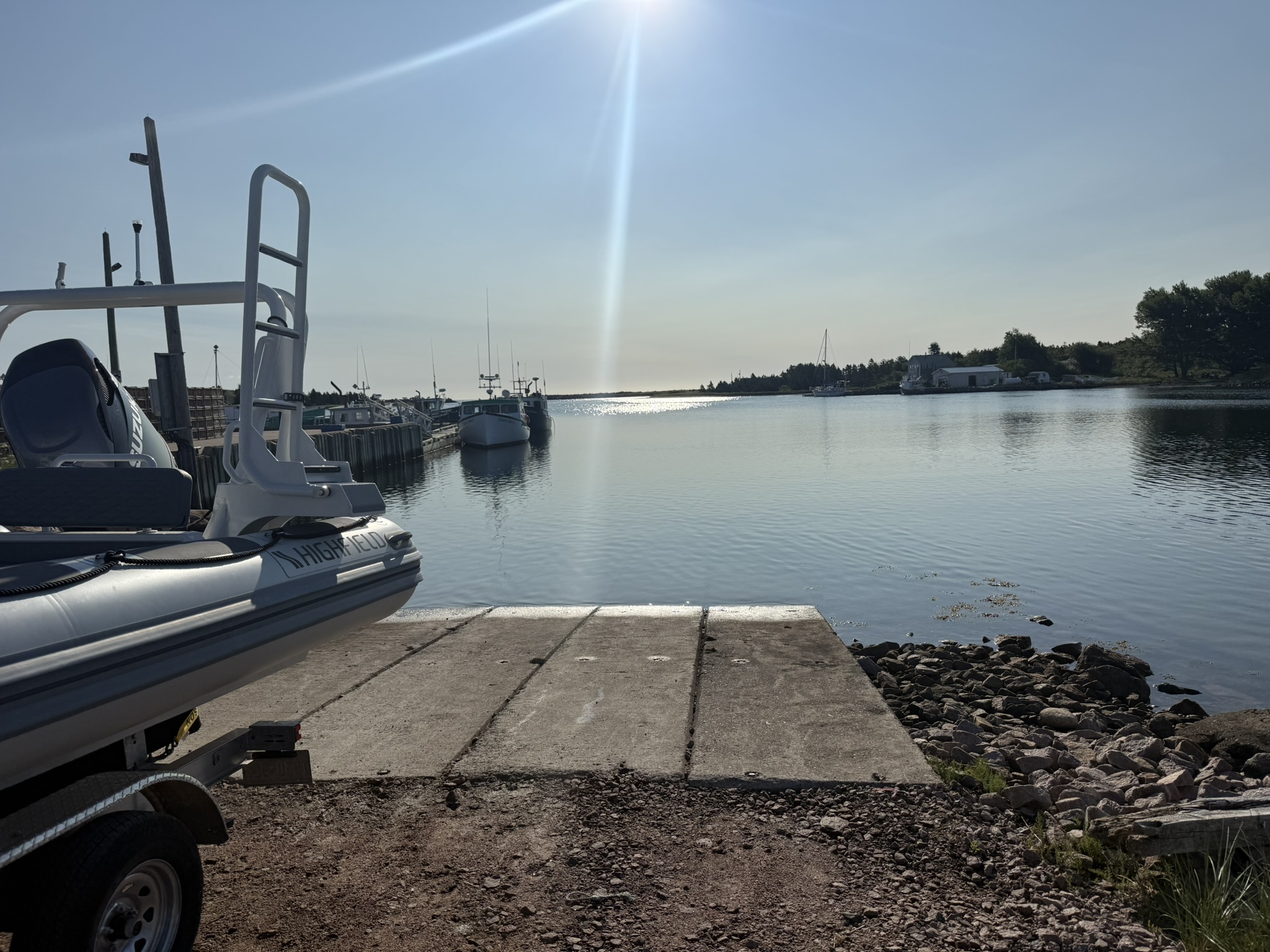
Wreck Coordinates:
- RMS Norwegian: 47°12.400′ N, 60°08.140′ W | 50-100+ft | east side island
- Boat Ramp: 46°54.173′ N, 60°27.616′ W
Vessel Specs:
RMS Norwegian — 3,449 GRT, 300 ft × 38 ft, Iron Hull, Twin 450 HP Screw Engines
Dive Safety Notice:
Professional dive operations are strongly recommended. St. Paul Island lies far offshore and well beyond immediate support services. Strong tidal currents, rapidly changing weather, surge, and limited emergency access require advanced training, proper equipment, redundant systems, and experienced surface support. Thorough planning is essential before committing to open water. These shared coordinates are provided for historical reference and responsible exploration, blending SCUBA with Nova Scotia’s maritime heritage.
Ask me about the Highfield and Suzuki offshore expedition platform — engineered for serious divers.
#HighfieldHunter #HighfieldPatrol760 #SuzukiEngines #Suzuki-300hp #HalifaxShipwrecks #NSMaritimeHistory #NovaScotia #StPaulIsland #Norwegian