Portia
Carried Beyond the Shoal: The Wreck of the Steamship Portia. 1899.
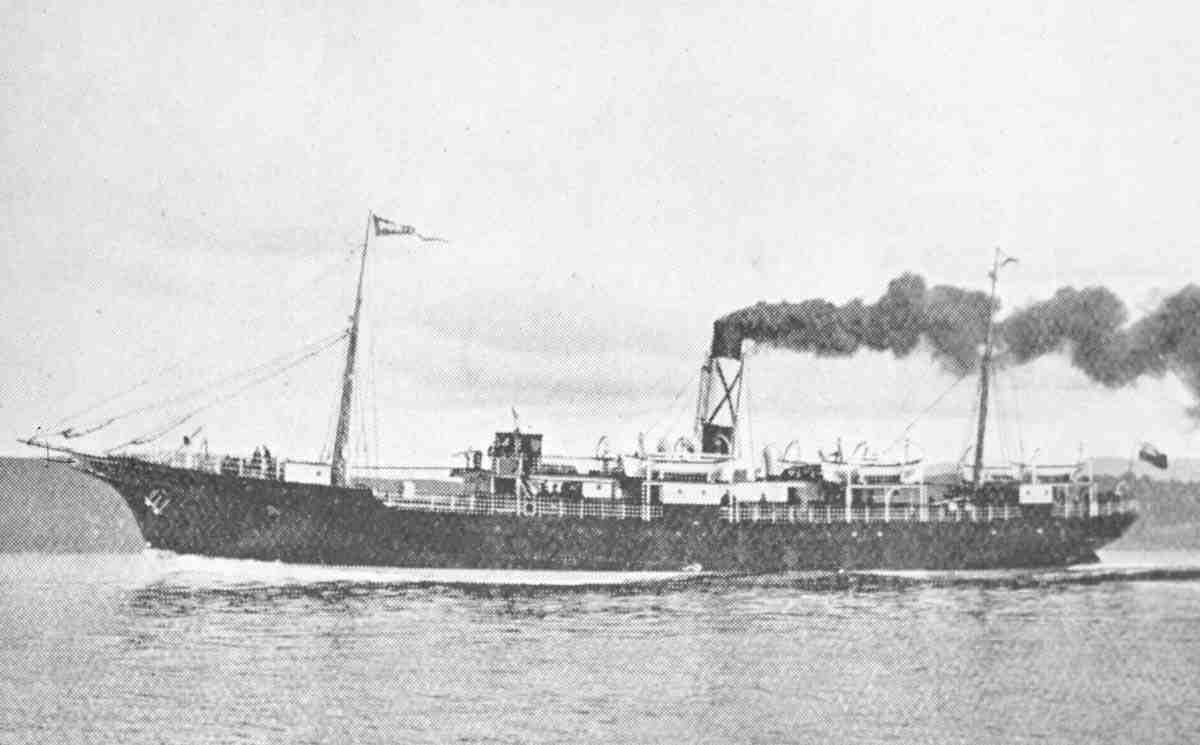
The Portia was not a ship out of place in the North Atlantic.
Built in 1884 at Newcastle-on-Tyne by Wigham Richardson & Co., she was an iron screw steamer of practical design—strong, efficient, and intended for steady commercial work. At roughly 220 feet in length, driven by a compound engine, she was built not for spectacle, but for reliability.
Cargo below. Passengers above.
She carried both without distinction.
Her route linked New York, Halifax, and St. John’s—part of a growing corridor of movement along the northeastern seaboard. These were not isolated ports. They were connected points in a working system.
The Portia belonged to that system.
A Working System
The Portia did not sail for herself.
Owned by the New York, Newfoundland & Halifax Steamship Company—better known as the Red Cross Line—she operated within a structured commercial network. Behind that system stood Bowring, a name tied to reliability, schedule, and continuity.
Ships like the Portia were expected to move.
Schedules mattered. Cargo mattered. Passengers expected arrival—not delay. And within that system, decisions were rarely made in isolation. They were shaped by expectation.
So ships continued.
Even in fog.
The Coast Off Nova Scotia
The approach to Nova Scotia was not forgiving.
Low land. Broken rock. Shoals extending farther than expected. In clear weather, a careful navigator could read the coast. In fog, it became something else entirely.
Invisible.
There was no line separating safe water from danger—only depth, measured through soundings. And beneath the surface, currents moved quietly, setting vessels inward without obvious indication.
Not abruptly.
Not enough to alarm.
But enough.
On a coast like Sambro, the difference between safe water and grounding was not measured in miles—
but in minutes.
Why Ships Continued in Fog
Fog was not unusual. It was expected.
Ships did not wait for it to clear. They could not. To stop meant delay. To delay meant disruption across an entire chain of movement.
So they continued.
They relied on soundings, dead reckoning, and experience. And most of the time, that was enough.
That is what made it dangerous.
Because repetition builds confidence.
And confidence becomes assumption.
The Voyage
On July 10, 1899, the Portia departed New York bound for Halifax.
The voyage began without incident. By the time she approached Nova Scotia, she was following a familiar route—one navigated countless times before.
Soundings were taken.
Course was held.
The ship was believed to be well offshore.
But as the day progressed, the fog thickened.
By noon, there was no land in sight.
By afternoon, still none.
At approximately six o’clock, a sounding was taken:
Fifty-two to fifty-three fathoms.
Hard bottom.
It was information.
But it was not acted upon.
No further soundings were taken.
The vessel continued.
The Final Hour
From that moment forward, the difference between what was known—and what was acted upon—began to widen.
No correction of course.
No full reduction of speed.
No allowance for current.
The ship continued on what was believed to be a safe track.
But she was no longer where she was thought to be.
And with every passing minute, that difference increased.
The Grounding
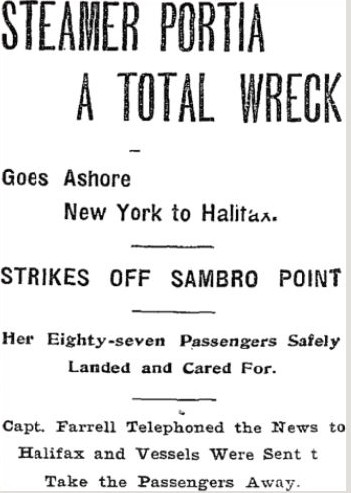
At approximately 6:50 p.m., the Portia struck.
There was no warning.
No breakers. No shoreline. No visible sign of danger.
Only the sudden, grinding shock beneath the hull.
Engines were reversed. For a moment, there was still uncertainty—ships had grounded before and come free.
Then came the second impact.
Heavier. Decisive.
The bow held fast. The stern lifted in the swell. Water began to enter.
From that point forward, the ship was no longer navigating.
It was reacting.
The Boats
There was no panic.
That detail holds across every account.
Orders were given. Boats cleared. Passengers gathered. Women and children were lowered first.
The swell made everything difficult—boats rising and falling against the hull—but the crew worked with control.
Passengers later spoke of calm. Of direction. Of officers moving deliberately.
They did this well.
Within forty minutes, the boats were away.
Carried Beyond the Shoal
The Portia did not sink where she struck.
That detail matters.
Lifted by motion and sea, she was carried beyond the shoal—into deeper water.
And there, she settled.
The moment of impact was not the moment of loss.
The loss came after.
The Missing Passenger
At first, the reports were simple:
All saved.
But they were wrong.
A boy was missing.
Twelve years old. Traveling alone. Bound for his mother in Newfoundland. His identity shifted between accounts—Assyrian, Italian—never fully settled.
He had been below deck. Seasick. Out of sight.
And in the urgency that followed, the visible were saved first.
The unseen were not.
The Enquiry
The findings were clear.
- The vessel had been navigated too close to land in fog
- Speed had not been sufficiently reduced
- Soundings had not been maintained
- No allowance had been made for current
- The master had not remained on the bridge
The evacuation was commended.
But one life had been lost.
The master’s certificate was suspended for six months.
The Wreck Today
More than a century later, the Portia remains.
You do not come upon her by accident. You go looking.
The descent is through cold, green water. Then gradually, the structure begins to appear.
Not as a ship.
What remains lies low—flattened, broken, spread across the seabed.
Two lines mark the edges where the hull once stood. Between them, twisted metal, piping, and beams collapse inward and outward at once.
And then—the boiler.
Large. Round. Still intact.
The wreck lies in sixty to seventy feet of water.
The seabed is sand—and that sand does not stay still.
A diver’s movement reveals what lies beneath: beams, pipe, fragments of structure. Sometimes, something more distinct.
A porthole.
Half buried. Waiting.
And scattered throughout—
white, hexagonal tiles.
Small remnants of interior space, now separated from it entirely.
They do not belong to the wreck as it is now.
But they belong to what it was.
Reading the Wreck
A single dive is not enough.
It takes repetition—different light, different current, different perspective.
Because the wreck does not present itself as an object.
It reveals itself as a sequence.
The angle. The spread. The collapse.
You begin to understand not just where she lies—
but how she came to be there.
What Remains
The loss of the Portia has been explained.
But the wreck tells a different story.
Not of recklessness—but of routine.
A system that depended on ships continuing forward—even in conditions that reduced certainty to assumption.
Fog was not a reason to stop.
It was something to move through.
And most of the time, that worked.
A Margin Measured in Minutes
The difference between arrival and loss was not distance.
It was not miles offshore.
It was time.
Minutes between soundings.
Minutes off the bridge.
Minutes between warning and action.
And in that space—
the margin disappeared.
Plan Your Sambro Expedition
Getting There:
30 minute drive from Halifax via Highway 349. Turn left on Sambro Wharf Road
Diving:
- Bring your own boat or contact local fishermen to arrange charters.
- Halifax Dive Shops may provide charters – check their respective websites.
- Primary: Portia (44°26.919′ N, 63°35.127′ W | 60-70ft |south side island).
Local Resources:
- Sambro Harbour Authority: 902-471-2301
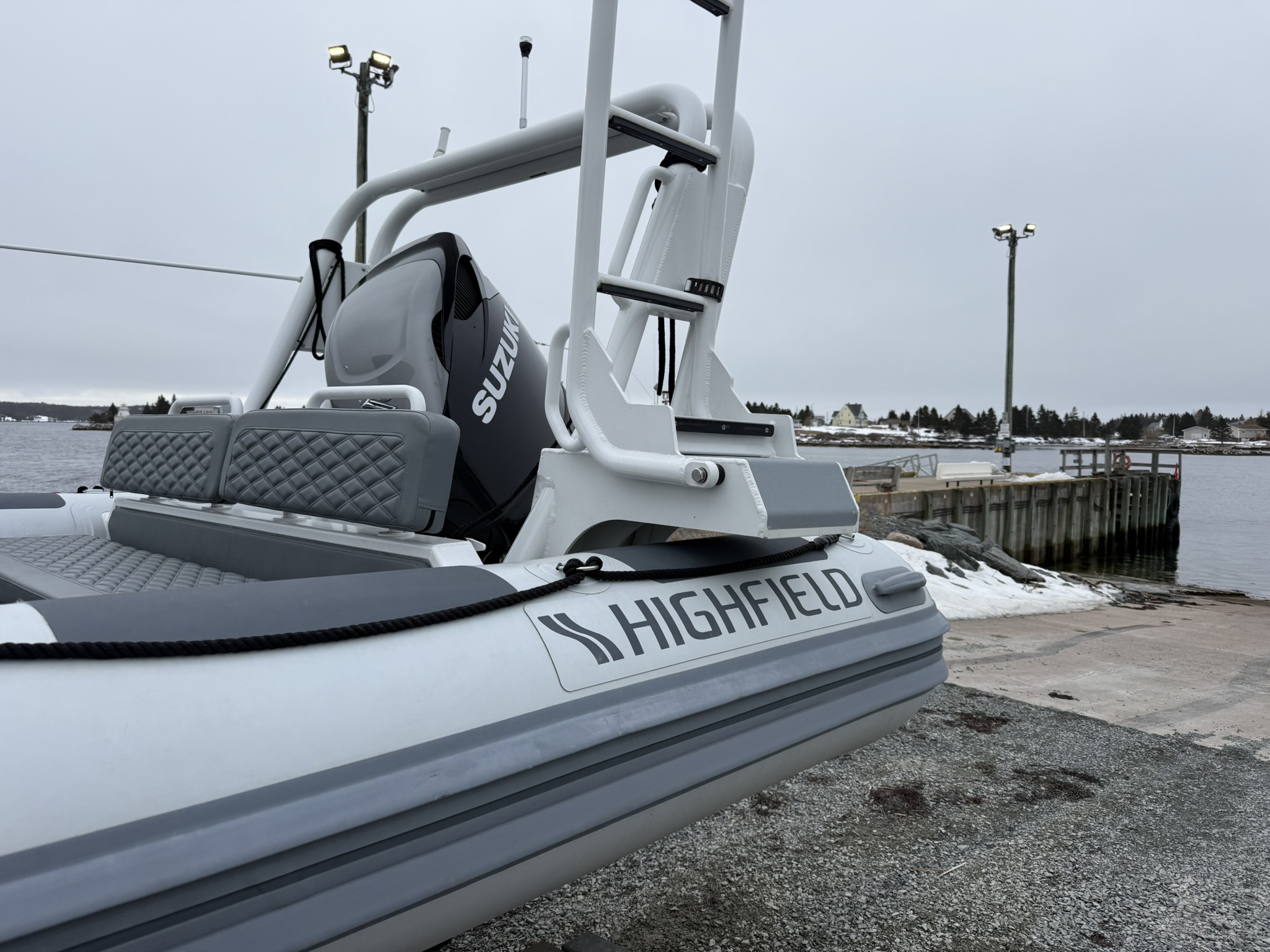
Ask me about the Highfield and Suzuki offshore expedition platform — engineered for serious divers.
#HighfieldHunter #HighfieldPatrol760 #SuzukiEngines #HalifaxShipwrecks #NSMaritimeHistory #NovaScotia #ShipwreckHunter #Portia #NorthAtlantic #DivingHistory