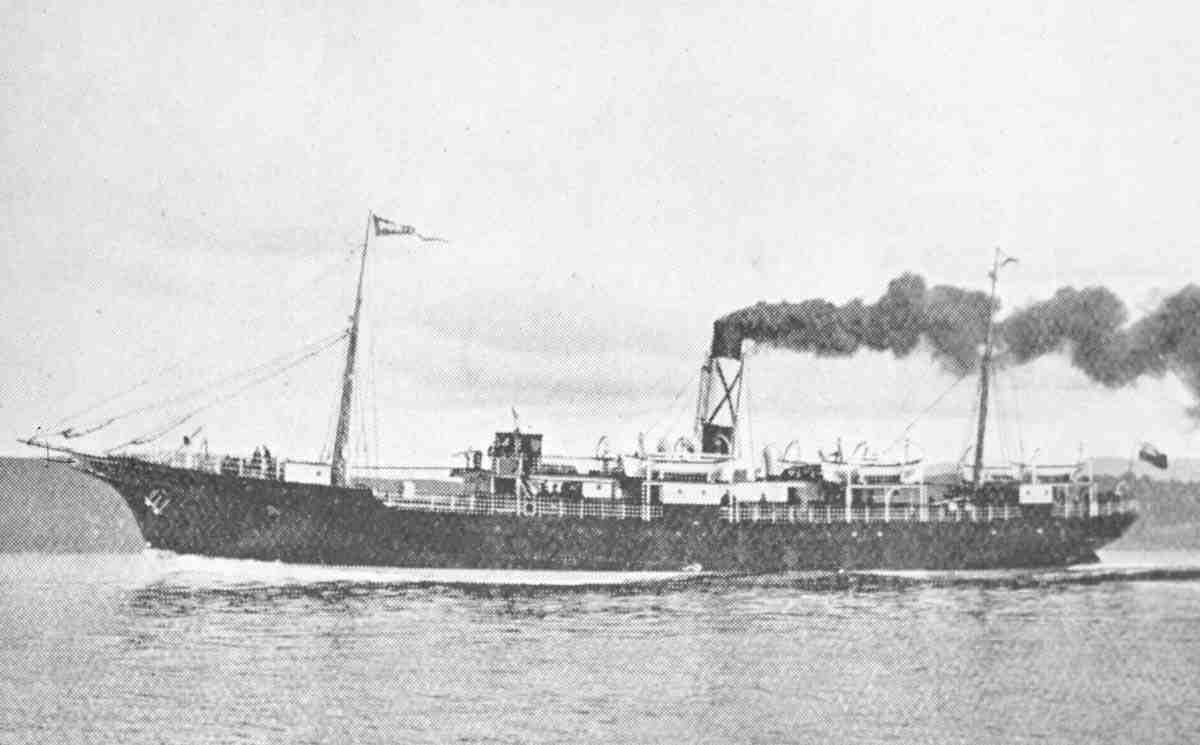
Portia
Carried Beyond the Shoal: The Wreck of the Steamship Portia. 1899.
The Portia was not a ship out of place in the North Atlantic.
Built in 1884 at Newcastle-on-Tyne by Wigham Richardson & Co., she was an iron screw steamer of practical design—strong, efficient, and intended for steady commercial work. At roughly 220 feet in length, driven by a compound engine, she was built not for spectacle, but for reliability.
Cargo below. Passengers above.
She carried both without distinction.
Her route linked New York, Halifax, and St. John’s—part of a growing corridor of movement along the northeastern seaboard. These were not isolated ports. They were connected points in a working system.
The Portia belonged to that system.
A Working System
The Portia did not sail for herself.
Owned by the New York, Newfoundland & Halifax Steamship Company—better known as the Red Cross Line—she operated within a structured commercial network. Behind that system stood Bowring, a name tied to reliability, schedule, and continuity.
Ships like the Portia were expected to move.
Schedules mattered. Cargo mattered. Passengers expected arrival—not delay. And within that system, decisions were rarely made in isolation. They were shaped by expectation.
So ships continued.
Even in fog.
The Coast Off Nova Scotia
The approach to Nova Scotia was not forgiving.
Low land. Broken rock. Shoals extending farther than expected. In clear weather, a careful navigator could read the coast. In fog, it became something else entirely.
Invisible.
There was no line separating safe water from danger—only depth, measured through soundings. And beneath the surface, currents moved quietly, setting vessels inward without obvious indication.
Not abruptly.
Not enough to alarm.
But enough.
On a coast like Sambro, the difference between safe water and grounding was not measured in miles—
but in minutes.
Why Ships Continued in Fog
Fog was not unusual. It was expected.
Ships did not wait for it to clear. They could not. To stop meant delay. To delay meant disruption across an entire chain of movement.
So they continued.
They relied on soundings, dead reckoning, and experience. And most of the time, that was enough.
That is what made it dangerous.
Because repetition builds confidence.
And confidence becomes assumption.
The Voyage
On July 10, 1899, the Portia departed New York bound for Halifax.
The voyage began without incident. By the time she approached Nova Scotia, she was following a familiar route—one navigated countless times before.
Soundings were taken.
Course was held.
The ship was believed to be well offshore.
But as the day progressed, the fog thickened.
By noon, there was no land in sight.
By afternoon, still none.
At approximately six o’clock, a sounding was taken:
Fifty-two to fifty-three fathoms.
Hard bottom.
It was information.
But it was not acted upon.
No further soundings were taken.
The vessel continued.
The Final Hour
From that moment forward, the difference between what was known—and what was acted upon—began to widen.
No correction of course.
No full reduction of speed.
No allowance for current.
The ship continued on what was believed to be a safe track.
But she was no longer where she was thought to be.
And with every passing minute, that difference increased.
The Grounding
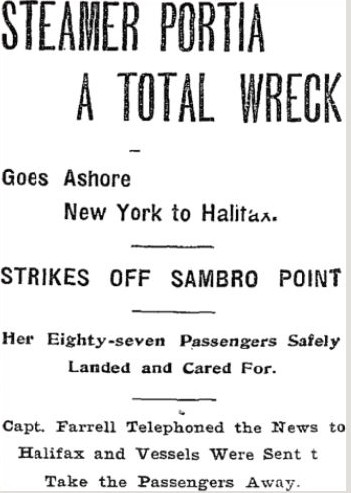
At approximately 6:50 p.m., the Portia struck.
There was no warning.
No breakers. No shoreline. No visible sign of danger.
Only the sudden, grinding shock beneath the hull.
Engines were reversed. For a moment, there was still uncertainty—ships had grounded before and come free.
Then came the second impact.
Heavier. Decisive.
The bow held fast. The stern lifted in the swell. Water began to enter.
From that point forward, the ship was no longer navigating.
It was reacting.
The Boats
There was no panic.
That detail holds across every account.
Orders were given. Boats cleared. Passengers gathered. Women and children were lowered first.
The swell made everything difficult—boats rising and falling against the hull—but the crew worked with control.
Passengers later spoke of calm. Of direction. Of officers moving deliberately.
They did this well.
Within forty minutes, the boats were away.
Carried Beyond the Shoal
The Portia did not sink where she struck.
That detail matters.
Lifted by motion and sea, she was carried beyond the shoal—into deeper water.
And there, she settled.
The moment of impact was not the moment of loss.
The loss came after.
The Missing Passenger
At first, the reports were simple:
All saved.
But they were wrong.
A boy was missing.
Twelve years old. Traveling alone. Bound for his mother in Newfoundland. His identity shifted between accounts—Assyrian, Italian—never fully settled.
He had been below deck. Seasick. Out of sight.
And in the urgency that followed, the visible were saved first.
The unseen were not.
The Enquiry
The findings were clear.
- The vessel had been navigated too close to land in fog
- Speed had not been sufficiently reduced
- Soundings had not been maintained
- No allowance had been made for current
- The master had not remained on the bridge
The evacuation was commended.
But one life had been lost.
The master’s certificate was suspended for six months.
The Wreck Today
More than a century later, the Portia remains.
You do not come upon her by accident. You go looking.
The descent is through cold, green water. Then gradually, the structure begins to appear.
Not as a ship.
What remains lies low—flattened, broken, spread across the seabed.
Two lines mark the edges where the hull once stood. Between them, twisted metal, piping, and beams collapse inward and outward at once.
And then—the boiler.
Large. Round. Still intact.
The wreck lies in sixty to seventy feet of water.
The seabed is sand—and that sand does not stay still.
A diver’s movement reveals what lies beneath: beams, pipe, fragments of structure. Sometimes, something more distinct.
A porthole.
Half buried. Waiting.
And scattered throughout—
white, hexagonal tiles.
Small remnants of interior space, now separated from it entirely.
They do not belong to the wreck as it is now.
But they belong to what it was.
Reading the Wreck
A single dive is not enough.
It takes repetition—different light, different current, different perspective.
Because the wreck does not present itself as an object.
It reveals itself as a sequence.
The angle. The spread. The collapse.
You begin to understand not just where she lies—
but how she came to be there.
What Remains
The loss of the Portia has been explained.
But the wreck tells a different story.
Not of recklessness—but of routine.
A system that depended on ships continuing forward—even in conditions that reduced certainty to assumption.
Fog was not a reason to stop.
It was something to move through.
And most of the time, that worked.
A Margin Measured in Minutes
The difference between arrival and loss was not distance.
It was not miles offshore.
It was time.
Minutes between soundings.
Minutes off the bridge.
Minutes between warning and action.
And in that space—
the margin disappeared.
Plan Your Sambro Expedition
Getting There:
30 minute drive from Halifax via Highway 349. Turn left on Sambro Wharf Road
Diving:
- Bring your own boat or contact local fishermen to arrange charters.
- Halifax Dive Shops may provide charters – check their respective websites.
- Primary: Portia (44°26.919' N, 63°35.127' W | 60-70ft |south side island).
Local Resources:
- Sambro Harbour Authority: 902-471-2301
Ask me about the Highfield and Suzuki offshore expedition platform — engineered for serious divers.
#HighfieldHunter #HighfieldPatrol760 #SuzukiEngines #HalifaxShipwrecks #NSMaritimeHistory #NovaScotia #ShipwreckHunter #Portia #NorthAtlantic #DivingHistory

Kenkerry
A Hundred Yards from Shore: The Loss of the Kenkerry
Highfield Hunter
The storm came in hard off the Atlantic.
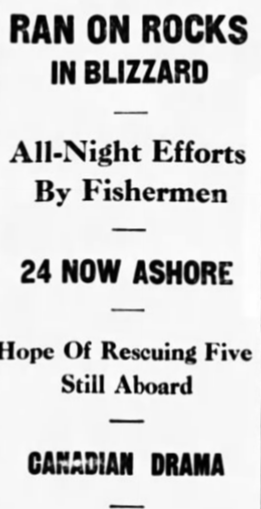
By the evening of January 18, 1935, visibility along the approaches to Halifax had collapsed into blowing snow and darkness. Somewhere just outside the harbour, beyond the lights that marked safety, a freighter pressed forward at reduced speed—feeling her way through conditions that left little margin for error.
She did not see the coast.
She felt it.
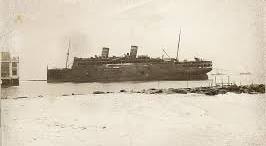
What the storm concealed that night was revealed by daylight.
The British freighter Kenkerry, 3,930 tons, out of Newcastle, had left Havana bound for Halifax. From there, she was to load grain for the return crossing to the United Kingdom. It was routine—another leg in a working life defined by movement between ports.
But the timing was wrong.
As she approached the Nova Scotia coast, snow thickened, wind built, and the shoreline disappeared.
Chief Engineer John Dove would later describe the moment:
“We were going ahead at dead slow when I felt her bump… I ordered full speed astern. The fires were low. The steam didn’t last long.”
The ship had already struck.
Why She Never Had a Chance
What followed was not a failure of seamanship alone.
It was a convergence of limits.
The Kenkerry was navigating in near-zero visibility. There was no radar. No electronic positioning. Only dead reckoning, soundings, and what could be seen through the storm.
In those conditions, navigation became an act of judgment rather than certainty.
Courses were estimated. Distances inferred. Soundings taken when possible, but limited by depth, timing, and the difficulty of working in heavy weather. A ship could be closer to land than believed—or further—without any clear indication of which was true.
Along this stretch of coast, that uncertainty mattered.
The approaches to Halifax are not forgiving in winter. Wind, current, and sea all work against a vessel standing in too close. A ship set even slightly off her intended position can be carried inward without realizing it, the margin for correction shrinking with each minute.
And once that margin is gone, there is no gradual warning.
Only impact.
That margin had already narrowed.
When the ship struck, even at reduced speed, the outcome shifted immediately. Driven toward a lee shore, the vessel could not easily free herself.
The order for full speed astern came quickly.
But the Kenkerry was a coal-fired steamer.
With fires banked for slow approach, steam pressure was limited. When the engines were reversed, what remained was used quickly—and once exhausted, there was no immediate recovery.
Within minutes, propulsion was gone.
Water entered the stokehold. Power failed. The ship could no longer move.
From that point forward, she was no longer navigating.
She was fixed.
And with each wave, she was driven further onto the rock beneath her.
A Hundred Yards from Shore
The Kenkerry had grounded on Black Point Rocks near Portuguese Cove—less than a hundred yards from land.
Close enough to hear the shore.
Close enough to survive.
But not easily.
Heavy Atlantic rollers lifted and dropped the vessel onto the ledge beneath her hull. Steel plates strained under repeated impact. Each wave drove her further into place.
From the ship, nothing could be seen.
From shore, nothing could be reached.
It was a situation as old as the coast itself—ship and land separated by a distance that could not be crossed.
The Coast in Winter
In summer, this coastline can be read.
Landmarks hold. Distances make sense. A vessel can judge its position against what it sees.
In winter, that changes.
Snow removes the horizon. Wind flattens sound. Lights disappear or distort through blowing ice. What should be a defined shoreline becomes something uncertain—present, but not visible in any reliable way.
For ships approaching Halifax in these conditions, the danger was not always obvious.
It was hidden in distance.

It was not a rescue vessel that reached her first.
It was sound.
The ship’s siren carried through the storm to the fishermen of Portuguese Cove. Drawn to the cliffs, they listened, then watched for signs through the snow.
When they saw her, she was already doomed.
A line had to be established.
From the deck, a rocket was fired into the darkness, carrying a thin line toward shore. The first attempt failed. The line sagged and could not be secured.
A second shot was fired.
This time, it held.
A rope stretched across the water—one hundred yards between ship and land.
It was enough.
The Line
The system was simple—and unforgiving.
A breeches buoy, a canvas sling suspended from the line, would carry each man across.
But the line sagged into the sea. At its lowest point, the water took hold.
Each man would be dragged through it.
There was no clean passage.
Only effort.
Crossing
Someone had to go first.
Seaman Stanley Davies volunteered.
He climbed into the buoy and was pushed out into the storm.
The line dropped.
Instead of riding above the water, he was forced into it.
Waves broke over him. He pulled himself forward, hand over hand.
He didn’t make it.
Halfway across, he was overcome and hauled back to the ship—frozen and barely conscious.
Another attempt was made.
This time, it worked.
But “worked” did not mean safe.
Each man entering the buoy faced the same passage—down into the lowest point of the line, where the full weight of the sea took hold. The water there was not simply cold; it was violent, pulling and dragging at anyone caught in it.
Progress was measured in effort.
Hands gripped rope stiffened by ice. Bodies were submerged, lifted, and submerged again. The crossing became less a movement across distance and more a fight to remain attached to the line itself.
On shore, the fishermen waited in the surf.
They did not stand back from it. They moved into it—timing their steps between waves, reaching out as each man approached, pulling them clear before the next surge could take them back.
There was no clean transfer from ship to land.
Only a narrow moment where one gave way to the other.
One by one, the crew began to cross.
A Night Without End
The rescue took hours.
There was no speed—only repetition. Each man clipped in. Each man fought the same stretch of water.
On shore, fishermen waded into the surf to pull them clear.
On board, the crew waited.
The ship continued to break.
Lifeboats were useless—one smashed before it could be launched.
The line was the only way off.
There was no second option.
No delay.
Only the next man.
Breaking Apart
Before dawn, the Kenkerry began to come apart.
The stern went first.
The remaining hull sagged, then split beneath the strain.
By then, most of the crew had made it ashore.
Only two remained.
Captain Duncan Milne.
Chief Engineer John Dove.
The Last Crossing
Dove went first. He made it.
The line was sent back.
Now, the captain stood alone.
There was nothing left to hold the ship together—and nothing left to wait for.
He stepped into the breeches buoy.
Accounts differ in detail—but not in what followed.
A wave struck.
He was torn from the line and thrown into the sea.
Those watching saw him surface.
Then they saw nothing more.
All Saved—But One

Twenty-eight men reached shore.
One did not.
After the Storm
The men were taken into homes in Portuguese Cove—frozen, exhausted, barely able to stand.
From there, they were brought to Halifax.
The journey inland was short in distance, but not in experience.
Snow still blocked the roads. What should have taken less than an hour stretched into several, the men carried through conditions that had not yet eased. Many were too exhausted to speak. Others could not recall the journey at all.
One of them would later say simply:
“What happened after that is all a blank.”
They had come ashore alive.
But the night had not yet released them.
Then home.
They sailed back across the Atlantic aboard another ship, passing the wreck along the way.
They lined the rail and saluted.
What Remained

By daylight, the wreck was already reduced to a broken hull.
Steel exposed. Structure gone.
It was no longer a ship.
It was a marker.
What happened that night did not end at the water’s edge.
It carried forward—with the men who survived, and with the place where it occurred.
The Distance
Today, the remains of the Kenkerry still lie off Black Point.
The distance has not changed.
It is still less than a hundred yards.
Close enough to see land.
Close enough to hear it.
And in the wrong conditions—
far enough that it might as well not be there at all.
Ask me about the Highfield and Suzuki offshore expedition platform — engineered for serious divers.
#HighfieldHunter #HighfieldPatrol760 #SuzukiEngines #Suzuki-300hp #HalifaxShipwrecks #NSMaritimeHistory #NovaScotia #Kenkerry

City of Washington
Into the Fog: The Loss of the City of Washington
Highfield Hunter
South Coast of Nova Scotia – July 5, 1873
The fog was so thick that afternoon that the sea seemed to end only a few yards from the ship.
For days, the passengers aboard the steamship City of Washington had lived with the sound of the fog-horn—its hollow note echoing out into the Atlantic, marking time in a place where nothing else could be seen. The voyage had settled into rhythm: engines turning steadily beneath the deck, conversations in the saloon, emigrants gathering where they could find air above.
Beyond the rail, there was nothing.
The horizon had vanished. The sky and sea had merged into a single grey field.
Shortly after half past one, that routine ended.
There came a sudden jolt beneath the hull.
Passengers felt two light bumps—then a violent shudder, longer this time, as iron scraped against rock. The entire ship trembled.
The City of Washington had run full speed onto Gull Rock Shoal, along the coast of Nova Scotia.
No one aboard knew it yet.
The fog still held.
The System Behind the Voyage
By the time the City of Washington pushed west into that fog, she was part of a much larger system.
The North Atlantic had become a corridor—of movement, of industry, of departure. Steam power had transformed ocean travel. Where sail had once meant uncertainty, steam promised schedule.
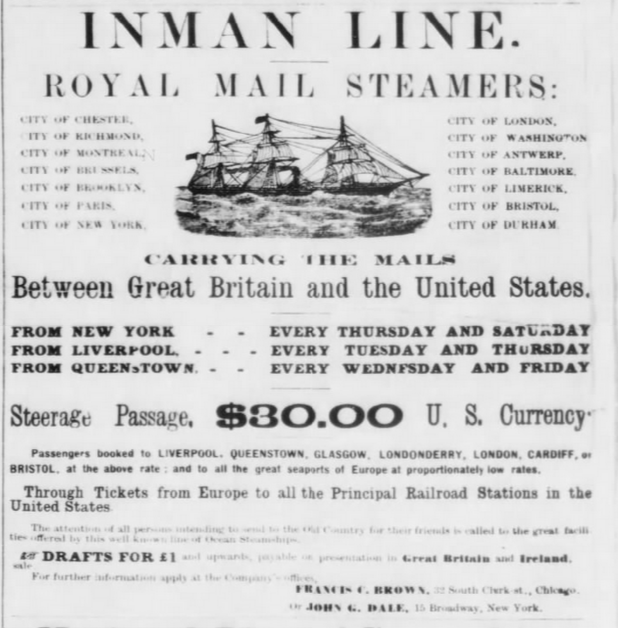
Companies like the Inman Line built their reputation on that promise.
Their ships carried more than cargo. They carried people in motion—families leaving Ireland, labourers from Britain, tradesmen from across Europe. Above them travelled cabin passengers with means. Below, hundreds crossed in steerage, bound by destination rather than circumstance.
All of them shared the same ocean.
And the same risks.
The Ship – Built for the Crossing
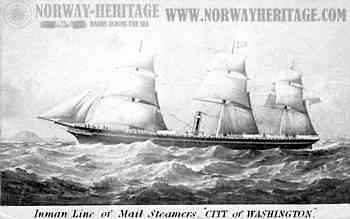
Built in 1855 at Glasgow, the City of Washington belonged to a transitional generation of ocean vessels.
She was an iron-hulled screw steamer—over 300 feet in length—combining steam propulsion with a full sailing rig. It was a design born of uncertainty. Steam was advancing, but not yet trusted on its own.
Inside, the divisions of the era were clear.
Cabin passengers occupied the central saloon spaces. Forward and aft, steerage compartments carried hundreds of emigrants. On her final voyage, she held:
- 28 cabin passengers
- More than 480 in steerage
- Nearly 100 officers and crew
Below them lay cargo typical of an industrial age—steel rails, iron bundles, manufactured goods bound for American expansion.
She had made this crossing for nearly two decades.
Nothing about this voyage suggested it would be different.
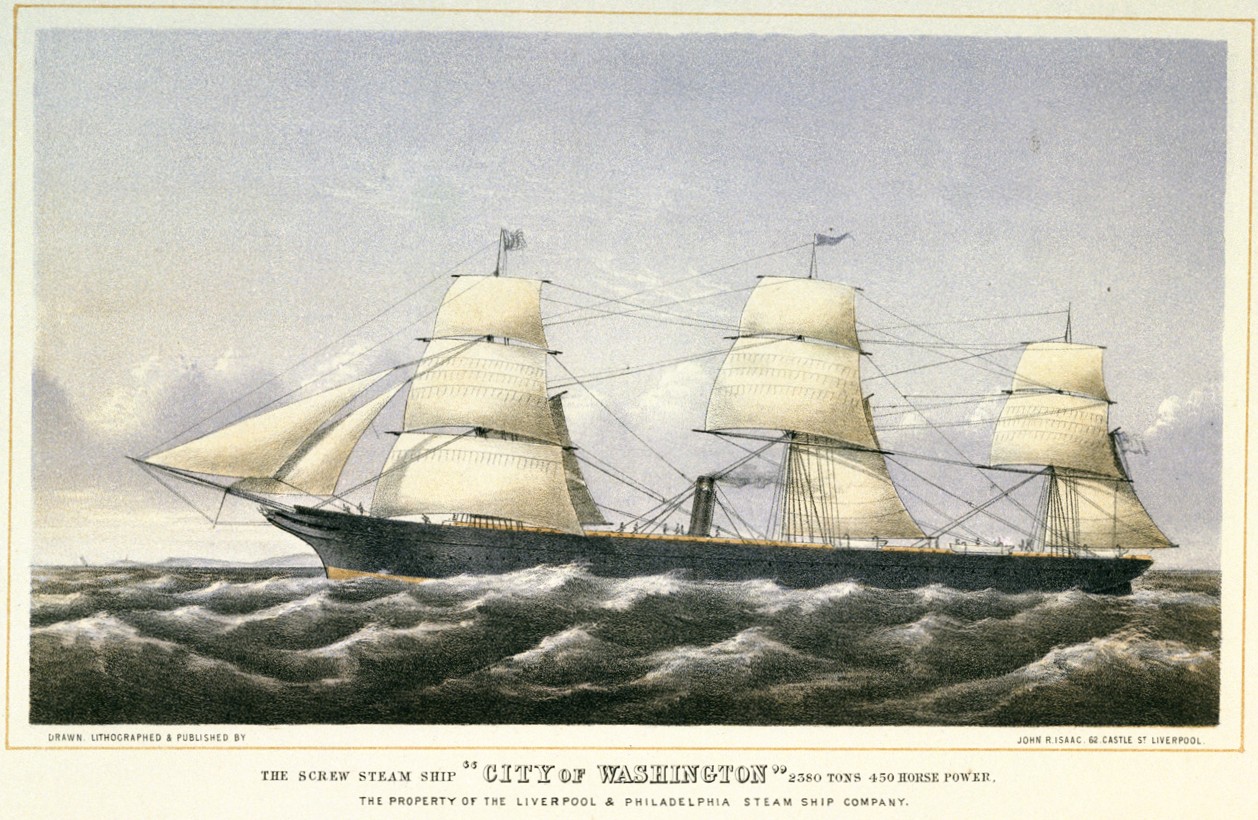
For nearly two decades, she had moved back and forth across the Atlantic, part of a system that depended on repetition. Departures, crossings, arrivals—measured not in individual voyages, but in schedules kept and routes maintained. Ships like the City of Washington were not exceptional. They were expected to work.
And that expectation shaped how they were navigated.
The ocean was not unknown—but it was not forgiving. Precision mattered, but so did confidence. Masters were expected to keep time, to make landfall when expected, to move through conditions that could not always be seen or measured.
It was within that balance—between certainty and assumption—that small errors could begin.
The Voyage – Into the Grey
She left Liverpool on 24 June 1873.
At Queenstown, more passengers boarded before the ship turned west into the Atlantic.
Then the fog came.
Not briefly. Not in passing.
It settled—and remained.
Day after day, the sky was hidden. Without sun or stars, navigation shifted to estimation. Position was no longer measured—it was believed.
Speed. Heading. Time.
Dead reckoning.
For short periods, it worked. Over days, small uncertainties accumulated.
Still, the ship maintained speed.
Still, the fog-horn sounded.
Still, the passengers waited.
And somewhere on deck, they leaned into the rail, staring into the grey—believing there was nothing there.
What they could not see was not empty water.
It was distance closing.
The Nova Scotia Coast
For days, the ship had moved without a confirmed position.
Only two celestial observations had been taken early in the voyage. After that, the fog held. Without sun or stars, navigation relied entirely on estimation—course, speed, and time carried forward without correction.
No soundings were taken as the vessel approached North America.
The crew believed they were farther south.
They were not.
The coast of Nova Scotia does not announce itself.
It waits.
Reefs and shoals extend outward beneath the surface, hidden by fog that can reduce visibility to nothing. Only months earlier, the liner Atlantic had been lost along the same coast with heavy loss of life.
But on 5 July, the passengers aboard the City of Washington believed themselves far from danger.
Inside, the engines turned steadily.
Then the ship struck.
The Impact
The grounding came without warning.
The vessel drove onto Gull Rock Shoal, less than half a mile from shore—though no one aboard could see it. Confusion spread quickly. Some believed they had struck offshore banks. Others admitted they did not know where they were.
In reality, land lay just beyond the fog.
And help was closer than anyone realized.
The Rescue at Port Le Bear
At first, there was only silence.
The fog-horn sounded. Signal guns were fired.
Then—unexpectedly—a reply.
A voice.
Through the mist, a small boat appeared, carrying two local fishermen—Cornelius Swanburg and William Ferguson. They had heard the signals and made their way out to the stranded liner.
“Where are we?” came the question from the deck.
“Off the coast of Nova Scotia.”
“How far from land?”
“Half a mile.”
Relief spread immediately.
Moments earlier, many aboard had believed themselves still far out in the Atlantic—days from land, beyond immediate help. The realization that shore lay within reach changed everything. What had been uncertainty became urgency.
Now, the task was not survival at sea—but getting everyone off the ship before conditions changed.
Evacuation began at once. Lifeboats were lowered, and order was maintained under strict control. Women and children were sent first. Despite the circumstances, passengers remained disciplined.
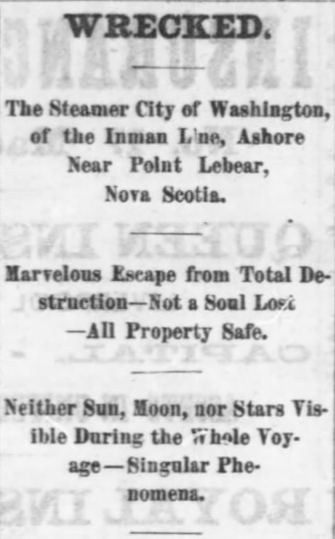
Within three hours, every person aboard had been landed safely on shore.
Refuge on the Shore
The small community at Port Le Bear absorbed the survivors as best it could.
Cabin passengers were taken into homes. Steerage passengers and crew gathered along the shoreline, where fires were built and temporary shelter arranged in barns and outbuildings.
Food was shared. Groups formed along familiar lines—language, nationality, family.
Behind them, hidden again by fog, the ship remained grounded.
But the danger had passed.
The Ship Breaks Apart
For several days, the City of Washington remained intact on the shoal.
Salvage began almost immediately. Cargo and provisions were brought ashore while conditions held.
Then the sea changed.
On 10 July, heavy swell began to roll in. Each wave lifted the hull and dropped it again against the rock beneath. The strain built gradually—until it did not.
The ship broke.
The forward section collapsed and sank. Masts fell. Cargo scattered into the surrounding waters.
What had carried hundreds safely across the Atlantic was reduced, piece by piece, by the same sea it had crossed.
In the days following the wreck, news travelled slowly. It would take nearly two days for word to reach Halifax, and longer still for consistent accounts to emerge in newspapers across the Atlantic.
By then, the ship was already beginning to disappear.
What Went Wrong
The cause was not a single failure.
It was accumulation.
A series of decisions made in conditions where confirmation was no longer possible.
Days of fog prevented celestial navigation. The crew relied entirely on dead reckoning. No soundings were taken as the ship approached North America—an oversight that might have revealed their position.
There was also the possibility of compass deviation, caused by the iron hull and cargo.
The Halifax inquiry concluded that the captain had exercised poor judgment in maintaining speed without verifying position.
His certificate was suspended.
But the outcome had already been decided long before that ruling.


A Narrow Escape
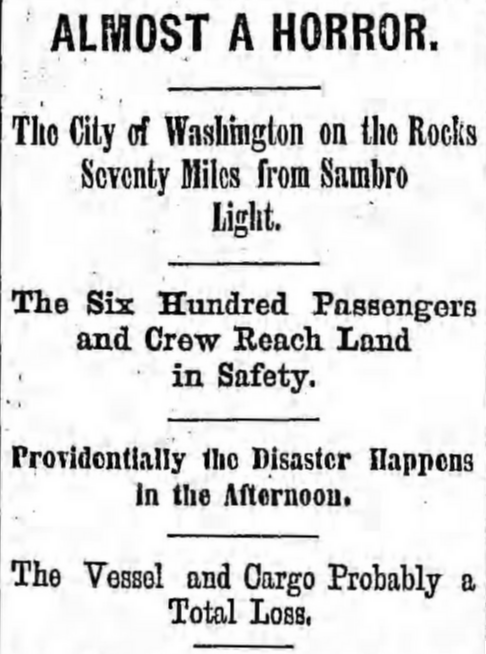
In the end, the loss of the City of Washington became something rare in the history of the North Atlantic.
A disaster without death.
More than five hundred people had crossed an ocean, entered a wall of fog, and driven full speed onto a hidden shoal.
And yet, within hours, every one of them stood on land.
Alive.
Had the timing been different, the story would have been told another way.
Had the ship struck at night, or in heavy seas, there would have been no orderly evacuation. No small boats finding their way through the fog.
Only wreckage.
Only loss.
The answers, when they came, were measured in degrees, miles, and decisions made in fog.
But out along the coast of Nova Scotia, none of that mattered anymore.
There, the sea had already taken what it would.
The City of Washington lay broken across the shoal where she had come to rest—her hull opened, her cargo scattered, her passage finished within sight of land.
The fog still comes in along that coast.
It still closes the horizon.
And somewhere beneath it, what remains of the ship waits in the same place it settled in July of 1873.
Not as a tragedy.
But as a margin.
A distance measured not in miles—
but in how close more than five hundred lives came to being lost.
Ask me about the Highfield and Suzuki offshore expedition platform — engineered for serious divers.
#HighfieldHunter #HighfieldPatrol760 #SuzukiEngines #Suzuki-300hp #HalifaxShipwrecks #NSMaritimeHistory #NovaScotia #CityOfWashington

Nueva Andalucia
NUEVA ANDALUCIA – Two Ships, One Name
A tanker broken off Nova Scotia—and rebuilt from what remained.
Highfield Hunter
Final Voyages
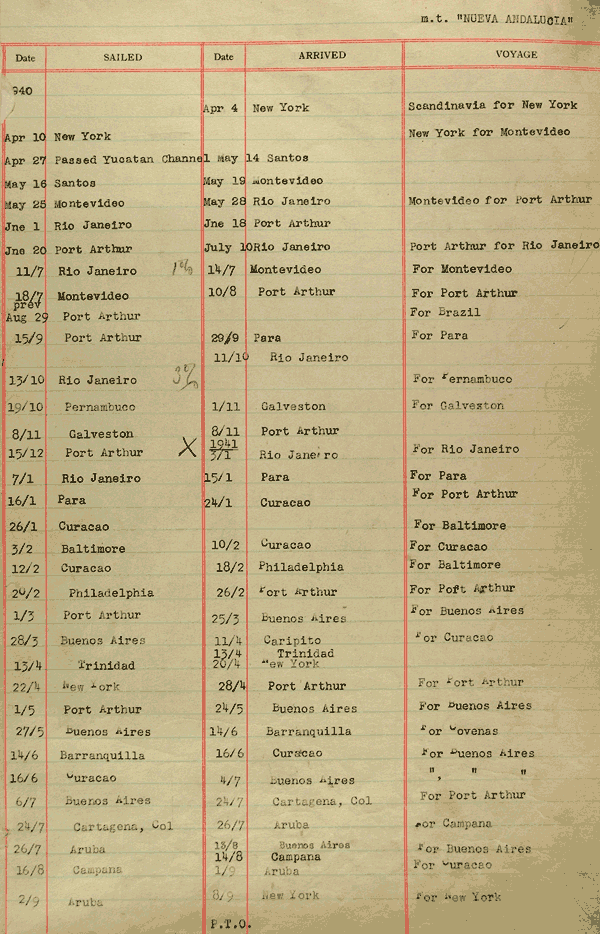
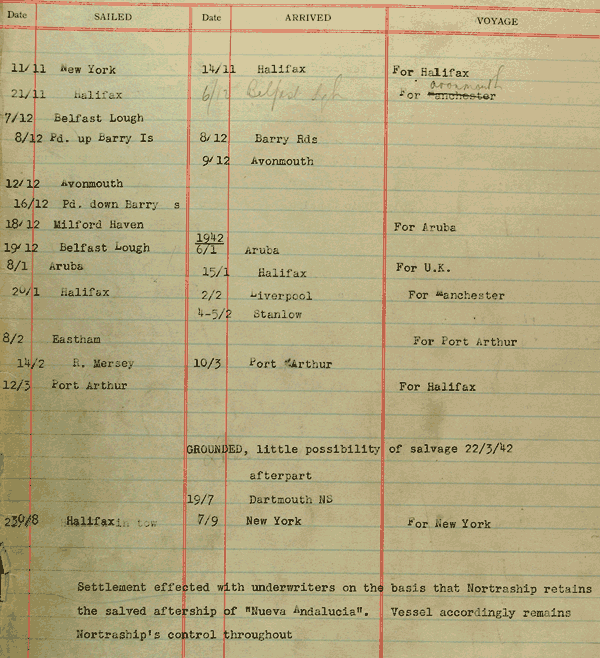
In the months leading up to its loss, Nueva Andalucia was operating across a wide Atlantic circuit—moving between New York, Halifax, the United Kingdom, and the Caribbean before shifting into the Gulf oil trade. The recorded movements show a ship in constant transition, working both supply routes and petroleum distribution, before its final voyage north toward Nova Scotia in March 1942.
In the final months of 1941, Nueva Andalucia moved steadily along the North Atlantic route, sailing from New York to Halifax before crossing to Belfast Lough and working cargo through Barry Roads, Avonmouth, and Milford Haven. By January 1942, her operations shifted south, arriving at Aruba before returning once more to Halifax and then on to Liverpool and Stanlow, tied into the industrial fuel supply network feeding wartime Britain.
From there, the pattern changed.
Clearing the Mersey in February, the ship crossed the Atlantic to Port Arthur, Texas, arriving in early March to load petroleum cargo. Within days, she sailed again—this time northbound, bound for Halifax. It would be her final voyage.
The surviving movement record traces Nueva Andalucia through its final trading pattern and into the loss itself, ending with the March 1942 grounding near Halifax and the later disposition of the salvaged after section.
The Break
On March 22, 1942, approaching the Nova Scotia coast in heavy weather, Nueva Andalucia grounded. The damage was catastrophic. The hull failed, and the vessel broke in two. Salvage was initially considered unlikely.
The forward section was lost.
The after section, however, remained intact enough to be recovered. In the months that followed, it was towed clear of Nova Scotia and brought to New York, where it lay idle. What remained of the ship was no longer a vessel—just a fragment of one, waiting for a decision.
That decision came later.

The Ship Before the Break
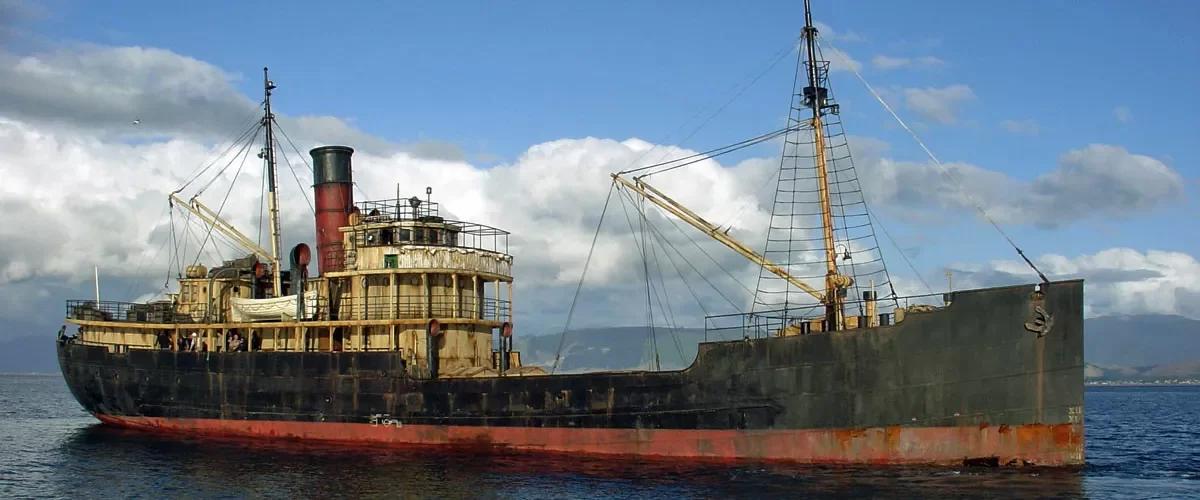
Built in Hamburg at Deutsche Werft and completed in March 1940, Nueva Andalucia entered service as a modern motor tanker designed for the petroleum trade. Owned by The Texas Company (Norway) and managed out of Oslo, the ship was part of a growing fleet built to move refined fuel across an expanding global network.
She was not a small vessel. At over 500 feet in length, with a deadweight of more than 14,000 tons, the ship was built for capacity and endurance. Powered by twin MAN diesel engines driving two propellers, she was capable of sustained ocean service, moving fuel between continents at a steady working speed. Her classification—Lloyd’s +100A1 for carrying petroleum in bulk—placed her firmly within the top standard of tanker construction of the time.
By the time she entered service, the world had already shifted. Within weeks, management of the vessel passed to Nortraship, placing her within the broader Norwegian merchant fleet operating under wartime conditions. From that point forward, Nueva Andalucia was not simply a commercial tanker—she was part of a system moving critical fuel across the Atlantic.
Rebuilt from What Remained
By 1946, the surviving afterbody had been towed again, this time to Newport News Shipbuilding & Dry Dock Company in Virginia. There, rather than being scrapped, it became the foundation for reconstruction. A new forepart was built and joined to the salvaged stern, effectively creating a new ship from the remains of the old.
The work was completed in February 1947.
The rebuilt vessel retained the name Nueva Andalucia, but it was no longer the same ship that had grounded off Halifax. Its dimensions shifted slightly, its tonnage adjusted, and its structure was now a combination of original and newly constructed sections. What had been lost was not replaced entirely—only enough was rebuilt to return the ship to service.
It was, in every sense, a continuation rather than a restoration.
A Second Life: The Ship That Returned
The loss of Nueva Andalucia in March 1942 should have marked the end of the vessel.
It did not.
Grounded in heavy weather on the approaches to Halifax, she broke apart under the strain—her structure failing to the point that the ship was effectively destroyed. The bow was lost. What remained was the after section, damaged but still intact enough to be considered recoverable.
Where most wrecks end, this one continued.
The stern section was raised, salvaged, and ultimately became the foundation for rebuilding. Rather than scrapping what remained, the decision was made to carry part of the ship forward—literally. The surviving structure was incorporated into a reconstructed vessel, returning to service in 1947 under the same name: Nueva Andalucia.
From that point on, the ship that sailed was no longer the one that had grounded off Nova Scotia—not entirely. It carried forward steel from the original hull, but it also represented something new: a wartime casualty reworked into a functioning tanker, built partly from what had been lost.
Into Service Again
After returning to service in 1947, Nueva Andalucia settled into the work it had been built for—moving petroleum across the Atlantic system that tied together refineries, storage hubs, and consuming markets. By the late 1950s, the ship appears regularly in company records, not as a rebuilt vessel of note, but simply as part of the operating fleet.
Those records—published internally in Texaco Tanker, a company magazine circulated among crews and shore staff—offer a rare view into that second life. They were not written as history. They were written as routine updates: ship movements, crew changes, short reports from voyages, and glimpses of life at sea. It is precisely that lack of drama that makes them valuable.
Through those entries, a pattern emerges.
Nueva Andalucia operated within a wide but consistent network. The Gulf Coast appears repeatedly—Port Arthur in Texas acting as a loading point tied to refinery output. From there, the ship moved into the Caribbean: Aruba, Curaçao, and Trinidad, each serving as key transshipment and storage hubs in Texaco’s distribution system. South American ports, including Brazil, and oil-producing regions such as Maracaibo in Venezuela, were also part of the circuit. On some voyages, the route extended further, crossing the Atlantic to Rotterdam, linking directly into European markets.
The cargo was almost always the same—petroleum products. Gasoline, lubricating oils, refined fuels. The work was repetitive by design: load, sail, discharge, repeat. The language used in the company publications reflects that rhythm—“regular service,” “established routes,” “steady operations.” There is no sense of exception, only continuity.
A Ship in a System
What becomes clear in the Texaco Tanker material is that Nueva Andalucia was not operating independently, but as part of a tightly coordinated system. The ship appears alongside others moving through the same routes—American, Swedish, and Norwegian tankers crossing paths between the Gulf, Caribbean, and Atlantic. Encounters with vessels such as Hampton Roads and Gustav Erikson are noted almost casually, a reminder that these sea lanes were crowded with ships performing the same work. Nueva Andalucia was one unit in a much larger flow of fuel moving continuously between continents.
Cargo and Purpose
While the records rarely dwell on specifics, they make clear what the ship carried and why it mattered. The cargoes—gasoline, lubricating oil, and other refined petroleum products—were not raw materials, but finished fuels ready for use. This places Nueva Andalucia not at the beginning of the supply chain, but in its final stages, distributing energy outward from refineries to markets. Ports like Aruba and Curaçao were not just stops; they were critical nodes in that system, where storage, blending, and redistribution allowed oil to move efficiently across regions.
The Geography of Oil
The routes themselves tell the story. From Port Arthur on the Gulf Coast, the ship moved into the Caribbean network—Aruba, Curaçao, and Trinidad—before continuing south to Brazil or west to Maracaibo, one of the most important oil-producing regions of the time. On some voyages, the route extended across the Atlantic to Rotterdam, linking directly into European demand. It was not a single route but a flexible circuit, adapting to cargo needs while remaining anchored to the same core geography of production, storage, and distribution.
Routine, by Design
The language used in the company publications is consistent across years: “regular service,” “established routes,” “operations without interruption.” It is not incidental wording—it reflects how tanker operations were designed to function. Success was measured in consistency, not variation. The absence of incident is itself the story. For Nueva Andalucia, the second life was defined not by what happened, but by what did not—no further loss, no major disruption, only the steady continuation of work.
Crew and Continuity
The human side appears in brief but telling moments. Crew members completed long periods aboard and went ashore, replaced by others stepping into the same roles. Engineers advanced, radio operators returned to familiar equipment, and officers rotated through command. The ship remained constant, even as the people aboard it changed. Over time, this created a continuity of operation that did not depend on individuals, but on the structure of the work itself.
Maintenance and Endurance
There are occasional references to maintenance—yard periods, inspections, necessary pauses after long stretches at sea. These are mentioned briefly, almost as an aside, but they point to the reality of a ship that had already survived catastrophic damage. That Nueva Andalucia required only routine servicing through the late 1950s and early 1960s suggests that the reconstruction had been successful. Whatever had been rebuilt in 1947 was not temporary—it endured.
Back to Nova Scotia
For all the miles that followed—for every voyage between the Gulf, the Caribbean, South America, and across the Atlantic—Nueva Andalucia never left Nova Scotia behind.
Part of the ship remained there.
When she broke apart in March 1942, the bow was lost to the coast. What could not be salvaged stayed where it fell, settling into the cold water off the approaches to Halifax. That section of the ship never returned to service. It became something else entirely—part of the seabed, part of the long record of ships that did not make it in.
What sailed again in 1947 carried only half of that story.
The rebuilt vessel moved through established trade routes, recorded in company publications as just another tanker in steady service. Ports changed. Crews rotated. Cargo moved without interruption. Over time, the ship’s past disappeared from the record, replaced by routine. There is no mention in those later accounts of where it had been left behind.
But the separation remained.
One part of Nueva Andalucia continued across the Atlantic for years, working quietly within the global oil trade. The other remained off Nova Scotia, unchanged, marking the point where the ship had failed. Together, they form a single story—one that exists in two places at once.
A working vessel in motion.
And a wreck, at rest.
Both are Nueva Andalucia.
Ask me about the Highfield and Suzuki offshore expedition platform — engineered for serious divers.
#HighfieldHunter #HighfieldPatrol760 #SuzukiEngines #Suzuki-300hp #HalifaxShipwrecks #NSMaritimeHistory #NovaScotia #Halifax #NuevaAndalucia
Afghan Prince
Four Months on the Reef:
The Afghan Prince and the November Gale
Highfield Hunter
For more than four months, the Afghan Prince lay fixed on the reef off Cape Breton—held between salvage and loss. Pumps ran. Cargo was stripped. Crews remained aboard, working against tide and weather.
In London, her fate was reduced to numbers—guineas rising as confidence fell.
On the coast, the outcome was already being decided by wind and sea.
The Builder — Sunderland and the Wear
The Afghan Prince was built in 1903 on the River Wear at Sunderland, one of the most productive shipbuilding centres in the world at the turn of the twentieth century.
By that time, Sunderland yards were launching vessels in rapid succession—steel cargo steamers designed not for distinction, but for reliability. Ships like the Afghan Prince were built to work: standardized hulls, practical layouts, and triple-expansion engines that powered the global movement of goods.
She was a steel screw steamer of approximately 4,900 tons, intended for general cargo service. Nothing about her construction stood out.
That was precisely the point.
Vessel Particulars
- Name: S.S. Afghan Prince
- Type: Steel screw steamship (cargo)
- Built: 1903
- Builder: Short Bros Ltd
- Owner: Prince Line Ltd
- Tonnage: 4,923 gross tons
- Official Number: 118617
- Propulsion: Triple-expansion steam engine, single screw
- Voyage at Loss: United States to Sydney, Nova Scotia (to assemble for convoy to England)
- Cargo: General cargo including steel and approximately six million gallons of alcohol
She was large enough that her loss would matter—but not so large as to be irreplaceable within wartime trade.
A Wartime Steamer
By 1918, Atlantic shipping operated under constant pressure. German U-boats threatened established routes, and convoy systems had become essential. Sydney, Nova Scotia, served as one of the primary assembly ports.
Delays meant missing convoy windows. Missing convoys meant exposure.
Masters approaching unfamiliar coasts were balancing navigation with timing. In fog, decisions were shaped not only by seamanship, but by the urgency of war logistics.
The Afghan Prince was part of that system.
On 30 July 1918, in dense fog off Cape Breton, she ran aground on Forchu Shoal near Louisbourg.
The Grounding at Forchu
Forchu Shoal lies along an exposed stretch of coastline where reefs and shoals extend seaward beneath frequently shifting fog banks. Navigation in reduced visibility demands extreme caution.
Navigation here becomes incremental. Bearings replace visibility. Confidence replaces certainty.
The Afghan Prince approached under heavy fog. The land was obscured. The reef was invisible.
At inquiry, it was determined that the vessel had been navigated carefully up to the moment of grounding—but had maintained half speed in dense fog along an unfamiliar coast.
The court concluded that this speed was not justified. At the same time, it acknowledged wartime submarine concerns, which discouraged vessels from stopping in exposed waters.
The master was reprimanded, but retained his certificate.
It was not recklessness.
It was misjudgment within pressure.
The Master and the Margin for Error
Guyon Island and the Limits of Light
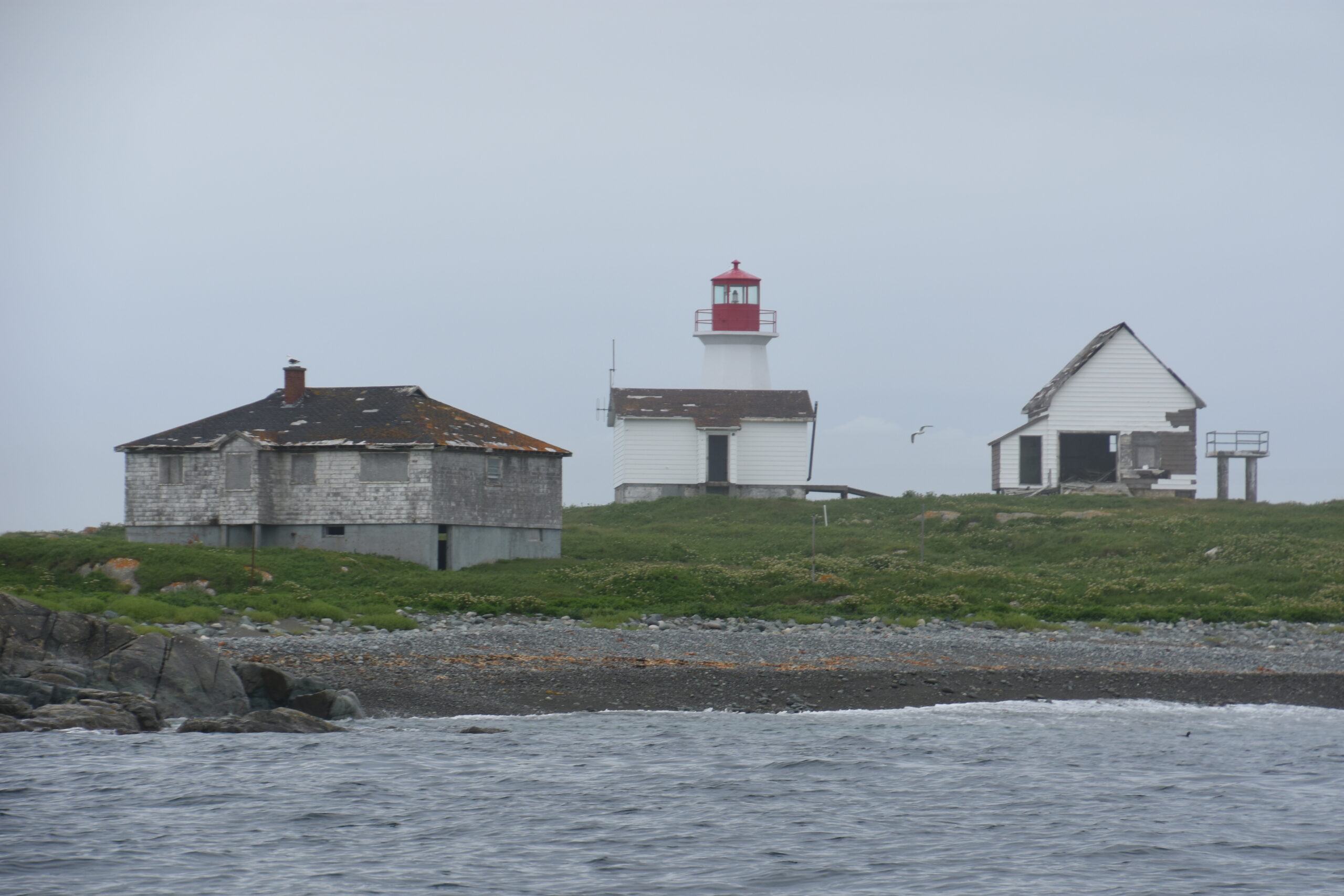
The vessel grounded off Guyon Island, a low, exposed outcrop marking the reef system.

Lighthouses mark position. They do not remove fog. They do not compensate for speed misjudged by minutes or charts lacking precision.
Standing on the island, the margin becomes clear. The distance between safe water and reef is measured in yards.
The grounding was not caused by absence of warning—but by the convergence of fog, navigation, and geography.
Gabarus and an Exposed Coast
The nearest shoreline is Gabarus, a small coastal community long familiar with the risks of offshore navigation.
This coast offers little shelter. Swell runs directly from the Atlantic. Fog is common. Even with lighthouses, strandings were not unusual.
When the Afghan Prince struck, local residents would have seen cargo begin to wash ashore.
The wreck quickly became part of the coastal environment.
The reef was not an anomaly. It was part of a coast long known for demanding precision.
Five Weeks on the Shoal
The grounding did not immediately destroy the vessel.
Salvage began quickly. Pumps were installed. Divers were engaged. Cargo was removed. At times, the engine room was kept dry.
For five weeks, crews remained aboard.
But progress was temporary.
The vessel leaked in multiple holds. Pumps failed. Refloating attempts were unsuccessful. With each tide and swell, structural strain increased.
Life aboard was not static. The ship moved constantly—lifting, settling, twisting against the reef.
There was no single moment of collapse. Only accumulation.
The ship did not need to break to be lost.
It only needed to remain where it was.
The Overdue Market: Risk in Guineas
Within days, the Afghan Prince appeared in the London overdue market.
- 2 August: 30 guineas
- Rising steadily to 35, 40, 50
- Mid-September: 60–65 guineas
- Late September: 80 guineas
Each increase reflected declining confidence.
Salvage reports suggested progress. The market did not follow.
By October, rates plateaued. The vessel remained—but did not improve.
By early November, rates rose again to 85 guineas.
The ship had not yet disappeared.
But the market had already decided.
The November Gales
Late November brought heavy gales to the Nova Scotia coast.
The hull, already weakened, could not withstand sustained storm conditions.
What had been gradual became immediate.
Steel plates failed. Seams opened. Sections gave way under repeated impact.
The wreck did not vanish instantly—but it began to break apart.
Within days, newspapers reported that the vessel had been destroyed.
The reef had held her first.
The storm finished her.
Cargo and Consequence
As the vessel broke apart, cargo came ashore.
Barrels and drums were driven onto the coastline. Some were recovered intact.
Reports cited six million gallons of alcohol and a large steel consignment.
In coastal communities like Gabarus, such cargo was not abstract—it was opportunity.
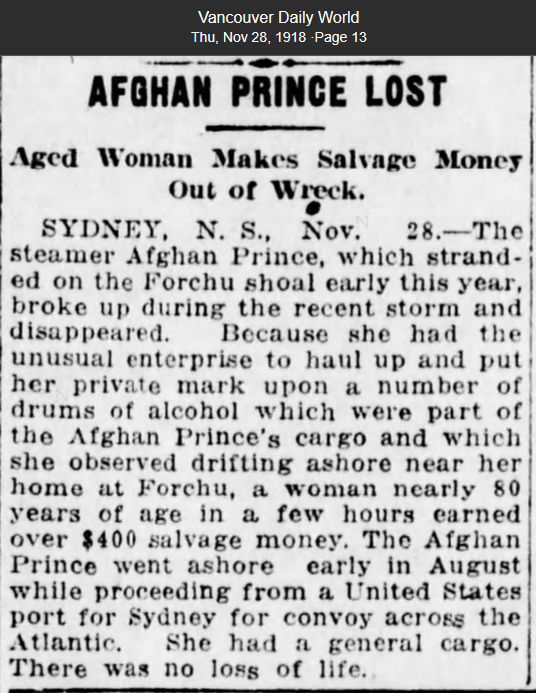
One report describes an elderly woman, nearly eighty years old, gathering drums and marking them as her own. In doing so, she secured salvage rights and earned over four hundred dollars.
It was an extraordinary sum.
The ship had crossed the Atlantic carrying industrial cargo. In its destruction, that cargo became part of a local economy.
The sea had taken the ship.
It returned what it did not keep.
The Ship in the Newspapers
The history of the Afghan Prince survives in fragments.
Launch reports in 1903 recorded her construction and even an injury during fitting-out.
In 1918, brief marine columns tracked her grounding and salvage attempts.
Financial pages recorded her value in guineas.
Personal notices recorded loss—most notably the death of her Chief Officer, aged twenty-seven, in October 1918.
By late November, newspapers reported her final destruction.
Across time, these fragments form a complete arc:
construction, service, grounding, salvage, loss.
The Huntington Diaries: A Local Record
A more immediate record survives in the Huntington diaries of Louisbourg.
On 30 July 1918:
“British steamer ‘Afghan Prince’ ran ashore near Guyon Island.”
By 6 August, salvage was underway.
On 18 October, the diary records the death of the Chief Officer from Spanish Influenza.
Then, on 14 November:
“Terrific gale… wrecked steamer ‘Afghan Prince’… entirely disappeared.”
The entry is brief. The event was not.
The wreck intersects here with something larger—the global pandemic of 1918.
The loss was not only structural.
It was also human.
A Rarely Documented Decline
Few wrecks allow such detailed observation of loss.
Navigation, wartime pressure, salvage engineering, insurance economics, and seasonal weather—all interacting over time.
The Afghan Prince did not vanish suddenly.
She endured, weakened, and was steadily revalued before final destruction.
By the time the storm came, the outcome had already been understood.
A Coast That Repeats Itself
The loss was not unique.
Other wrecks—such as the Dufferin Bell and Langeeridge—lie within the same stretch of coastline.
Different ships. Same environment.
Fog, current, exposed reefs, and narrow margins for error.
These wrecks are not isolated points.
They are part of the same system.
The coast does not separate them.
It gathers them.
Searching for a Launch at Gabarus
Access today is not straightforward.
Old records indicated a boat launch at Gabarus. We traced the coordinates to a location overlooking the harbour.
The launch existed—at least in memory.
It lay within private property. No signage. No public access.
We chose not to cross.

Access is part of the challenge.
In 2005, the wreck was visited by charter, without recorded coordinates.
In 2018, a return search was unsuccessful.

The absence is not conclusive.
Over time, storm action and sediment can reduce even large wrecks to scattered remains.
What Remains
A recovered porthole, likely from a wreck along this coast, speaks to what time leaves behind.

Steel becomes fragments. Structure becomes memory.
The wreck itself may now be reduced—broken, scattered, or buried.
But the record remains intact.
The Process of Loss
The Afghan Prince was built as one of many.
Worked as one of many.
Lost in a way not uncommon to this coast.
What distinguishes her is not the wreck—but the record.
Few vessels allow us to observe loss as a process:
- Construction
- Service
- Grounding
- Salvage
- Financial decline
- Final destruction
Not a moment—but stages.
The Coast Today
The waters off Cape Breton appear unchanged.
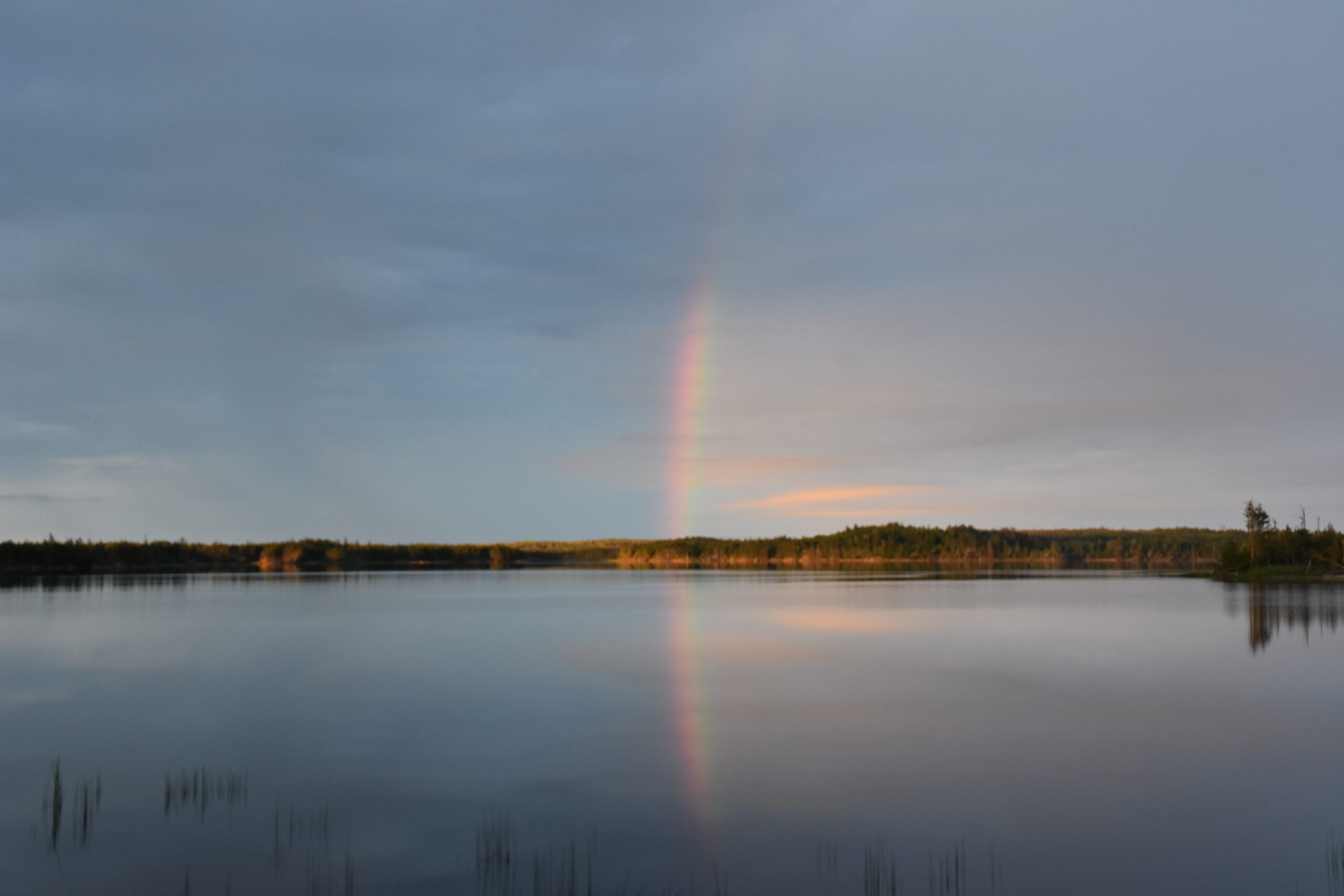
The reef is still there.
The margin is still narrow.
And the outcome, given the same conditions, would not need to change.
Ask me about the Highfield and Suzuki offshore expedition platform — engineered for serious divers.
#HighfieldHunter #HighfieldPatrol760 #SuzukiEngines #Suzuki-300hp #HalifaxShipwrecks #NSMaritimeHistory #NovaScotia #CapeBreton #AfghanPrince

Costa Rican Trader
COSTA RICAN TRADER
Four Names, One Hull — A Working Ship Across Borders
Highfield Hunter
Some ships are remembered for how they end.
Others are remembered for how long they endure.
The Costa Rican Trader was not a vessel of headlines or singular catastrophe. She did not vanish in deep water or burn in the night. Instead, she worked—quietly, continuously—across decades, coastlines, and industries.
Her story is not one of a single identity, but of many.
Before she was Costa Rican Trader, she was something else.
And before that—something else again.
To understand the ship, you have to follow the names.
The Builder — Albina and the Postwar Transition
The ship that would become Costa Rican Trader was built in 1946 by Albina Engine & Machine Works in Portland, Oregon.
Originally an engineering and repair yard, Albina expanded during the Second World War to produce practical, working vessels—tugs, barges, and cargo ships built for reliability rather than recognition. These were not ships designed to stand out. They were built to move material, to operate consistently, and to remain in service.
By the time Washington Cedar was completed, the war had ended—but the system that built her had not. Shipyards continued producing vessels to support the reopening of global trade, and ships like this transitioned directly into commercial service.
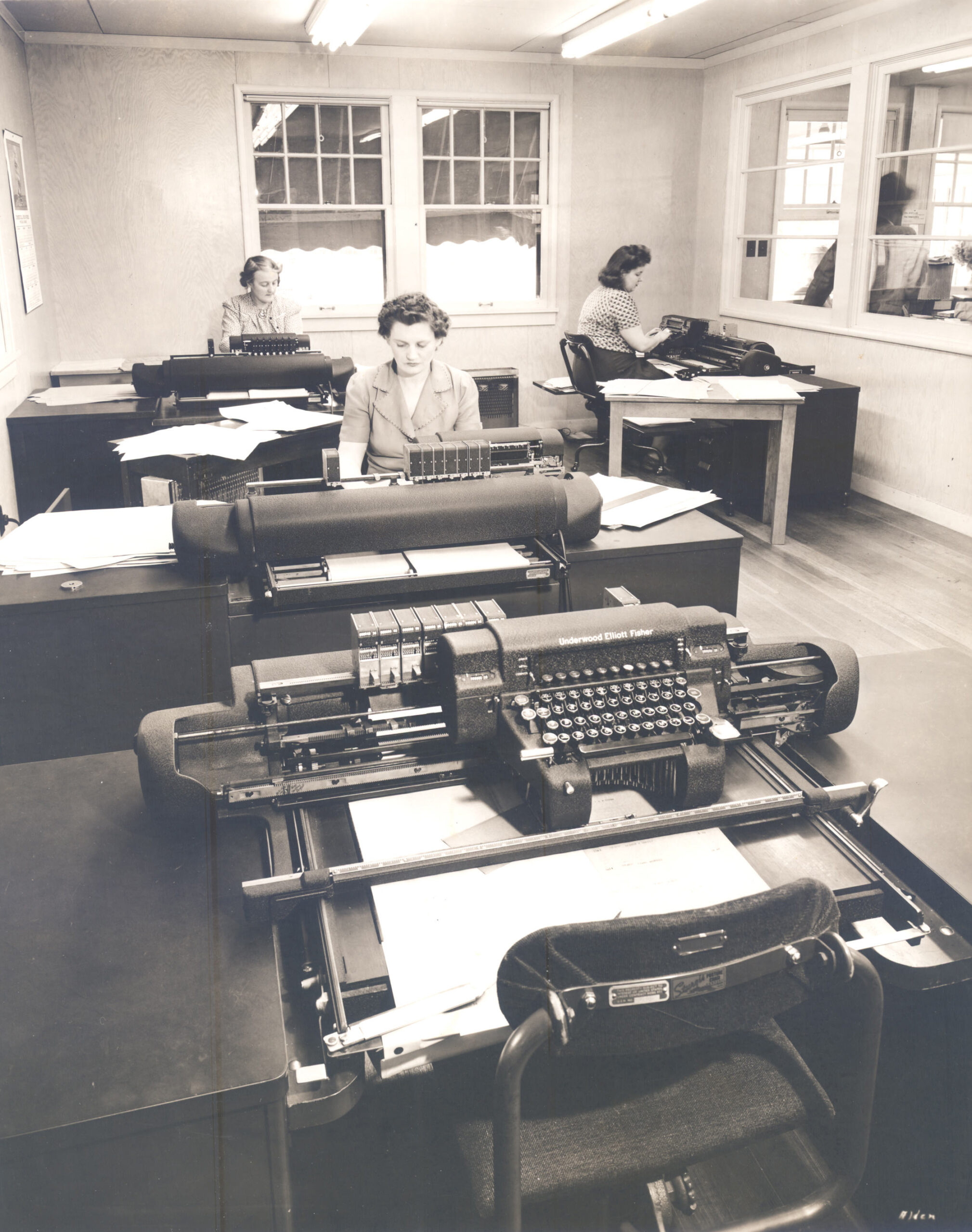
She entered that world as part of the War Shipping Administration network, moving into operation under established trade routes and experienced operators.
There was nothing remarkable about her design.
That was the point.
She was built to work—and to keep working.
The First Life — Washington Cedar
She was launched as Washington Cedar, a name tied to the timber trade of the Pacific Northwest.
Her early voyages reflected that origin. Cargoes of southern pine moved south toward Puerto Rico and the Caribbean, part of the steady reopening of postwar trade routes. These were not small shipments—individual voyages could carry over a million feet of lumber, stacked across deck and hold, exposed to weather and requiring careful handling.

This was material destined for construction—housing, infrastructure, and expansion in regions where demand was growing quickly.
Ships like Washington Cedar formed part of what might be called the invisible fleet. They did not make headlines, but they sustained the movement of goods that made growth possible. Port to port, voyage to voyage, they operated within systems that depended on consistency more than recognition.
The work was steady.
Predictable.
And constant.
A Change in Trade — Becoming Ponce
At some point in her working life, the vessel changed hands—and with that, identity.
She became Ponce.
This marked a shift into a different kind of operation—one tied directly to industrial production. Under the ownership of Ponce Cement, part of the Ferré industrial network in Puerto Rico, the vessel entered a structured supply system feeding construction demand across the Caribbean and Florida.
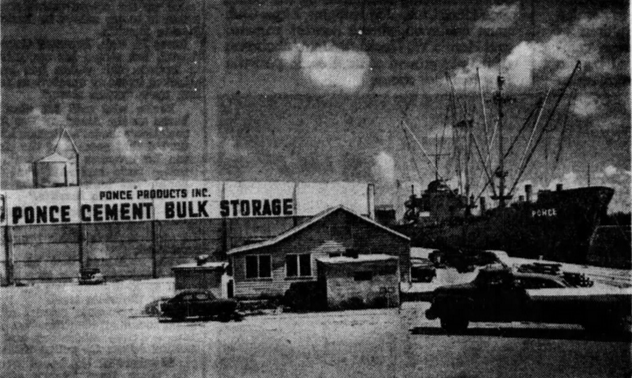
By the early 1950s, cement was in high demand. Population growth and development in South Florida created pressure on supply chains that were still adapting to postwar conditions.
Ships like Ponce became part of the solution.
The Cement Trade
Cement does not move like other cargo.
In bulk form, it behaves almost like a fluid—fine, shifting, and sensitive to moisture. It requires controlled handling, careful transfer, and systems designed specifically for its movement.
At Port Everglades, unloading Ponce was not a simple operation.
Compressed air systems drove the process. Hoses were lowered into the hold, drawing cement upward and moving it through pipes into shore-side storage. The operation was continuous, mechanical, and efficient—but it required coordination at every stage.
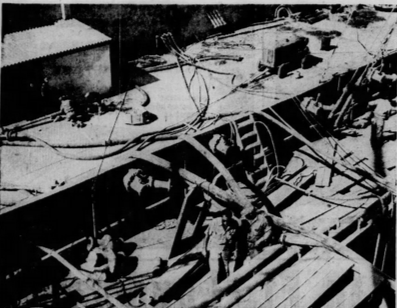
Air compressors pulsed. Material moved through enclosed lines. Fine dust settled across deck and equipment.
From ship to warehouse.
From warehouse to silo.
From silo to truck.
And from there, into the expanding footprint of South Florida’s construction boom.
Supplying Growth
There were times when cement was not simply a commodity—but a constraint.
Shortages could delay projects. Construction slowed. Demand outpaced supply.
When a vessel like Ponce arrived, it mattered.
Not symbolically—but practically.
Concrete could be poured. Foundations completed. Roads extended.
The ship did not create the boom.
But it sustained it.
Into International Trade — Mexican Trader
Under the name Mexican Trader, the vessel entered another phase—one defined less by a single company and more by global commodity movement.
Her cargo shifted again—this time to sulphur, loaded at Gulf Coast ports such as Coatzacoalcos, Mexico.
Sulphur was an industrial material, used in fertilizer production, chemical processing, and manufacturing. Like cement, it moved in volume and required specialized handling, though in different form.
The trade routes changed.
The structure of operation changed.
And by this stage, the vessel sailed under a Liberian registry—a common practice for working ships engaged in international trade during this period. Reflagging allowed vessels to operate within different regulatory and economic frameworks, extending their viability in a competitive global market.
She was no longer tied to one identity.
But she remained what she had always been:
A working ship.
Final Identity — Costa Rican Trader
By 1967, the ship was no longer young.
But she remained in service.
Across her four names—Washington Cedar, Ponce, Mexican Trader, and finally Costa Rican Trader—she had adapted to changing industries, cargoes, and ownership structures.
What remained constant was the hull itself.
Proven. Worked. Still moving.
It would be under this final name that her long working life came to an end.
The Loss — Halifax Harbour, April 28, 1967
She had been in Atlantic Canada only briefly.
After undergoing rudder repairs in Halifax, the Costa Rican Trader departed under a building southeast gale. Conditions outside the harbour were already deteriorating—winds rising, seas building, and the western approaches exposed.
At approximately 10:00 a.m., she was driven off course.
The impact forced her onto a rocky ledge near Halibut Bay, just feet from shore. With the bow fixed and the stern exposed to open water, the vessel was caught in a position that offered little chance of recovery.
Tugs were dispatched. Helicopters circled overhead.
But the sea held her fast.
The Strain
Each wave did more than strike the hull.
It lifted it.
Twisted it.
Dropped it again against rock.
With one end fixed and the other free, the structure was forced to absorb stresses it was never designed to endure. The hull began to flex—first slightly, then visibly.
Below deck, the sound would have changed.
From impact…
to strain…
to failure.
Abandon Ship
The crew—26 men—left in sequence.
A gangplank was lowered to the rock below. One by one, they crossed from steel to shore. No one was lost.
Behind them, the ship remained.
Breaking Up
By the following day, reports had shifted:
First “buckled.”
Then “breaking.”
Then “broken in two.”
The hull had failed.

Photographs show her lying against the rock—structure distorted, deck compromised, the accumulated weight of years reduced to something the sea could dismantle piece by piece.
A salvage expert would later describe any attempt to recover her as “like trying to refloat a sieve.”
The declaration came quickly:
Total loss.
The Wreck Today
The remains of the Costa Rican Trader lie where she grounded—along the exposed coastline near Halibut Bay.
Time and sea have done what salvage could not.
What was once a continuous structure is now scattered—sections collapsed, shifted, or carried away entirely. The site remains exposed, shaped by the same surge and conditions that ended the vessel’s working life.
It is not a sheltered wreck.
It is a reminder.
Why This Ship Matters
The Costa Rican Trader is not defined by her loss alone.
What makes her story compelling is continuity.
Across her names, she reflects the movement of industry itself:
- timber and postwar reconstruction
- cement and industrial expansion
- bulk cargo and global trade
She adapted.
She endured.
She worked.
And like many ships of her kind, she became visible only at the end.
~~~
She was never famous.
But she was always moving.
And sometimes, that’s the better story.
Ask me about the Highfield and Suzuki offshore expedition platform — engineered for serious divers.
#HighfieldHunter #HighfieldPatrol760 #SuzukiEngines #Suzuki-300hp #HalifaxShipwrecks #NSMaritimeHistory #NovaScotia #Halifax #CostaRicanTrader

Gertrude DeCosta
The Gertrude DeCosta
A Collision in the Fog — Halifax Harbour, March 18, 1950
Highfield Hunter
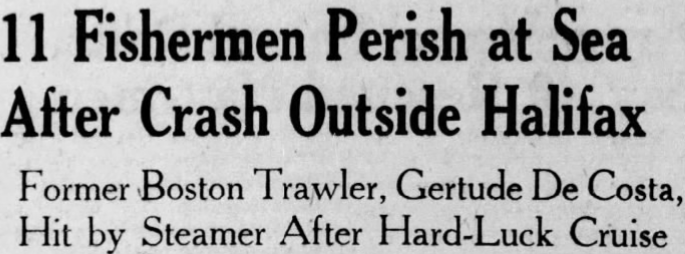
A Harbour That Does Not Forgive
Halifax Harbour has long been described as a place of refuge.
For vessels crossing the North Atlantic, it offered shelter—deep water, protection from open seas, and a direct connection to one of Canada’s most important ports. But for those who worked within it, the harbour was not simply a destination.
It was a system.
Traffic moved along understood paths shaped by shoals, channels, and the narrowing entrance between McNabs Island and the mainland. Vessels inbound from the Atlantic converged with outbound ships leaving the inner harbour. Even in clear weather, it was a place that demanded attention.
In fog, it demanded judgment.
Distances collapsed. Lights appeared without context. A vessel that seemed safely off might already be committed to a closing course. Sound signals—whistles—were meant to bridge that uncertainty, but even they could be lost in shifting air.
Traffic did not stop for fog.
Fishing vessels returned from the Banks. Coastal freighters moved between ports. Larger ships maintained schedule.
It was within this working, compressed environment that two vessels moved toward one another.
One inbound.
One outbound.
Neither fully aware of how little time remained.
The Vessel
The Gertrude DeCosta was a working fishing schooner of a type once common along the Nova Scotia coast.
Launched in 1912 and registered out of Yarmouth, she measured approximately 115 feet and represented a transitional era in maritime design—diesel-powered, but still carrying sail when conditions allowed. By 1950, vessels like her were no longer modern, but they remained essential.
She operated within the fleet of Sweeney Fisheries Ltd., one of the largest fishing enterprises on the East Coast. From Yarmouth, Sweeney vessels worked the Grand Banks and beyond, forming part of a broader system that extended from catching to processing and distribution.
Fishing on the Banks was not a single task, but a coordinated system.
Dories formed its core. Each day, small boats were launched from the schooner, spreading out across the fishing grounds. At day’s end, they returned, their catch hauled aboard and processed.
It was efficient.
It was also dangerous.
Days earlier, one crewman had been lost when a dory overturned. Another—Morton Tanner—survived.
The voyage continued.
It always did.
But such events changed the tone aboard. By the time the DeCosta turned toward Halifax, she carried more than her catch.
She carried the weight of what had already happened.
The Collision — The Moment It Failed
In the early hours of March 18, 1950, the Gertrude DeCosta approached Halifax under diesel power.
The watch was set. The vessel held her course. Ahead, the glow of Halifax spread through the fog.
Somewhere within that same confined space, the Island Connector was outbound—larger, faster, and operating within the same narrow approach.
At first, there was no alarm.
A light appeared.
Then another.
To those aboard the DeCosta, the lights resolved into the familiar pattern of an approaching vessel—one that, by their understanding, would pass clear.
The assumption was made:
They had the right of way.
For a time, that assumption held.
But in fog, time compresses.
Distance closes faster than it can be judged. A vessel that should alter course does not—or does so too late to matter.
Recognition came suddenly.
The captain reacted.
“Haul her hard over.”
The wheel was put to port.
But by then, the geometry of the two vessels had already collapsed.
Out of the fog, the Island Connector emerged—not as a distant shape, but as an immediate presence.
There was no room left.
No time to recover.
The freighter struck the schooner aft of the main rigging.
The hull opened.
Water entered immediately.
And within one to two minutes, the Gertrude DeCosta was gone.
What the Survivors Saw
What followed was not a single account, but several—each revealing a different part of the same moment.
At approximately 2:00 AM, Robert Parker was at the wheel. The vessel was making steady headway at roughly six knots. The first sign of danger came as lights on the starboard bow—distant, uncertain.
The assumption remained: the other vessel would alter course.
It did not.
Captain Haslem Knickle gave the order to turn. The wheel was put over hard to port.
Moments later, the Island Connector emerged from the fog.
The collision was sudden and violent.
The schooner was struck aft. The hull opened immediately. There was no time to launch boats or organize escape.
On deck, men called for knives to cut the dories loose.
No one had one.
The vessel began to sink almost at once.
Rigging tightened. Lines became entanglement. Movement was restricted just as it was most needed.
Men climbed instinctively toward the mainmast.
There were too many.
There was too little time.
Then the vessel disappeared beneath them.
In the Water
Survival did not end with escape from the vessel.
It began again in the water.
Edward Tanner, the ship’s cook, went down with the schooner and surfaced among wreckage. Others were thrown clear or dragged under before resurfacing.
Parker was pulled from the wheelhouse and entangled in rigging, his hand crushed against the freighter’s hull before he broke free.
Some reached floating debris.
Some reached dories that had come loose.
Some reached lines thrown from the Island Connector.
Others did not surface.
The water was cold—damned cold.
Men who had never swum before found themselves doing so.
Rescue and Aftermath
The crew of the Island Connector responded quickly.
Ropes and cargo nets were thrown over the side. Survivors were hauled aboard—injured, exhausted, and in shock.
Inside, they gathered in the engine room, recounting what had happened in fragments.
Two bodies were recovered immediately.
Others were missing.
Hours later, one washed ashore at Maugher’s Beach.
By daylight, the news had spread through Halifax.
Fishing vessels were not anonymous. Crews were known. Names travelled quickly—from dock to shore, from harbour to home.
The harbour did not close.
Traffic continued.
But the awareness remained.
The Dead
Eleven men were lost.
Among them were Captain R. Haslem Knickle of Lunenburg and his father, Otto. George Schrader and his son Dave. Morton Tanner—who had survived the earlier dory accident only days before.
In several cases, fathers and sons did not return.
The vessel was gone in minutes.
And with it, nearly two-thirds of her crew.
The loss was not individual.
It was generational.

The Inquiry
A formal inquiry followed.
Testimony from survivors described the lights they saw, the signals they did not hear, and the final moments before impact.
Three questions defined the proceedings:
Speed.
Position.
Responsibility.
Counsel for the schooner argued the Island Connector was travelling too fast for fog. Others suggested the schooner had altered course into danger.
Between those positions stood the central fact:
Two vessels had approached one another in fog.
Each had acted.
Neither had acted in time.
What Remains
The Gertrude DeCosta does not remain intact on the seabed.
Like many working vessels lost in confined waters, she has broken apart—reduced to scattered remnants shaped by time and current.
But the wreck is not the only thing that remains.
Across Nova Scotia, the memory endured—not through formal record alone, but through families, conversations, and quiet acknowledgment.
Fishing vessels are built to work.
They are not intended to endure in memory.
And yet, when loss comes suddenly—without warning—they become something else.
Not symbols.
But markers.
Of a moment when routine failed.
When experience was not enough.
When the sea took more than it gave.
Closing
The fog that morning eventually lifted.
What happened within it did not.
Ask me about the Highfield and Suzuki offshore expedition platform — engineered for serious divers.
#HighfieldHunter #HighfieldPatrol760 #SuzukiEngines #Suzuki-300hp #HalifaxShipwrecks #NSMaritimeHistory #NovaScotia #Halifax #GertrudeDeCosta
Havana
The Sudden Harbour Loss of the S.S. Havana (1891–1906)
Highfield Hunter
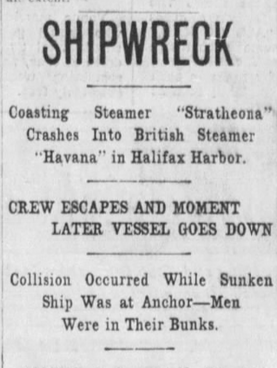
In April 1906, the steam schooner Havana did not vanish in a North Atlantic gale. She did not strike ice, nor founder on a remote reef. Instead, she sank in Halifax Harbour — within sight of the city’s wharves, warehouses, and growing industrial waterfront. Struck while at anchor by the outbound steamer Stratheona near Point Pleasant, Havana slipped beneath the surface in roughly ten minutes. No lives were lost. Yet the vessel belonged to Captain James Augustus Farquhar — one of Nova Scotia’s most accomplished maritime figures — and that fact transforms a minor harbour casualty into a story of transition, irony, and enduring legacy.
The Collision — Halifax Harbour, April 1906
Contemporary reports describe Havana lying at anchor when the coasting steamer Strathcona, bound outward from Halifax, collided with her. Captain Farquhar and most of the crew were asleep below decks; only the watch remained on duty. The impact was decisive.
Crew members rushed topside and were taken aboard the Stratheona. Within minutes, Havana was beyond recovery. There was no prolonged distress, no drawn‑out salvage attempt — just a swift, efficient sinking in one of Canada’s busiest working harbours.
Primary Source Extract:
“With the exception of the watch on deck… Within ten minutes the Havana disappeared.”
The brevity of the event is striking. Many Atlantic shipwrecks unfolded in dramatic weather, but Havana was undone not by storm, but by proximity — a reminder that danger persists even in sheltered waters.
Sable Island — A Childhood in Wreck Culture
To understand Havana’s deeper meaning, one must begin on Sable Island. Captain James Augustus Farquhar’s formative years were spent in an environment defined by shipwreck. Sable Island’s shifting sandbars had claimed hundreds of vessels, and salvage operations were a routine part of island life.
Growing up amid grounded hulls and recovery efforts, Farquhar learned early about navigation, risk, and the mechanics of maritime survival. Wreck was not merely tragedy — it was discipline, technical challenge, and opportunity.
This upbringing shaped a mariner comfortable with calculated risk. It explains his later mastery of deep‑sea diving and salvage, and it frames the quiet irony of Havana’s fate: a man raised among wrecks would eventually lose a vessel of his own — not offshore, but in the harbour he knew best.
Havana — A Transitional Working Vessel
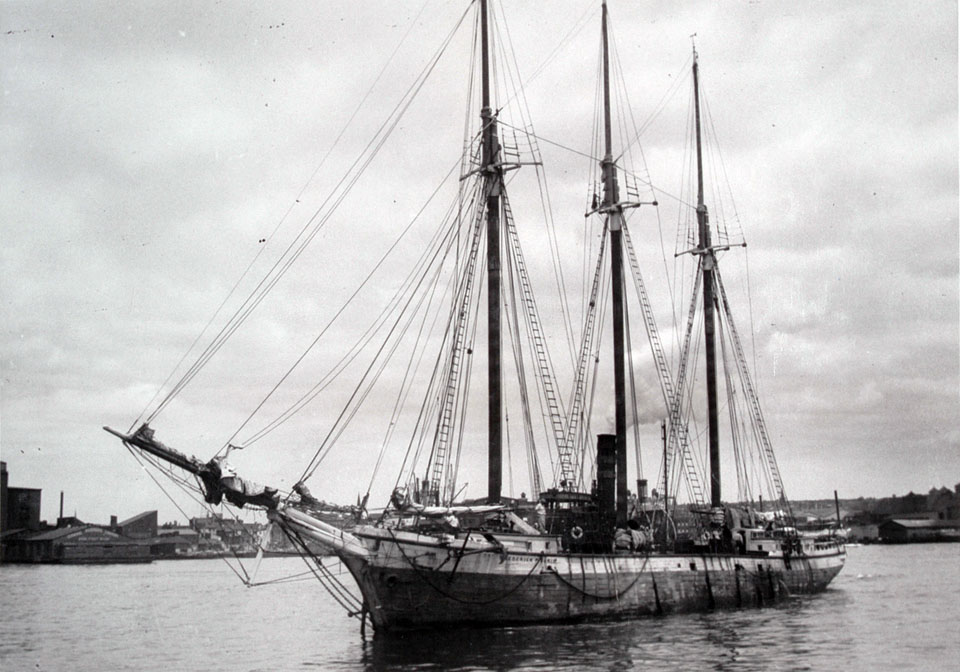
Built in 1891 at Hantsport, Nova Scotia, Havana was a three‑masted steam schooner representative of the transitional era between sail and steam. Traditional rigging remained economically useful, while mechanical propulsion provided reliability and maneuverability in harbour and coastal trade.
Such vessels were practical rather than glamorous. Havana was not a passenger liner nor a naval vessel, but a working ship engaged in sealing and coastal commerce — the backbone of Atlantic Canada’s maritime economy.
Her loss therefore interrupted not only a voyage, but a system of trade and seasonal enterprise closely tied to the ambitions of her owner.
The Builder – Hantsport and the Churchill Yard
The Havana was built in 1891 at Hantsport, Nova Scotia, by shipbuilder George W. Churchill, a name rooted deeply in one of the province’s most productive shipbuilding families.
To understand the vessel, you have to understand where she came from.
Hantsport, sitting along the tidal estuary of the Avon River at the edge of the Minas Basin, was not simply a village—it was a shipbuilding engine. The extreme Fundy tides, nearby timber resources, and direct access to Atlantic trade routes made it an ideal place to build and launch wooden vessels.
At the center of this industry was the Churchill shipyard, founded by George’s father, Ezra Churchill, one of the most influential shipbuilders in 19th-century Nova Scotia. From the 1840s onward, the Churchill operation helped transform Hantsport into a major maritime construction hub, producing dozens upon dozens of large wooden vessels for Atlantic trade.
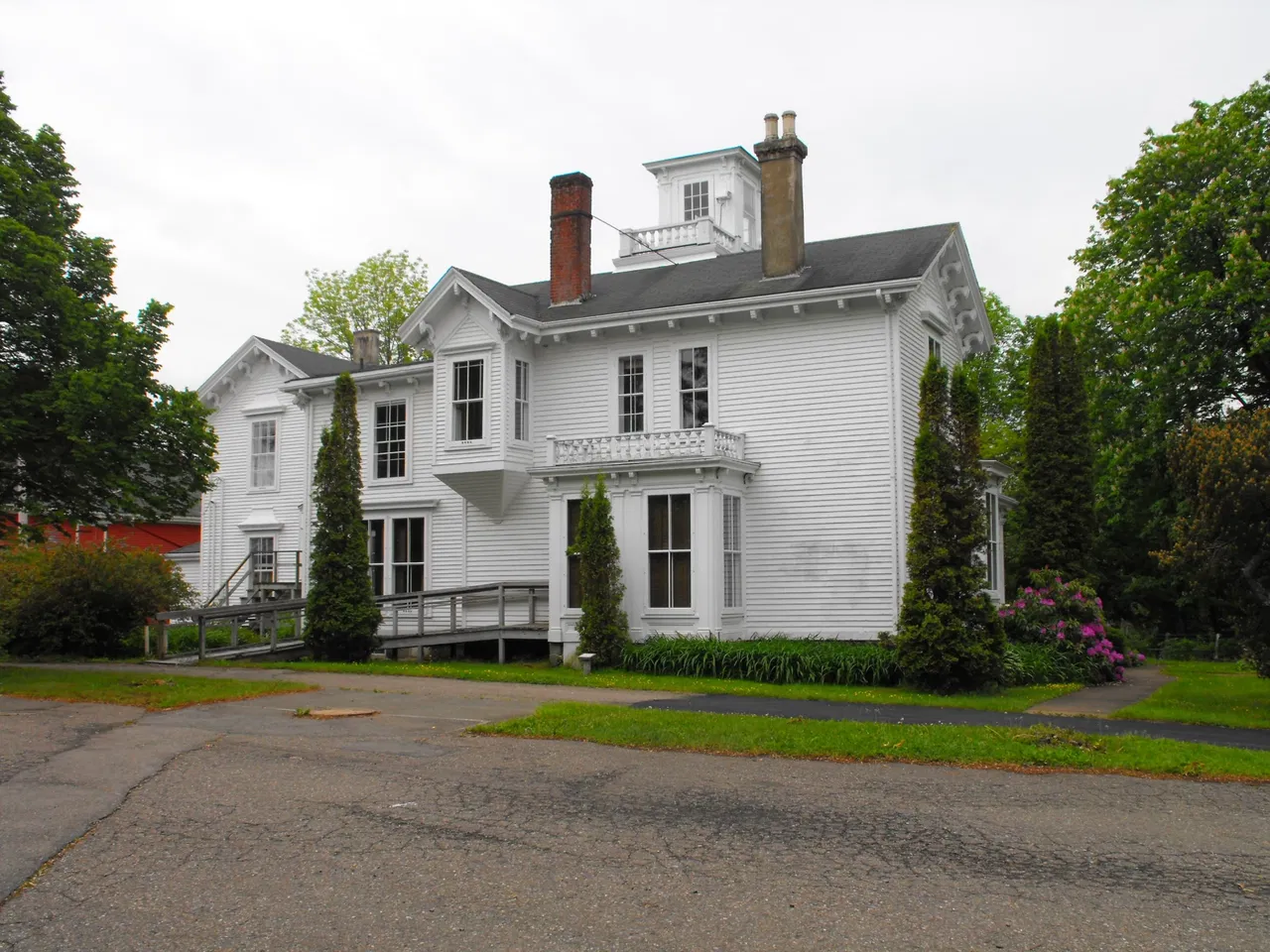
By the mid-19th century, the yard had launched everything from brigs and schooners to massive ocean-going barques—some among the largest ever built in Canada. The scale of production was such that the Churchill fleet became both a shipbuilding enterprise and a shipping network, moving timber, gypsum, and cargo throughout the North Atlantic world.
When Ezra stepped back, George Washington Churchill (1835–1906) took over management of the yard and continued operations into the final decades of the wooden ship era.
It was during this later period—when steam power was beginning to merge with traditional sail—that the Havana was constructed.
A Vessel of Transition
The Havana reflects that exact moment in maritime history.
Built as a three-masted steam schooner, she combined sail with auxiliary steam propulsion—a practical evolution rather than a radical one. This was not a luxury vessel or a deep-ocean liner. She was a working ship, designed for the demands of sealing, salvage, and coastal trade—industries that defined Atlantic Canada at the time.
By 1891, yards like Churchill’s were adapting. Iron and steel ships were beginning to dominate global trade, but in places like Nova Scotia, wooden vessels still filled critical regional roles. The Havana represents one of the last generations of locally built wooden working ships, bridging the gap between two eras.
The End of an Era
There is a quiet significance in this.
The same forces that allowed the Churchill yard to thrive—timber, tides, and skilled labour—were becoming less relevant in a world shifting toward industrial shipbuilding. Within a few decades of Havana’s construction, the great age of wooden shipbuilding in places like Hantsport would collapse under the pressure of steel hulls and centralized industrial yards.
George W. Churchill himself died in 1906—the same year Havana was lost in Halifax Harbour.
It is a coincidence, but a fitting one.
Both the man and the vessel belonged to the closing chapter of a distinctly Nova Scotian industry—one that built ships not in massive factories, but along tidal rivers, where hulls rested in the mud at low tide and floated free on the rise.
Yard Inset – Building with the Tides
Shipbuilding at Hantsport did not take place in dry docks or controlled basins. It happened in the open—on the banks of the Avon River—where the tides of the Minas Basin governed everything.
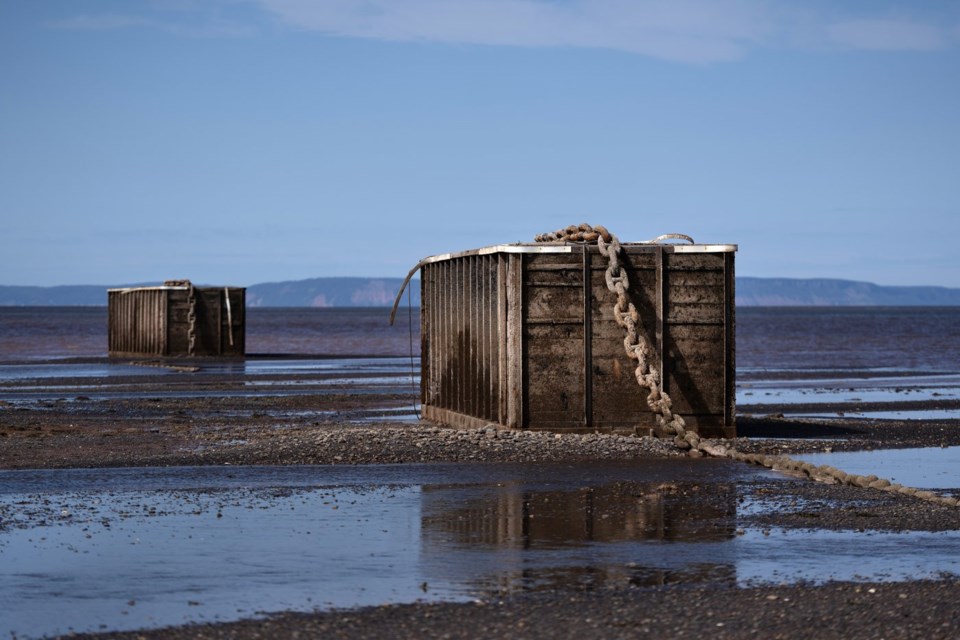
Here, the rise and fall of the water could exceed 40 feet. At low tide, the river withdrew completely, leaving vessels sitting upright in thick mud, their hulls exposed for work. Shipwrights moved freely beneath them, shaping frames, fastening planks, and driving treenails into green timber. The yard was quiet then—tools against wood, the slow rhythm of construction grounded in the exposed riverbed.
At high tide, everything changed.
Water returned with force, lifting the hulls free. What had been a construction site became, briefly, a working harbour. Materials could be brought alongside, hulls could be shifted, and—when the time came—a finished vessel could be launched directly into the current, carried out toward the Minas Basin and the open Atlantic beyond.
There were no rigid schedules. The tide was the clock.
For builders like George W. Churchill, this was not a limitation—it was an advantage. The tidal system eliminated the need for expensive infrastructure and allowed large wooden ships to be built efficiently using the natural environment itself. It also demanded precision. A missed tide could delay work for hours. A poorly timed launch could be disastrous.
The Havana was built in this setting—its hull rising from the mud in stages, shaped between tides, and finally released into the river on a flood that would carry it out into the Bay of Fundy.
It is a method of construction that feels distant now, but it was once the backbone of Nova Scotia’s shipbuilding tradition—practical, tide-driven, and deeply tied to place.
Lucky Farquhar — From Seaman to Steamship Magnate
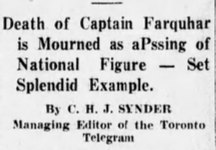
James Augustus Farquhar’s life bridged the Age of Sail and the Age of Steam. He went to sea before the mast, rounded Cape Horn in clipper ships, commanded vessels of his own, and later embraced steam propulsion during an era of rapid technological change.
By the time of his death in 1930, newspapers declared that “Farquhar’s luck” had become a Maritime proverb — a phrase standing for bold enterprise and brilliant outcomes.
He was described as master mariner, salvor, deep‑sea diver, and founder of significant Halifax steamship firms. His career exemplified calculated risk supported by discipline and relentless work.
Farquhar’s Own Voice — Farquhar’s Luck
Unlike many mariners of his era, Farquhar left a written record of his life – a chronicle that would later be published as Farquhar’s Luck.
In 1980, fifty years after his death, Captain James Augustus Farquhar’s memoir was published under the title *Farquhar’s Luck*. Drawn from the lively chronicle he kept throughout his life, the book documents a career that stretched from Sable Island wreck culture to steamship enterprise in Halifax.
The title reflects the phrase that became synonymous with his reputation — “Farquhar’s luck.” Yet those who knew him understood that luck alone did not define his success. His writing reveals discipline, calculated risk, and relentless work beneath the mythology.
Through his own words, Farquhar describes his early exposure to wreck and salvage, voyages before the mast, command in the age of sail, adoption of steam power, deep-sea diving operations, and commercial expansion within Atlantic trade networks.
The Havana, lost in 1906, becomes part of a much broader arc — one episode within a life shaped by maritime adaptation and enterprise.
Unlike many vessel owners of his era, Farquhar left a written record. Havana is therefore not simply a submerged structure, but a vessel connected to a documented maritime philosophy.
Today, divers tracing her timbers beneath Halifax Harbour move through a site once commanded by a man who understood both risk and recovery — and who preserved his own account of it for future generations.
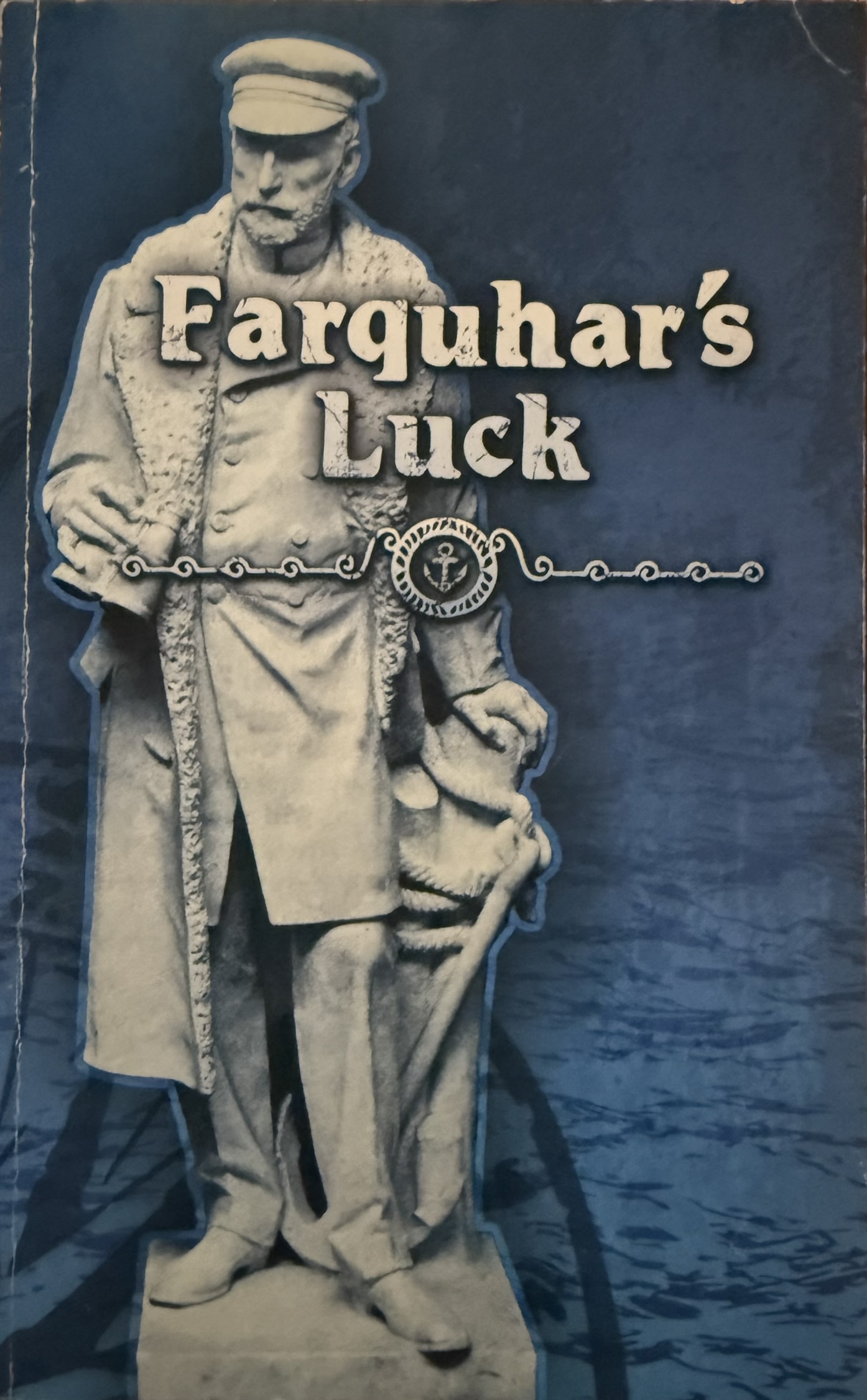
The Irony of Salvage
Few aspects of the Havana story are more compelling than its irony. Captain Farquhar learned deep sea diving to enhance his salvage operations, accomplishing numerous rescues throughout Atlantic waters.
Yet Havana afforded no opportunity for recovery. The harbour depth, rapid flooding, and structural compromise rendered salvage impractical. The man who built a reputation recovering wrecks could not recover his own vessel.
This paradox elevates Havana from minor harbour casualty to symbol of maritime limitation — a reminder that even experience and preparation have boundaries.
Harbour Context — Halifax in 1906
By 1906, Halifax Harbour was already a strategically important port. Steam traffic was increasing, anchorages near Point Pleasant were common, and navigation required coordination in confined waters.
Collisions in harbour reveal the risks inherent in industrial expansion. Rather than being lost to storm, Havana was lost to density — a product of proximity within a modernizing maritime environment.
Technical Dive Site Survey — Present Condition
Location: Halifax Harbour near Point Pleasant
Depth: Approximately 80–90 feet
Seabed: Sand and silt overlay with ballast concentrations
Water Temperature: Winter bottom temperatures near 2°C
Visibility: Typically 5–15 feet depending on tidal and vessel activity
Remaining structural elements include timber hull framing, ballast stone mounds, coal remnants, partially buried boiler structure, and isolated fittings. The debris field aligns roughly along the original hull axis.
Active commercial traffic, variable currents, and cold‑water exposure require advanced dive planning, harbour coordination, and surface support monitoring.
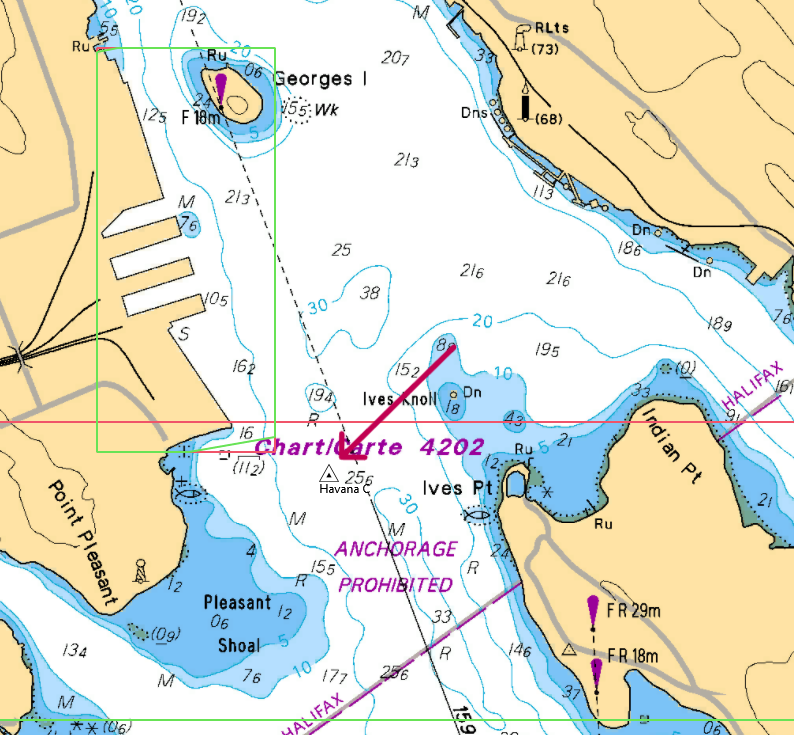
Cultural Memory and Enduring Recognition
The Farquhar name endured long after Havana’s loss. Family prominence continued in Halifax society, and decades later, American press still referenced Captain Farquhar and his statue in Nova Scotia.
Through obituary accounts, family notices, and cultural references, the story extended well beyond the harbour floor.
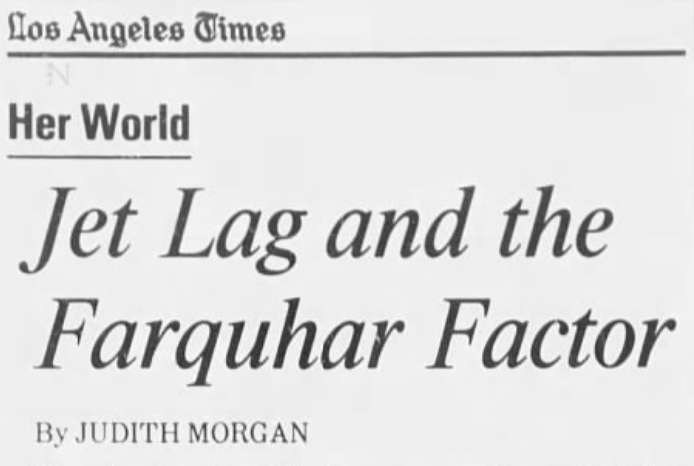
Interpretive Significance
Havana is not remembered for catastrophe or mass casualty. Her importance lies in narrative depth. She represents a transitional vessel owned by a transitional mariner. She illustrates the limits of calculated risk and the quiet hazards of industrial harbour life.
Most harbour wrecks fade into obscurity. Havana endures because her owner’s life story magnifies her significance. Beneath Halifax Harbour, she remains a quiet but meaningful chapter in Atlantic Canada’s maritime heritage.
Modern Exploration — The Highfield Hunter Reaches the Havana (January 10, 2026)
The plan began the evening before. January 9th carried a forecast of scattered showers and west winds pushing 44 km/h, gusting to 66. Halifax in January offers little comfort and less certainty. But winter windows are rare, and hesitation is often the only true barrier. We committed.
Dawn broke cold and metallic. Frost clung to the gunwales as we uncovered the boats and loaded steel tanks into the 25-foot Highfield. A smaller 16-foot aluminum boat trailed behind — practical, stubborn, and loud against the chop. The wind cut across the harbour, but the Halifax Peninsula shielded us from the worst of the west. Engines growled to life. We pushed off.
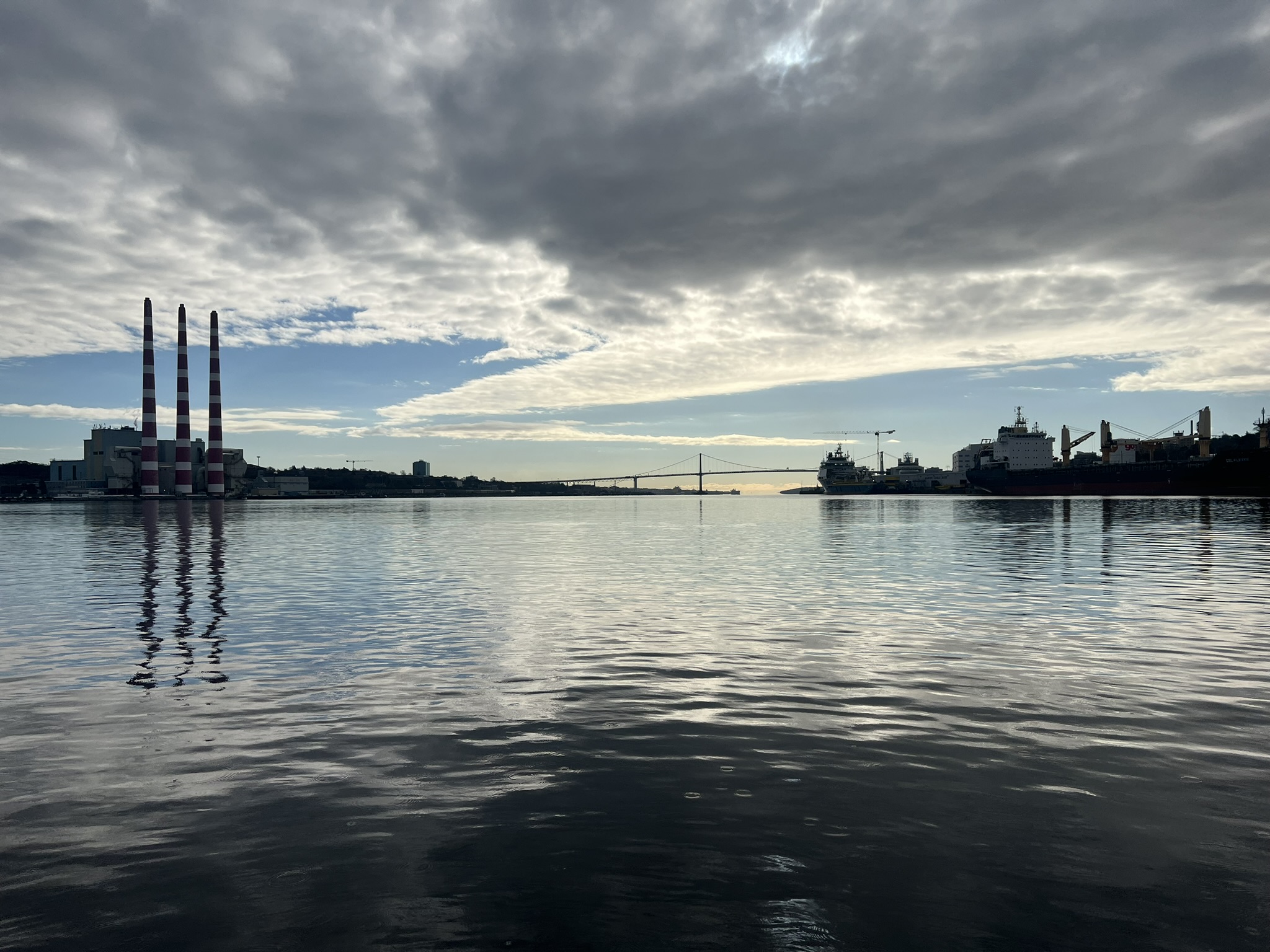
The harbour in winter feels different. The air carries a sharper edge. Sound travels farther. Container cranes loomed against a pale sky while freighters moved deliberately through the channel. We checked in with Halifax Traffic, confirmed diving operations, and took position over the coordinates.
One vessel anchored. The second idled nearby as a tethered chase boat, lines ready and radios monitored. Three of us stepped to the stern. Regulators hissed. Masks sealed. The Atlantic swallowed us in a rush of grey.
The first sensation was temperature. Even through drysuit layers, the cold pressed in — bottom water hovering near 2°C. The descent line shimmered downward into dimness. I expected the usual harbour murk — heavy silt, visibility measured in arm’s length. Instead, as my light cut forward, the water opened to 10, even 15 feet. Shapes began to form.
Timbers emerged from the sand like ribs. Hull sections rose at angles, softened by a century of salt and current. Rock piles — ballast — lay scattered in uneven mounds. Patches of coal stained the seabed black. And there, unmistakable, the boiler rested half-buried — iron rounded and silent beneath silt.
I checked the anchor and began a slow circuit westward, finning carefully to avoid disturbing the bottom. The wreck revealed itself in fragments: a deadeye resting against timber; a curve of brass catching my beam; an intact porthole rim still circular after 120 winters. Clusters of short, stubby shells marked her sealing past — small reminders of the industry she once served.
Above us, unseen, ships continued their passage through Halifax Harbour. Down here, only the rhythm of breath and the muted thud of distant propellers broke the stillness. The wreck felt preserved in suspension — not dramatic, not chaotic, but settled.
After roughly forty minutes, fingers stiffening and computers edging toward ascent profiles, we began our return. The line led upward into brighter grey. Cold air met us at the surface. Engines idled close. Lines were handed up. The city skyline reappeared, unaware.
More than a century earlier, Captain Farquhar mastered hard-hat diving in pursuit of salvage and recovery. On this winter morning, modern divers traced the remains of his vessel in the same harbour. The circle — from Sable Island wreck culture to steamship enterprise to quiet harbour loss — closed again beneath Atlantic water.
Access and Site Permissions
The wreck of the S.S. Havana lies within Halifax Harbour near Point Pleasant at coordinates 44°37.443' N, 63°33.211' W. As the site rests within an active commercial shipping corridor in Canada’s primary Atlantic port, diving operations require prior coordination and authorization. Divers must obtain clearance from Halifax Harbour Authority / Port of Halifax, notify Halifax Traffic (Vessel Traffic Services) before entering the water, and comply with all Transport Canada marine safety regulations. Due to continuous vessel movement, restricted navigation zones, and strong tidal influence within the Narrows and main channel, the site is not suitable for unsupervised or recreational access. Proper surface support, radio monitoring, and formal operational approval are mandatory.
Ask me about the Highfield and Suzuki offshore expedition platform — engineered for serious divers.
#HighfieldHunter #HighfieldPatrol760 #SuzukiEngines #Suzuki-300hp #HalifaxShipwrecks #NSMaritimeHistory #NovaScotia #Halifax #Havana